Helping design and engineering professionals discover, evaluate and specify technologies and processes that shorten the design cycle and enable success.



Digital Engineering April 2026
In the latest issue of Digital Engineering, we take a look at the latest innovations in design for additive manufacturing, including the use of natural language inputs, social media cosplayers, and AI integration. The issue also includes a feature…

January Special Focus Issue: Design for Additive
In this Special Focus Issue of Digital Engineering, learn about the latest advancements in design for additive manufacturing, including new software tools, additive in automotive, custom medical devices, and more.
As so often is the case, sci-fi is the prophet of actual science. Although it isn’t quite able to recycle old boots, the Filabot can recycle used plastic to create spools of filament that can be used in 3D printers. Begun as a Kickstarter project by Tyler McNaney, a mechanical engineering student at Vermont Technical College, the Filabot is ready for use, but hasn’t quite hit the mass manufacturing stage.
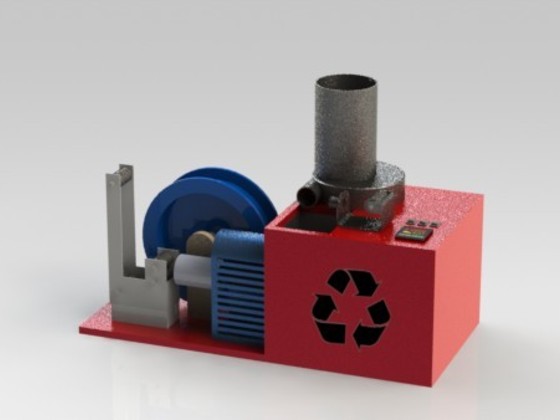
Filabot has been designed to fit on the desktop, with measurements of 24x2x12 in. You can’t feed whole plastic bottles into the current design, which requires the user to chop the plastic he means to recycle into around 4-in. pieces. These pieces are fed into the machine, which grinds the plastic down into smaller pieces.
While the Filabot does use heat as part of the extrusion process, McNaney says that as long as users follow guidelines provided with the machine, no toxic smoke is produced. The plastic filament produced by the Filabot passes through either the user’s choice of a 3mm or 1.75mm nozzle onto a sizing roller, before being rolled into a spool.
While the Filabot isn’t exactly for sale quite yet, interested individuals who donate $425 or more to McNaney’s Kickstarter account are guaranteed a kit which they may assemble at home. Projects like the Filabot are another stepping stone toward home 3D printers becoming every bit as much the norm as personal computers.
Below you’ll find the original pitch video that outlines the basics of how the Filabot works.
Sources: Kickstarter


John Newman is a Digital Engineering contributor who focuses on 3D printing. Contact him via [email protected] and read his posts on Rapid Ready Technology.
Follow DE
Join over 90,000 engineering professionals who get fresh engineering news as soon as it is published.






About Us · Contact Us · Editorial Team · Advertising · Privacy Policy · Subscriber Services · © 2026 Digital Engineering 24/7 · Peerless Media