Helping design and engineering professionals discover, evaluate and specify technologies and processes that shorten the design cycle and enable success.



Digital Engineering April 2026
In the latest issue of Digital Engineering, we take a look at the latest innovations in design for additive manufacturing, including the use of natural language inputs, social media cosplayers, and AI integration. The issue also includes a feature…

January Special Focus Issue: Design for Additive
In this Special Focus Issue of Digital Engineering, learn about the latest advancements in design for additive manufacturing, including new software tools, additive in automotive, custom medical devices, and more.
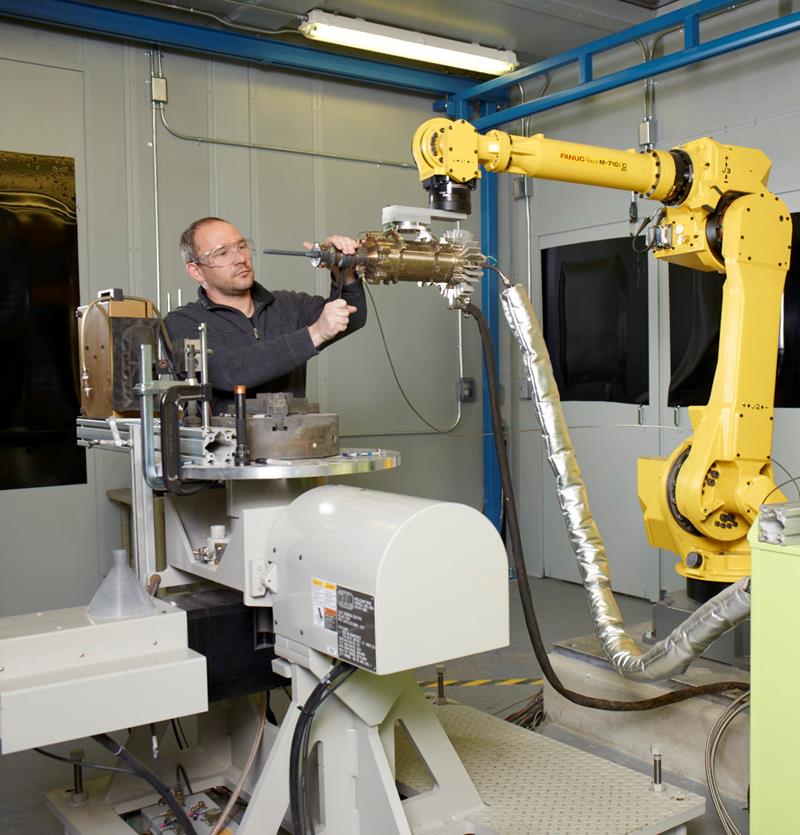
GE has waded hip-deep into AM, first with its acquisition of Morris Technologies, then with its announcement that it would be using 3D printing to build a large number of parts for GE Aviation’s jet engines. Now GE has announced its use of the cold spray AM process, both to create new parts and to repair damaged parts.
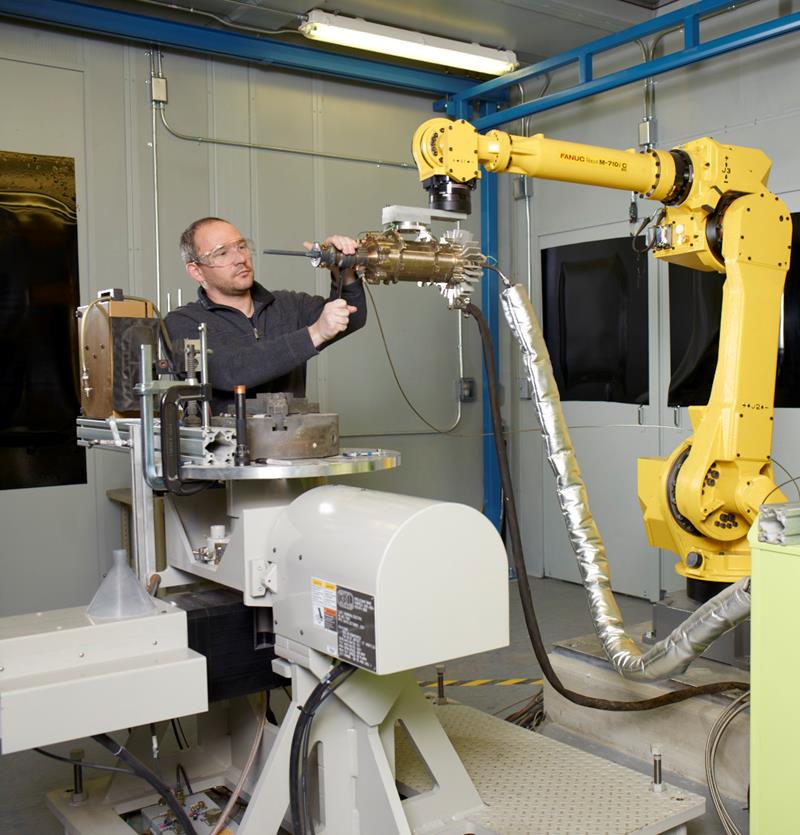
“In addition to being able to build new parts without welding or machining, what’s particularly exciting about cold spray as an innovative, 3D process is that it affords us the opportunity to restore parts using materials that blend in and mirror the properties of the original part itself,” said Anteneh Kebbede, manager of the Coating and Surface Technologies Lab at the GE Research Center. "This extends the lifespan of parts by years, or possibly by decades, ultimately providing improved customer value.”
The cold spray process propels powder particles at extreme speeds (200 to 1000 m.s-1) via a compressed gas jet. Upon impact with metals and alloys, the particles bond with the surface forming layers of material that can be built up rapidly over a short period of time. Cold spray essentially offers many of the benefits usually associated with AM without the introduction of a heat source, which could be advantageous when producing or repairing certain heat-sensitive materials.
Cold spray also carries the potential for large-scale AM, without simply increasing the size of an extruder head or print bed. According to the GE research team, the scale of cold spray manufacturing is only limited by the size of the area being subjected to the AM process. While it isn’t going to be building highly complex parts, cold spray could produce the skeleton of large-scale parts relatively quickly.
Researchers have identified a number of different materials that work well with cold spray, including:


John Newman is a Digital Engineering contributor who focuses on 3D printing. Contact him via [email protected] and read his posts on Rapid Ready Technology.
Follow DE
Join over 90,000 engineering professionals who get fresh engineering news as soon as it is published.






About Us · Contact Us · Editorial Team · Advertising · Privacy Policy · Subscriber Services · © 2026 Digital Engineering 24/7 · Peerless Media