Helping design and engineering professionals discover, evaluate and specify technologies and processes that shorten the design cycle and enable success.


May 2026 Special Focus: Artificial Intelligence in Design and Simulation
In this Special Focus Issue, learn about the latest developments in the integration of artificial intelligence into engineering workflows.

Design & Simulation Software Guide 2025
In this Special Issue, Digital Engineering presents its second annual guide to design and simulation software vendors.
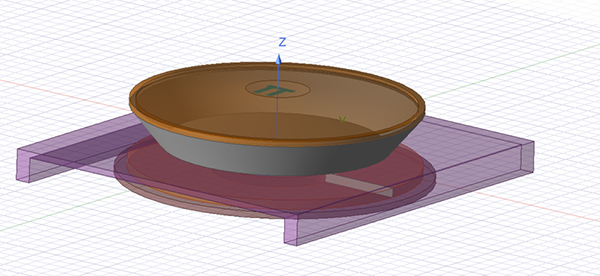
How do you celebrate Pi Day, honoring the mathematical constant π? On the annual event on March 14, some recite the pi number with its long trailing decimal digits (3.14159265359....). Others bake or eat pie, with the π symbol engraved on the crust's top. Matthias Laurich, electronics engineering solutions manager at Rand Simulation, chose to mark the day by simulating a pie warmer with an induction plate.
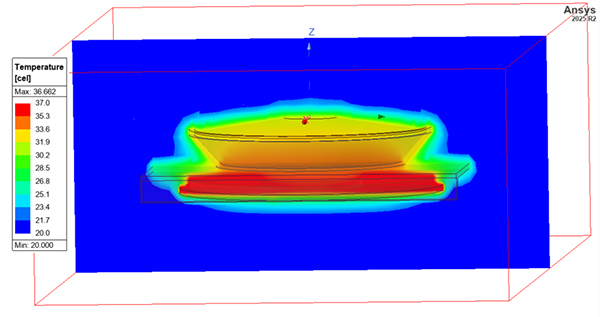
"I used Ansys Electronics Desktop to run the simulation," explained Laurich. "The pie's geometry was simple enough, so I just drew it in Electronics Desktop. I used one-way physics coupling to analyze the heat inside the pie. I looked at the electromagnetic activities and the eddy current's heat generation from the coil in Ansys Maxwell first. The resulting heat loss was used as input in Ansys Icepak [a CFD solver] to understand the heat distribution inside the pie."
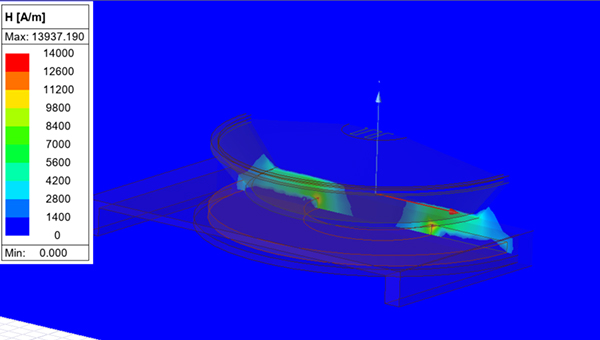
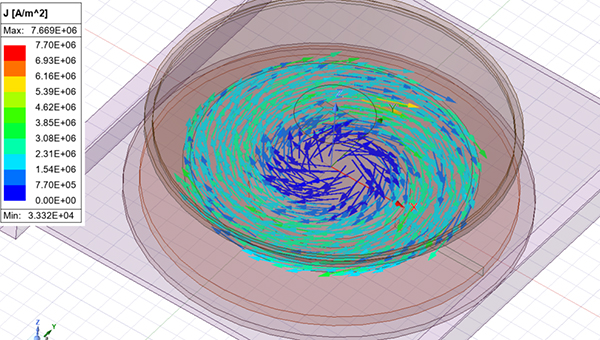
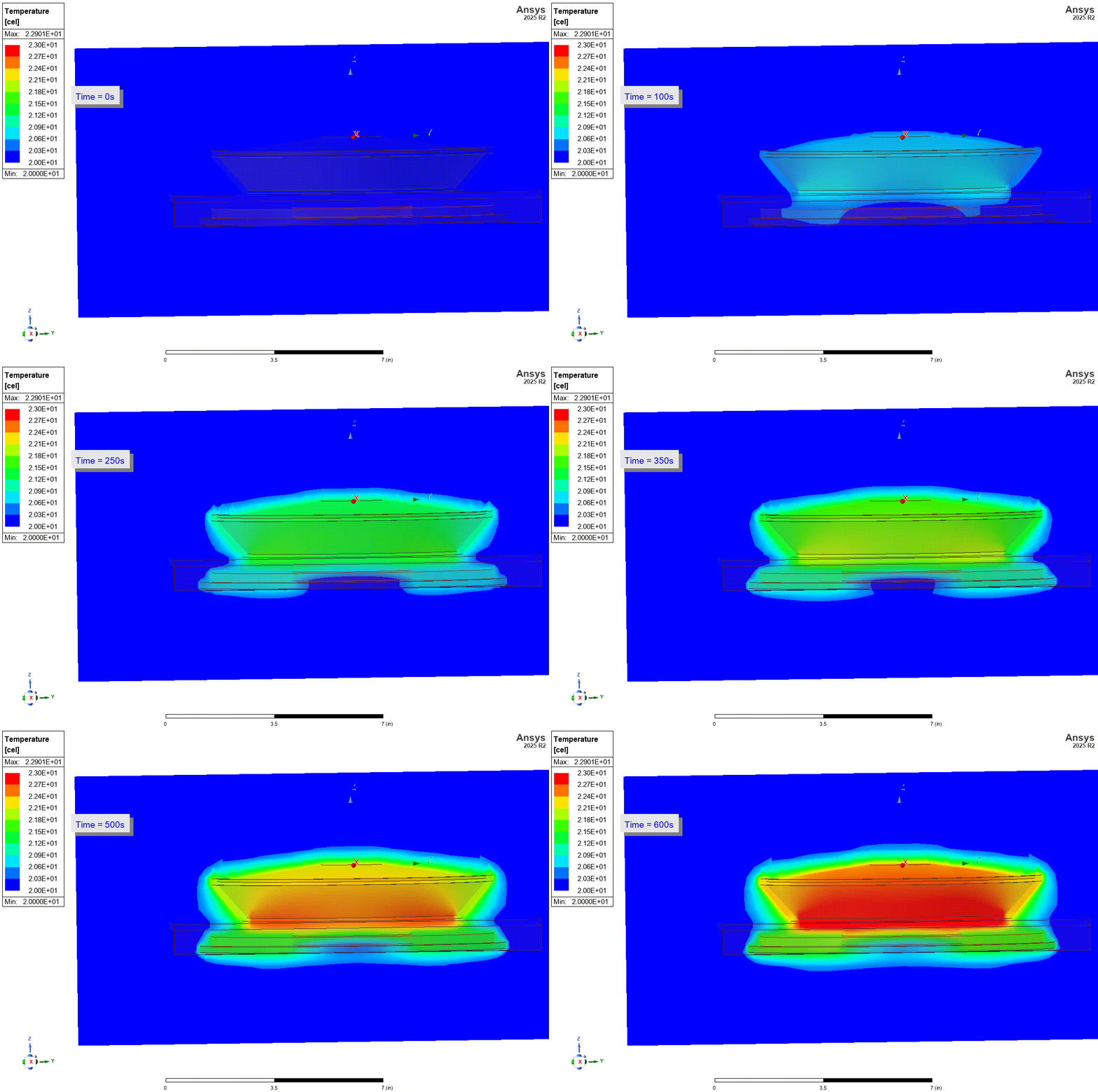
The goal, said Laurich, was to see the heat distribution pattern inside the pie. A uniformity in distribution would suggest the pie was even heated, from center to the corner with no pockets left behind.
A more thorough approach would require assigning accurate material properties to the pie's inside, to represent the apple, meat, or cheese fillings--"because they have different conductive properties," noted Laurich. The exercise could also be repeated with different pie holders to see if their shapes and sizes affect the temperature distribution, he observed.
He used a laptop with 16 CPU cores, 64GB RAM. But for the simulation, he only used 12 cores. Ansys Maxwell solver took only 45 seconds to run, followed by the IcePak simulation that ran for 2 minutes.
Laurich performed this simulation as a fun tribute to Pi Day, but he believes the method could be used to verify, for example, whether food kept warm with hot water baths or flames in a canteen or a buffet restaurant meet the FDA temperature requirements for food safety.
Laurich revealed that his favorite pie is "appie pie with ice cream on top." He's not a fan of curd pies. "But one exception is pecan pie," he added.
Pi Day is celebrated on March 14 because it matches the beginning digits of the pi number, 3.14.


Kenneth Wong is Digital Engineering's resident blogger and senior editor. Email him at [email protected] or share your thoughts or suggestions at digitaleng.news/facebook.
Follow DE
Join over 90,000 engineering professionals who get fresh engineering news as soon as it is published.






About Us · Contact Us · Editorial Team · Advertising · Privacy Policy · Subscriber Services · © 2026 Digital Engineering 24/7 · Peerless Media