Helping design and engineering professionals discover, evaluate and specify technologies and processes that shorten the design cycle and enable success.



Digital Engineering April 2026
In the latest issue of Digital Engineering, we take a look at the latest innovations in design for additive manufacturing, including the use of natural language inputs, social media cosplayers, and AI integration. The issue also includes a feature…

January Special Focus Issue: Design for Additive
In this Special Focus Issue of Digital Engineering, learn about the latest advancements in design for additive manufacturing, including new software tools, additive in automotive, custom medical devices, and more.
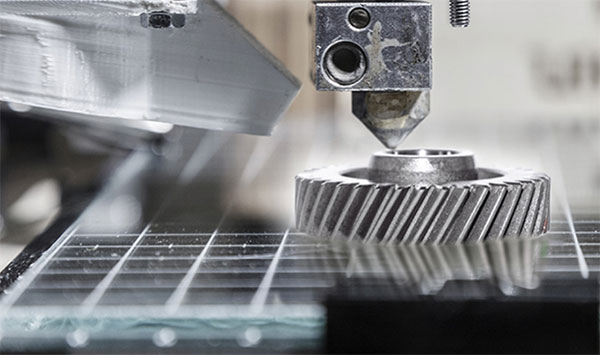
Hexagon's Manufacturing Intelligence division has announced a new solution with Stratasys to help manufacturers in the aerospace sector boost confidence in the performance and safety of 3D printed plastic components and compress time to market, the companies report. Through the virtual engineering and manufacturing support provided by the partnership, customers will be able to reduce a 2- to 3-year timescale of designing and testing a part to 6 to 9 months.
Through the new partnership, users of Stratasys' ULTEM 9085 filament can now use Hexagon's Digimat material modeling software to predict how printed parts will perform. ULTEM 9085 filament is used to produce parts for aircraft cabin interiors, such as bracketry, pieces for cable routing, covers and duct components, all of which are required to meet stringent certification, for example around flammability and toxicity.
ULTEM 9085 resin is a flame-retardant, high-performance thermoplastic with a high strength-to-weight ratio, heat resistance and high impact strength, and possesses favorable flame, smoke, and toxicity (FST) characteristics, according to Stratasys. The material modeling software provides engineers with a validated tool for analyzing how this material will perform mechanically in a product design when printed with two compatible printers.
Using Digimat, engineers will be able to predict how parts made from ULTEM 9085 filament may behave when made using approved Stratasys printers. This is made possible through an accurate virtual material model jointly developed by the two companies through physical testing that includes detailed information about the material's internal microstructure. The software's process simulation capabilities help manufacturers avoid defects such as the delineation of warpage of a part and analyze the print time and material cost for the printer toolpaths of these machines to achieve an optimal result.
The solution gives aerospace engineers a number of benefits:
"The aerospace industry is continuously pushing the boundaries of performance and innovation, but current confidence in the performance of additive manufactured parts is mostly limiting its application to highly specialised metal parts," says Guillaume Boisot, head of ICME, Hexagon's Manufacturing Intelligence division. "We are excited that this new development in our partnership with Stratasys will help compress the design and testing phases and improve understanding of plastic behavior and speed up innovation across the sector."
"The dual needs to make complex parts lighter and produce low volumes economically has meant that aerospace has pulled 3D printing towards production and put the sector ahead of the curve in use of the technology," says Scott Sevcik, vice president, Aerospace Business Segment for Stratasys. "But this also means it's the first industry to identify several challenges, a key one being the need for a digital toolset to provide confidence in 3D printed parts. Our partnership with Hexagon is a big step forward in solving that, as it gives engineers the same upfront design intelligence for 3D printing that they have for traditional processes."
The virtual engineering solution can now be accessed by customers of the Digimat material modeling software. Stratasys customers can request access to detailed material cards through its Materials Exchange capabilities and import toolpaths directly from their Stratasys Insight software.
For more information on virtual manufacturing of plastics and Digimat click here. For more information on Stratasys' ULTEM 9085 filament click here.
Sources: Press materials received from the company and additional information gleaned from the company’s website.


Every day, our customers find simpler, smarter approaches to stubborn design problemsand greater confidence to confront towering human and technological challenges. Less hindered by the usual constraints, they can imagine, design, iterate and…
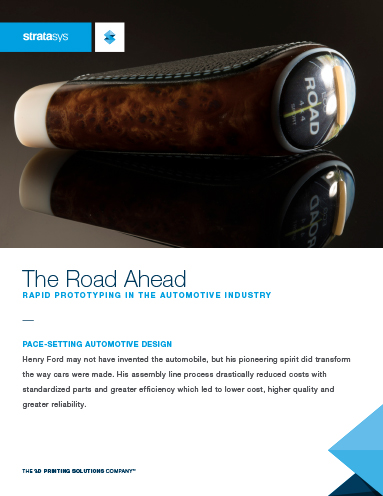
Rapid Prototyping in The Automotive Industry
Henry Ford may not have invented the automobile, but his pioneering spirit did transform the way cars were made. His assembly line process drastically reduced costs with standardized parts and greater efficiency which led to lower cost, higher quality and greater reliability.

DE's editors contribute news and new product announcements to Digital Engineering. Press releases may be sent to them via [email protected].
Follow DE
Join over 90,000 engineering professionals who get fresh engineering news as soon as it is published.






About Us · Contact Us · Editorial Team · Advertising · Privacy Policy · Subscriber Services · © 2026 Digital Engineering 24/7 · Peerless Media