Helping design and engineering professionals discover, evaluate and specify technologies and processes that shorten the design cycle and enable success.



May 2026 Special Focus: Artificial Intelligence in Design and Simulation
In this Special Focus Issue, learn about the latest developments in the integration of artificial intelligence into engineering workflows.

April 2026 Special Focus Issue: Generative Design
In this Special Focus Issue, Digital Engineering takes a look at how generative design solutions can be used across different types of design problems and with a variety of manufacturing approaches to accelerate design space exploration, and…
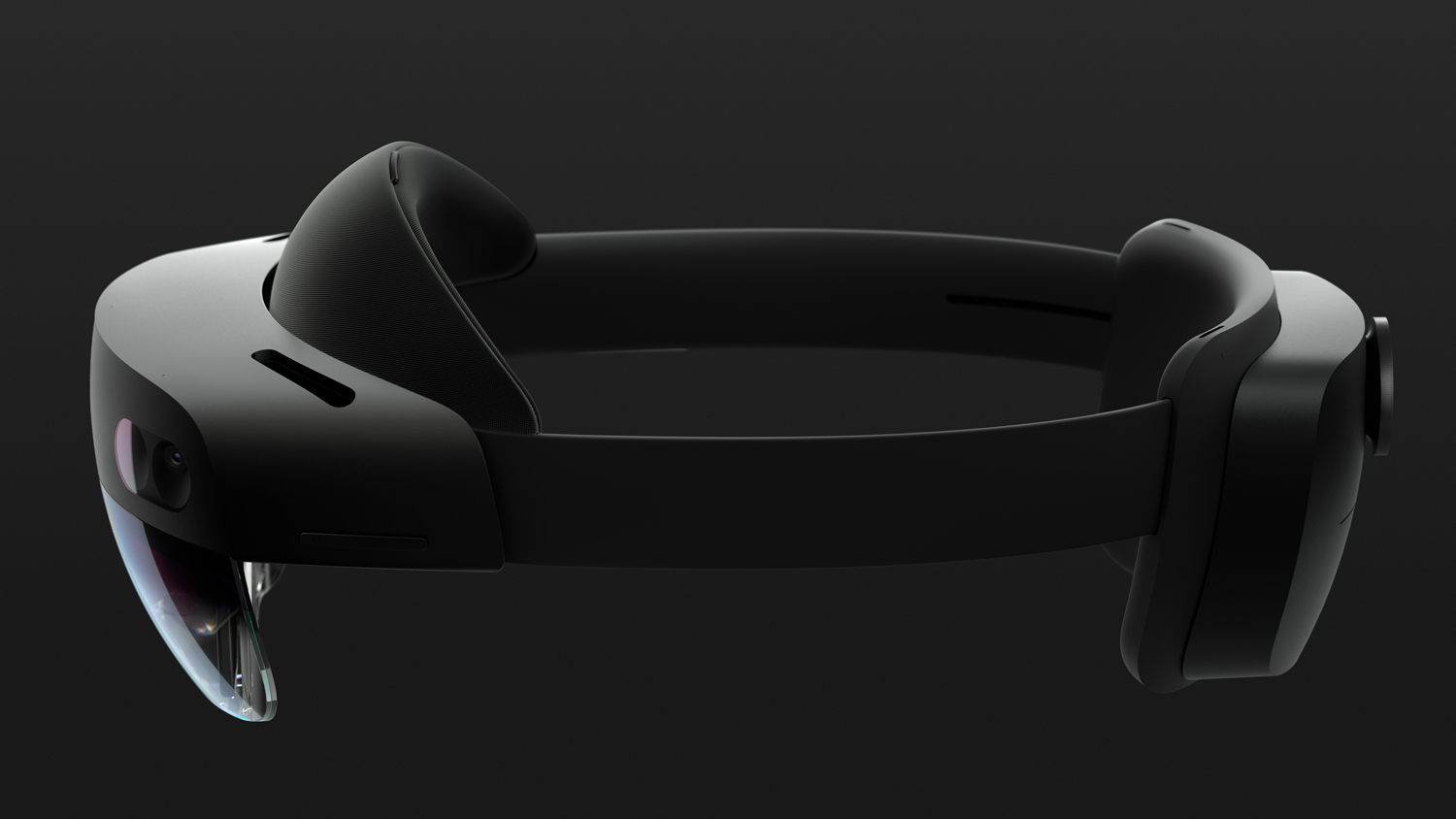
This year's Mobile World Conference (MWC) in Barcelona was Microsoft's launchpad for HoloLens 2, an upgrade to its flagship mixed reality (MR) hardware. The head-mounted display is the centerpiece but cannot thrive on its own. It needs an ecosystem to attract and support content providers.
"Joining [HoloLens 2] is Azure Kinect, a depth-sensing AI-based camera, Dynamic 365 line of business, a set of cloud services that take advantage of MR, and Azure cloud services for developers to build cloud-based MR applications," said Julia White, corporate vice president, Microsoft, in an interview at MWC19.
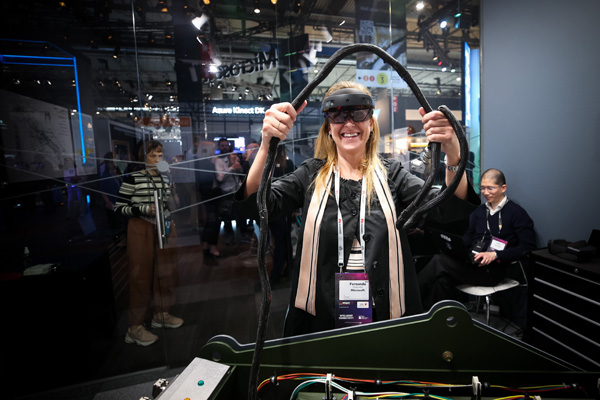
At the same show, PTC, an IoT-focused company with a long history in CAD and PLM, announced its "Vuforia augmented reality and mixed reality (AR/MR) solutions offer built-in support for Microsoft HoloLens 2."
PTC acquired the Qualcomm subsidiary Vuforia three years ago, as part of its strategy to promote and offer digital twin solutions. Since then the company has focused on enabling users of its CAD modeler Creo to be able to view their designs in MR environments.
"For example, an integral part of our Creo platform is Creo AR Design Share. This is an augmented reality experience that enables design collaboration across the engineering and manufacturing workflow," says PTC press office.
A distinguishing feature in HoloLens 2 is its ability to recognize and track finger and hand movements, allowing users to interact with digital objects (for example, a virtual piano) using fingers instead of the cumbersome joysticks and controllers. This could be an attractive feature for those developing MR apps for enterprise training, where building muscle memories and remembering complex gestures are as important as knowing the correct buttons to push.
"Imagine being able to use your hands to pull the engine block out of a vehicle and turn it around to inspect it in an augmented reality experience," says PTC press office. "This would simply not be possible in the physical world -- That component would not only be too heavy to simply pick up and extract, that is also a very long, complicated procedure. Imagine being able to select a dimension and then slide your hand to modify it, and see those modifications happen in real time and at full scale. This type of experience will be feasible with a combination of technology available on the HoloLens 2 and some enhancements to Creo’s AR technology integrations."

Game engines play a crucial role in bridging between CAD and MR. The two leading game engines -- Unity and Unreal -- offer technologies to bring 3D product data into MR environments for design review and collaboration.
Epic Games, which owns Unreal Engine, has already announced its support for Microsoft HoloLens 2. Unity is also behind the hardware. In its recent blog post, Unity outlines the requirements for developing content for HoloLens 2 in Unity.
"As the use of AR headsets becomes more democratized and easily accessible, the barriers to AR driven design collaboration will only further reduce and we believe it will become a standard part of the design review and approval process as well as downstream for sales, marketing, service and operations," says PTC press office.
While earlier incarnations of digital twins were conceived as 3D digital models housed in various programs (PLM, CAD, simulation, to name but three), the next generation digital twins appear to be heading for MR environments.


Kenneth Wong is Digital Engineering's resident blogger and senior editor. Email him at [email protected] or share your thoughts or suggestions at digitaleng.news/facebook.
Follow DE
Join over 90,000 engineering professionals who get fresh engineering news as soon as it is published.






About Us · Contact Us · Editorial Team · Advertising · Privacy Policy · Subscriber Services · © 2026 Digital Engineering 24/7 · Peerless Media