Helping design and engineering professionals discover, evaluate and specify technologies and processes that shorten the design cycle and enable success.



Cut Retrieval-Augmented Generation (RAG) Hallucinations by 50%
Most teams hit the same wall with enterprise AI: LLMs that hallucinate, pipelines that don’t scale, and infrastructure that’s harder to design than the models themselves.

What Is Intelligent BOM Management? A Guide to Smarter Product Development
Learn how intelligent Bill of Materials (BOM) management helps teams collaborate, reduce errors, and bring innovative products to market faster with cloud-based PLM tools.
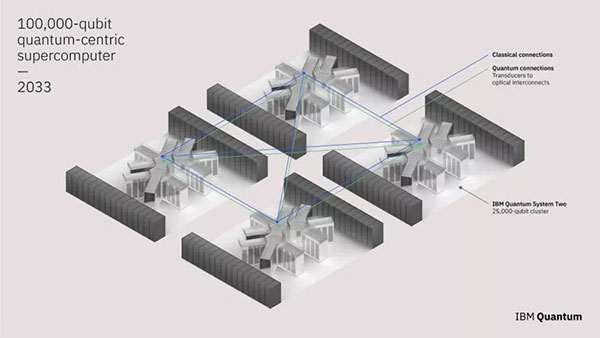
With quantum-centric supercomputing, a 100,000-qubit system would provide the foundation to address global pressing problems that perhaps today’s most advanced supercomputers could not solve, according to IBM. To deliver on this ambition, IBM has formed a global collaboration across industries and research institutions.
Partnering with the University of Chicago, the University of Tokyo, and IBM's broader global ecosystem, IBM will work over the next decade to advance the underlying technologies for this system, as well as to design and build the necessary components at scale.
Moving forward, IBM said that it intends to expand these partnerships to include Argonne National Laboratory and Fermilab National Accelerator Laboratory, both of which are members of the Chicago Quantum Exchange and home to two respective Department of Energy quantum hubs.
The two laboratories offer capabilities and expertise that can facilitate delivering the technologies envisaged in the race to build a quantum-centric supercomputer.
"Over the past several years, IBM has been at the forefront of introducing quantum technology to the world," says Arvind Krishna, chairman and CEO, IBM. "We have achieved significant progress along our roadmap and mission to globally establish useful quantum technology, so much so that we can now, with our partners, truly begin to explore and develop a new class of supercomputing anchored by quantum."
"Achieving breakthroughs at scale in quantum technology requires deeply rooted and productive collaboration around the world and across a broad range of industry, academic, and government partners," says Paul Alivisatos, president of the University of Chicago. "Quantum information science and technology is at a crossroad where foundational discovery and technical innovation will combine to create real breakthroughs."
The plans for this quantum-centric supercomputer are expected to involve innovations at all levels of the computing stack and encompass the convergence of the fields of quantum computing and quantum communication, as well as the seamless integration of quantum and classical workflows via the hybrid cloud.
Because such a computer has never been made before, the first step will be to lay out a blueprint. The design will have to integrate classical computers and quantum computers, as well as break new ground in quantum communication and computing technology.
The foundation of this system will include milestones IBM has already outlined on its Quantum Development Roadmap, such as the ability to scale and connect growing numbers of quantum processors through quantum interconnects, as well as technology to mitigate errors to fully harness noisy yet powerful quantum processors, according to IBM.
By the end of 2023, IBM said it intends to debut three cornerstones of its necessary architecture for quantum-centric supercomputers. One is the new 133-qubit 'IBM Heron' processor. This processor is a complete redesign of IBM's previous generations of quantum processors, with a new two-qubit gate to allow higher performance. It will also be compatible with future extensions to enable modular connected processors to grow the size of the computer.
The second is the introduction of IBM Quantum System Two. The new flagship system is designed to be modular and flexible to introduce elements of scaling in its underlying components, including classical control electronics and high-density cryogenic wiring infrastructure. This system is targeted to be online by the end of 2023.
The third is the introduction of middleware for quantum, a set of tools to run workloads on classical and quantum processors. This includes tools for decomposing, parallel execution and reconstructing workloads to enable efficient solutions at scale.
Over the next decade, IBM plans to work with university partners and its worldwide quantum ecosystem to evolve how its quantum processors can be connected via quantum interconnects. This work will aim to enable high-efficiency, high-fidelity inter-processor quantum operations and a flexible and affordable system component infrastructure to allow scaling to 100,000 qubits.
Sources: Press materials received from the company and additional information gleaned from the company’s website.

IBM is a global technology and innovation company headquartered in Armonk, NY. It is the largest technology and consulting employer in the world.

DE's editors contribute news and new product announcements to Digital Engineering. Press releases may be sent to them via [email protected].
Follow DE
Join over 90,000 engineering professionals who get fresh engineering news as soon as it is published.






About Us · Contact Us · Editorial Team · Advertising · Privacy Policy · Subscriber Services · © 2026 Digital Engineering 24/7 · Peerless Media