Helping design and engineering professionals discover, evaluate and specify technologies and processes that shorten the design cycle and enable success.


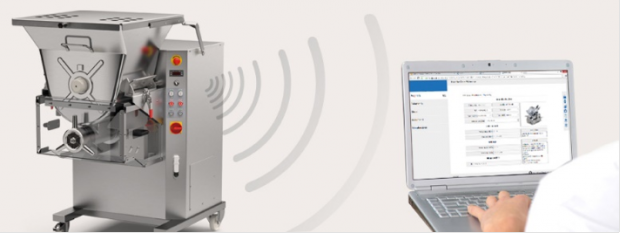
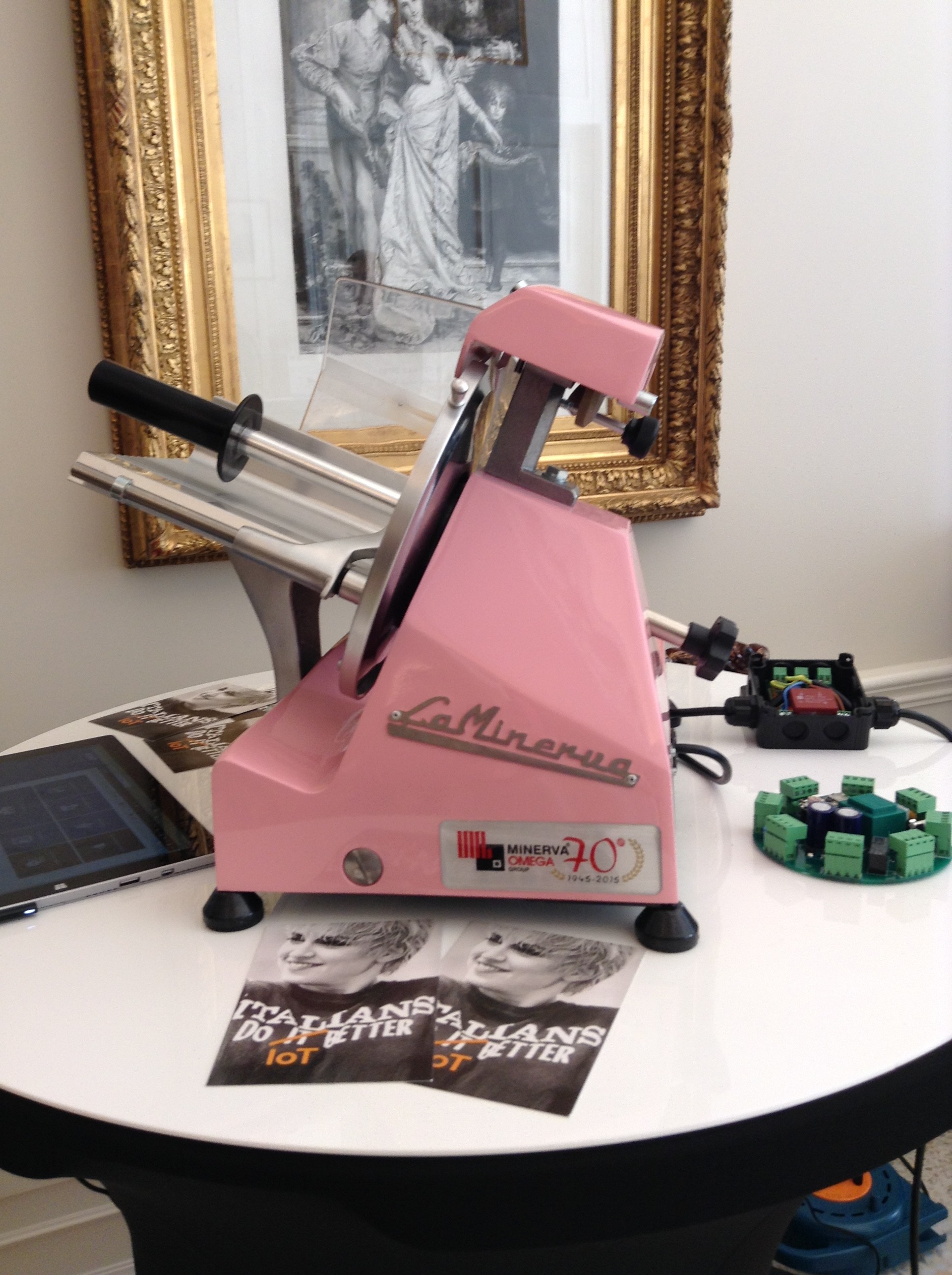 To bring innovation to the food industry, Minerva Omega equipped its machines with technology to collect real-time data. Image courtesy of Solair.
The industry where the Minerva Omega Group operates is highly competitive; it is a mature market and innovation on products, such as meat slicers, has reached its limit. The initial requirement for the Minerva Omega Group was to identify and produce an add-on for their machines to give significant added value and differentiation to put on the table during the negotiation phase. This was the beginning of the idea to add a monitoring solution to their machines in order to give the large-scale retail trade a new service to manage their maintenance dynamically.
In this phase Wi-Next, one of the most innovative Italian Wi-Fi vendors and a Solair technology partner, came into play. Working in close synergy with Solair, Wi-Next customized their End Node Power on the basis of the project requirements. The End Node was able to acquire the telemetry data in real time and by the agile mesh Wi-Fi network sends the data to the cloud. The solution connected both new and legacy machines. “Seeing as these machines have an electric motor,” says Marcello Majonchi, Customer Success & IT Team Leader at Solair,“we thought about estimating the values of ’work calculation’ on the basis of the machines’ energy consumption.”
The distinctive feature of Solair technology is its cloud-based platform that makes it possible to extract the acquired data and process it so that the data that is managed and recorded differs: recording the energy consumption but in reality monitoring the machine’s lifecycle.
Solair technology is at the heart of the new DSC Nexus patented system called NEMOSY (Nexus Monitoring System) – for remote control of operating machinery – and today makes it possible to consolidate the data collected directly on the cloud. The solution is able to aggregate the relevant information relating to the machinery and synchronize them with external systems (ERP, CRM, etc.); the information and data collected is processed and integrated into the business process.
Thanks to the flexibility of Solair's platform, the NEMOSY system is not only aimed at monitoring the machines but can also manage the entire maintenance cycle, from the integration of technical reports up to production of all documentation relating to individual machines.
The NEMOSY system — in its NEMOSY tech version focusing on service and maintenance and NEMOSY safe dedicated to safety — is an application platform solution that works using the web to connect different types of machines to make them communicate with a central controller. It is aimed at those responsible for maintenance to have all machines under control and all useful information continuously updated, to equipment buyers and to those in charge of safety. The application can give added value to distributors and importers to integrate their business with customers.
Thanks to the Solair application platform it is possible to combine the proposal of a service with the sale of the machine that adds value to the product and a plus for the customer. Furthermore, DSC Nexus obtains information on the product that is useful to highlight the machine’s competitive advantage. From the application point of view, users can manage one or more machines of a heterogeneous nature (meat slicers, meat mincers, potato peelers, etc., all with different behavior) with sufficient scalability.
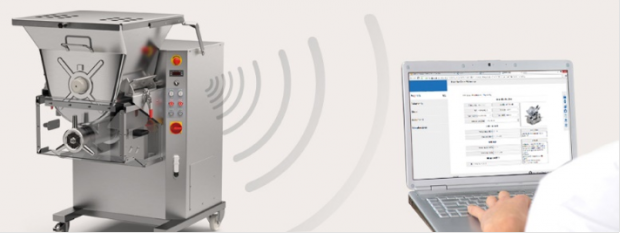 The Solair and DSC Nexus platform allows users to monitor multiple machines, even if they perform different functions. Image courtesy of Solair.
In short, Solair technology makes it possible to develop an innovative system like NEMOSY in a short time and without the need for large initial investments (the Solair platform is available in a Software-as-a-Service mode) and with the guarantee of cloud infrastructure for DSC Nexus that is easy to access and control.
More Info


DE's editors contribute news and new product announcements to Digital Engineering. Press releases may be sent to them via [email protected].
Follow DE
Join over 90,000 engineering professionals who get fresh engineering news as soon as it is published.






About Us · Contact Us · Editorial Team · Advertising · Privacy Policy · Subscriber Services · © 2026 Digital Engineering 24/7 · Peerless Media