Helping design and engineering professionals discover, evaluate and specify technologies and processes that shorten the design cycle and enable success.


Alert!
Digital Engineering ceased publication on July 1, 2026. This website remains available as an archive of engineering content.
For inquiries or information, please email [email protected].

Digital Engineering April 2026
In the latest issue of Digital Engineering, we take a look at the latest innovations in design for additive manufacturing, including the use of natural language inputs, social media cosplayers, and AI integration. The issue also includes a feature…

January Special Focus Issue: Design for Additive
In this Special Focus Issue of Digital Engineering, learn about the latest advancements in design for additive manufacturing, including new software tools, additive in automotive, custom medical devices, and more.
LINK3D, an additive manufacturing (AM) software company focused on software advancements for the 3D printing industry, announces an integration of blockchain technology.
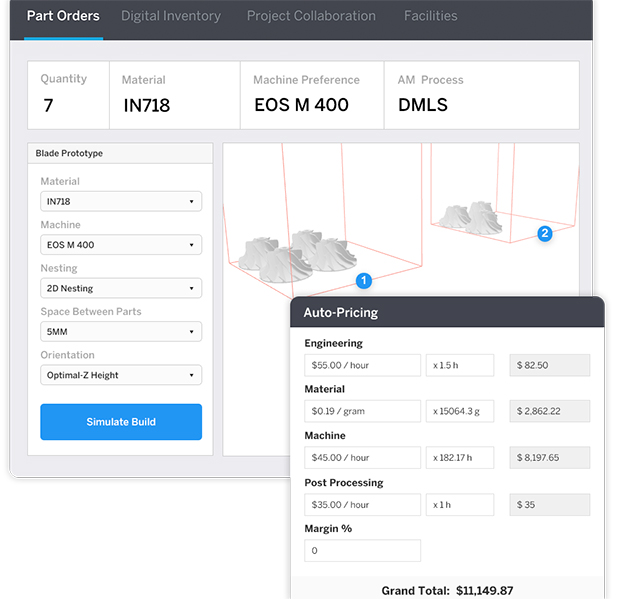
Blockchain technology is now integrated in LINK3D’s flagship SaaS product, Digital Factory (launched in 2017). This enhancement to the product enables:
LINK3D discovered with Digital Factory that a digital thread is necessary for the mass adoption of AM. A seamless ‘strand’ of information / data that aids in the 3D printing process, from start-to-finish (conceptualization, design, production) did not exist. The need for file integrity and traceability is needed for AM processes, LINK 3D reports.
LINK3D’s 3D printing blockchain is said to solve major problems in the 3D printing workflow including:
"Blockchain technology can be utilized as the backbone technology in the digital manufacturing ecosystem," explains LINK3D CTO and Co-founder Vishal Singh.
For more info, visit LINK3D.
Sources: Press materials received from the company.


DE's editors contribute news and new product announcements to Digital Engineering. Press releases may be sent to them via [email protected].
Follow DE






About Us · Contact Us · Editorial Team · Advertising · Privacy Policy · Subscriber Services · © 2026 Digital Engineering 24/7 · Peerless Media