Helping design and engineering professionals discover, evaluate and specify technologies and processes that shorten the design cycle and enable success.



Digital Engineering April 2026
In the latest issue of Digital Engineering, we take a look at the latest innovations in design for additive manufacturing, including the use of natural language inputs, social media cosplayers, and AI integration. The issue also includes a feature…

January Special Focus Issue: Design for Additive
In this Special Focus Issue of Digital Engineering, learn about the latest advancements in design for additive manufacturing, including new software tools, additive in automotive, custom medical devices, and more.
While a few AM-like tools, such as the 3Doodler, offer a bit more freedom, most 3D printing is done from the ground up. Mataerial has developed an AM system that is capable of printing on vertical surfaces as well as horizontal ones. The company refers to this process as “anti-gravity object modeling” (AOM).
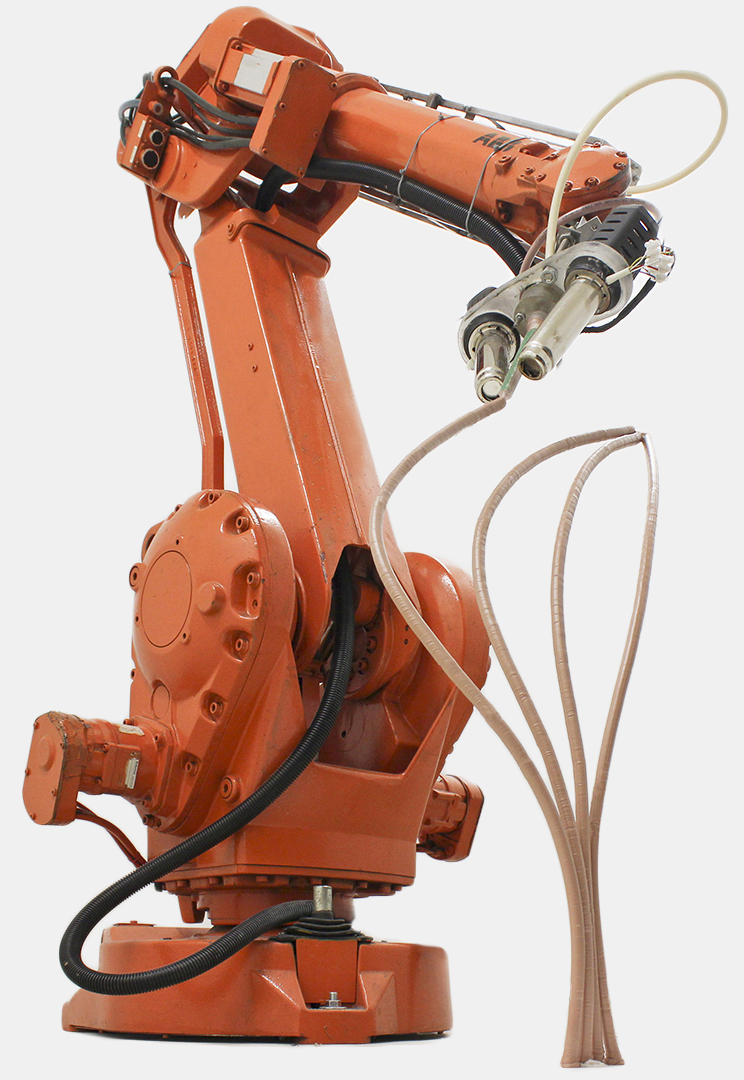
The secret to this new process is the material, which is a proprietary blend of thermoset polymers. No sooner does plastic get squirted out of the extruder head than it begins to harden. Additionally, the nature of the polymer mix allows for pre-programmed (or manually adjusted) CMYK full color object production. Colors are added to the mix just before the material is extruded.
Part of what makes vertical 3D printing possible is that the extruder head is mounted on a robotic arm. Unfortunately, precision robotic arms aren’t exactly inexpensive, which means Mataerial’s system will cost a fair amount more than other AM systems. It also seems likely that the company’s proprietary blend will also cost more than other plastic materials.
From watching the video, it appears that the quality of the material stream is a bit uneven. The diameter leaves something to be desired as well, with 5mm being the smallest aperture.
Even if Mataerial hasn’t quite worked out all the kinks, or managed a finer resolution, the process still offers possibilities that would be difficult to reproduce with standard 3D printers. The power to print in three dimensions from nearly any angle could allow the system the freedom to build objects in situ, which could be useful for large-scale projects. There’s also the artistic merit offered by the system, which, while not quite as commercially viable, could still attract some interest.
Below you’ll find a couple of videos about Mataerial’s 3D printer. The first is a general demonstration of the technology, and the second displays the system’s CMYK color potential.
Source: Mataerial


John Newman is a Digital Engineering contributor who focuses on 3D printing. Contact him via [email protected] and read his posts on Rapid Ready Technology.
Follow DE
Join over 90,000 engineering professionals who get fresh engineering news as soon as it is published.






About Us · Contact Us · Editorial Team · Advertising · Privacy Policy · Subscriber Services · © 2026 Digital Engineering 24/7 · Peerless Media