Helping design and engineering professionals discover, evaluate and specify technologies and processes that shorten the design cycle and enable success.



May 2026 Special Focus: Artificial Intelligence in Design and Simulation
In this Special Focus Issue, learn about the latest developments in the integration of artificial intelligence into engineering workflows.

April 2026 Special Focus Issue: Generative Design
In this Special Focus Issue, Digital Engineering takes a look at how generative design solutions can be used across different types of design problems and with a variety of manufacturing approaches to accelerate design space exploration, and…
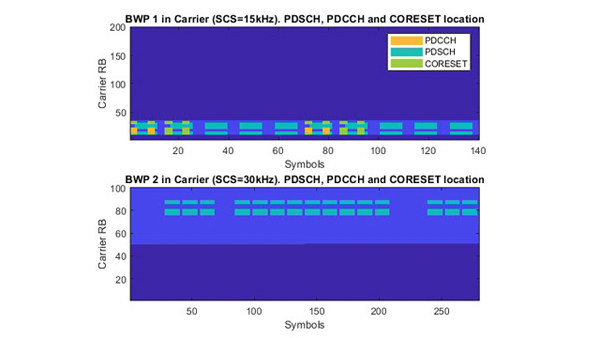
This week, MathWorks, the company behind MATLAB, launched a new 5G Toolbox, aimed at those who need to model, simulate, and test 5G communication systems.
The 5G Toolbox is part of the latest release of MATLAB, a widely used engineering calculation and programming environment. It includes a series of toolboxes to enable data analysis, deep learning, computer vision, and more.
"5G Toolbox helps wireless design engineers manage increasing design complexity while reducing development time. They can now use the toolbox for link-level simulation, golden reference verification, conformance testing, and test waveform generation -- without starting from scratch," the company says in its press release.
The nomenclature and release numbers can get a bit confusing as the leading organization behind the 5G (the 5th generation cellular mobile architecture) implementation is 3GPP (stands for third generation partnership project), uniting the works of seven leading mobile broadband standard development entities.
The first set of 5G standards are in Release 15 of 3GPP's specifications, announced after the group's June plenary meetings.
On October 4, 3GPP announced "5G includes Virtual Reality (VR) from Day 1 ... The 3GPP Codec and Media Working Group (SA4) has completed work on the support of 360° VR streaming services, within Release-15 of the specifications."
The 5G Toolbox is part of MATLAB R2018b, launched in September. With the toolbox, "you can configure, simulate, measure, and analyze end-to-end communications links," says MathWorks.
The toolbox includes reference models that you can use to build devices that leverage the 5G capacity. It also includes the ability to generate wave forms and test signals, which can help identify optimal placements of antennas and transmitters in mechanical assemblies and enclosures.
“When adopting 5G, wireless engineers need to verify that their product designs can conform or co-exist with a new, complex standard that will continue to evolve. Very few companies have adequate resources or in-house expertise to understand and implement a 5G-compliant design,” said Ken Karnofsky, senior strategist for signal processing applications, MathWorks. “Having seen how LTE Toolbox has helped teams quickly deploy pre-5G designs in radio test beds, we anticipate 5G Toolbox will have a similar impact for the mainstream wireless market.”
.
5G is touted as the setup that allows high data transfer rate, low latancy, power saving, and reduced cost. It's expected to deliver many new benefits to the so-called connected devices in the IoT sector, from smartphones and smart home thermostats to network-connected wind turbines and plants.
"It gives engineers another option for communication," Karnofsky says. "It gives you opportunities to create remote data-collecting devices in the field where there's no local network to connect to but the mobile network, so 5G is an option for devices like that. For engineers, it's important to figure out the data-transmission goal, its implications on power consumption and cost."
The ability to embed unprecedented processing power in small devices encourages edge processing (processing the collected data on the device itself). On the other hand, the ability to transmit vast amounts of data swifly favors cloud processing (uploading the data from the device to a server environment for centralized processing).
Karnofsky points out 5G might reinvigorate the edge-or-cloud processing debate among engineers and system designers.

The MathWorks is the world's leading developer of technical computing and Model-Based Design software for engineers and scientists in industry, government, and education. With an extensive product set based on MATLAB® and Simulink®,…

Kenneth Wong is Digital Engineering's resident blogger and senior editor. Email him at [email protected] or share your thoughts or suggestions at digitaleng.news/facebook.
Follow DE
Join over 90,000 engineering professionals who get fresh engineering news as soon as it is published.






About Us · Contact Us · Editorial Team · Advertising · Privacy Policy · Subscriber Services · © 2026 Digital Engineering 24/7 · Peerless Media