Helping design and engineering professionals discover, evaluate and specify technologies and processes that shorten the design cycle and enable success.


Alert!
Digital Engineering ceased publication on July 1, 2026. This website remains available as an archive of engineering content.
For inquiries or information, please email [email protected].

Design & Simulation Software Guide 2025
In this Special Issue, Digital Engineering presents its second annual guide to design and simulation software vendors.

Design & Simulation Software Guide
In this Special Issue, Digital Engineering presents its inaugural guide to design and simulation software vendors, including listings for CAD, CAM, simulation, generative design, PLM, rendering and visualization, design for additive manufacturing,…
Telcos are seeking solutions that can run 5G, artificial intelligence applications and immersive graphics workloads on the same server—including for computer vision and the metaverse.
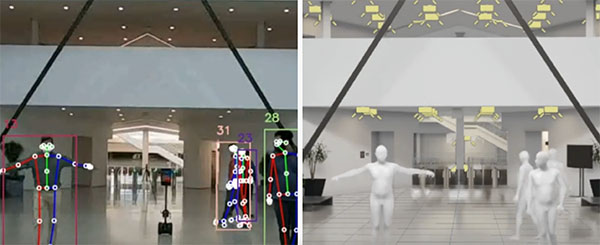
To meet this need, NVIDIA is developing a new AI-on-5G solution that combines 5G vRAN, edge AI and digital twin workloads on an all-in-one, hyperconverged and GPU-accelerated system.
The AI-on-5G system consists of:
Fujitsu’s virtualized 5G Open RAN product suite, which was developed as part of the 5G Open RAN ecosystem experience (OREX) project promoted by NTT DOCOMO. It also includes Fujitsu’s virtualized central unit (vCU) and distributed unit (vDU), plus other virtualized software functions of vRAN from Fujitsu.
The NVIDIA Aerial software development kit for 5G vRAN; NVIDIA Omniverse for building and operating custom 3D pipelines and large-scale simulations; NVIDIA RTX Virtual Workstation(vWS) software; and NVIDIA CloudXR for streaming extended reality.
Hardware includes the NVIDIA A100X and L40 converged accelerators.
OREX has supported performance verification and evaluation tests for this system.
“Fujitsu is delivering a fully virtualized 5G vRAN together with multi-access edge computing on the same high-performance, energy-efficient, versatile and scalable computing infrastructure,” says Masaki Taniguchi, senior vice president and head of mobile systems at Fujitsu. “This combination, powered by AI and XR applications, enables telcos to deliver ultra-low latency services, highly optimized TCO and energy-efficient performance.”
The announcement is a step toward accomplishing the O-RAN alliance’s goal of enabling software-defined, AI-driven, cloud-native, fully programmable, energy-efficient and commercially ready telco-grade 5G Open RAN solutions. It’s also consistent with OREX’s goal of implementing a high-performance and multi-vendor 5G vRAN for public and enterprise 5G deployments.
The all-in-one system uses GPUs to accelerate the software-defined 5G vRAN, as well as the edge AI and graphics applications, without bespoke hardware accelerators nor a specific telecom CPU. This ensures that the GPUs can accelerate the vRAN (based on NVIDIA Aerial), AI video analytics (based on NVIDIA Metropolis), streaming immersive extended reality (XR) experiences (based on NVIDIA CloudXR) and digital twins (based on NVIDIA Omniverse).
“Telcos and their customers are exploring new ways to boost productivity, efficiency and creativity through immersive experiences delivered over 5G networks,” says Ronnie Vasishta, senior vice president of telecom at NVIDIA. “At Mobile World Congress, we are bringing those visions into reality, showcasing how a single GPU-enabled server can support workloads such as NVIDIA Aerial for 5G, CloudXR for streaming virtual reality and Omniverse for digital twins.”
The AI-on-5G system is part of a portfolio of 5G solutions from NVIDIA that are driving transformation in the telecommunications industry. Anchored on the NVIDIA Aerial SDK and A100X converged accelerators—combined with BlueField DPUs and a suite of AI frameworks—NVIDIA provides a high-performance, software-defined, cloud-native, AI-enabled 5G for on-premises and telco operators’ RAN.
Telcos working with NVIDIA can gain access to thousands of software vendors and applications in the ecosystem.
Sources: Press materials received from the company and additional information gleaned from the company’s website.


Since its founding in 1993, NVIDIA (NASDAQ: NVDA) has been a pioneer in accelerated computing. The company’s invention of the GPU in 1999 sparked the growth of the PC gaming market, redefined computer graphics, ignited the era of modern AI and…

Cut Retrieval-Augmented Generation (RAG) Hallucinations by 50%
Most teams hit the same wall with enterprise AI: LLMs that hallucinate, pipelines that don’t scale, and infrastructure that’s harder to design than the models themselves.

DE's editors contribute news and new product announcements to Digital Engineering. Press releases may be sent to them via [email protected].
Follow DE






About Us · Contact Us · Editorial Team · Advertising · Privacy Policy · Subscriber Services · © 2026 Digital Engineering 24/7 · Peerless Media