Helping design and engineering professionals discover, evaluate and specify technologies and processes that shorten the design cycle and enable success.



Digital Engineering April 2026
In the latest issue of Digital Engineering, we take a look at the latest innovations in design for additive manufacturing, including the use of natural language inputs, social media cosplayers, and AI integration. The issue also includes a feature…

January Special Focus Issue: Design for Additive
In this Special Focus Issue of Digital Engineering, learn about the latest advancements in design for additive manufacturing, including new software tools, additive in automotive, custom medical devices, and more.
Along with form, the functionality of a forthcoming product can also benefit from rapid prototyping. While your math and software might insist a design will be functional, nothing beats trying out a hands-on version, particularly when functionality must coexist with style. This is particularly true for high tech devices like the forthcoming Microsoft Surface and Nintendo’s Wii U GamePad.
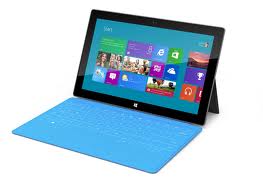
Microsoft has drawn back the curtain on how AM was used to aid the design process for its forthcoming tablet. The team responsible for the Surface says it made more than 200 custom parts during the design process, many built using AM. The hinge on the back of the Surface (that allows it to stand upright) is possibly one of the most talked about features of the tablet. Proof of concept for the design came in the form of an AM prototype, built using what appears to be an Objet Connex.
Digital design also simplified production of the Surface. The production facilities in China use the same 3D printers as the Microsoft design team in the U.S. This made sending out new data as simple as emailing .stl files. Both parties could then print out prototypes, and cooperate in design improvement, regardless of location.
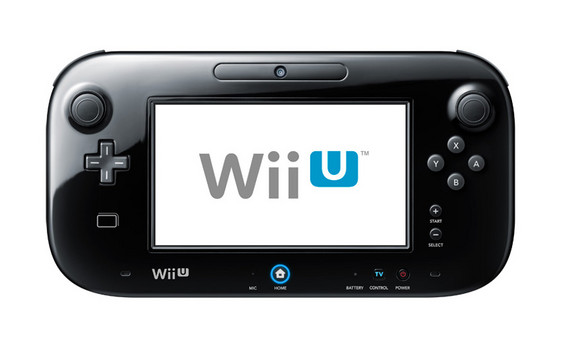
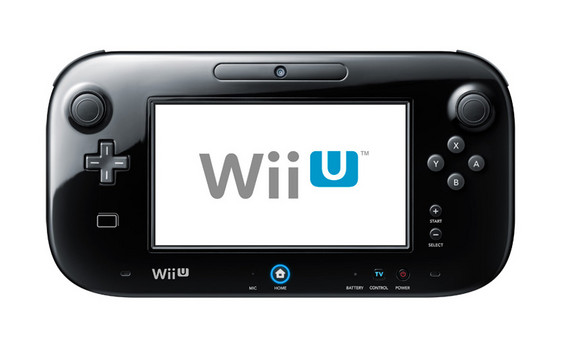
Nintendo has been similarly open about how rapid prototyping helped with the design of its Wii U GamePad. The new controller has standard player input devices, such as buttons and thumb controlled joysticks, but also includes a touchscreen. Early testers complained the controller was heavy and difficult to use, so the design team went back to work. They focused on slimming the controller and making it more comfortable to use for extended periods.
As each new iteration of the controller rolled out of a 3D printer, the team examined it and made adjustments, even going so far as to carve away bits of it by hand before printing the next prototype.
“We carved what came out of the 3D printer by hand and then sanded it,” said hardware developer, Masato Ibuki. “Most of the controller designs approved in the past were fine-tuned by hand. By doing things by hand, each trial and error process can be done much, much faster, so when the design is in the fine-tuning stage, you absolutely need to make modifications by hand.”
Below you’ll find a video about the making of the Microsoft Surface. Interested parties can check out Engineering on the Edge coverage of the tablet here.


John Newman is a Digital Engineering contributor who focuses on 3D printing. Contact him via [email protected] and read his posts on Rapid Ready Technology.
Follow DE
Join over 90,000 engineering professionals who get fresh engineering news as soon as it is published.






About Us · Contact Us · Editorial Team · Advertising · Privacy Policy · Subscriber Services · © 2026 Digital Engineering 24/7 · Peerless Media