Helping design and engineering professionals discover, evaluate and specify technologies and processes that shorten the design cycle and enable success.


Alert!
Digital Engineering ceased publication on July 1, 2026. This website remains available as an archive of engineering content.
For inquiries or information, please email [email protected].

Cut Retrieval-Augmented Generation (RAG) Hallucinations by 50%
Most teams hit the same wall with enterprise AI: LLMs that hallucinate, pipelines that don’t scale, and infrastructure that’s harder to design than the models themselves.

What Is Intelligent BOM Management? A Guide to Smarter Product Development
Learn how intelligent Bill of Materials (BOM) management helps teams collaborate, reduce errors, and bring innovative products to market faster with cloud-based PLM tools.
BOXX Technologies introduces a GoBOXX MXL mobile workstation built with an 8th-generation Intel Core i7 desktop-class processor and NVIDIA Quadro graphics for 3D content creation on the go. The new product line also includes the ultra-thin GoBOXX SLM designed for semi-complex CAD and 3D modeling on the go. Both models include virtual reality-ready editions and features suited for enhancing productivity of digital content creators.
“With mobility a key component of professional workflows, a GoBOXX solution is ideal for many organizations and industries,” says Shoaib Mohammad, BOXX VP of Business Development. “Both GoBOXX MXL and GoBOXX SLM empower creative professionals to work onsite, on set or provide virtual reality experiences wherever their business requires.”
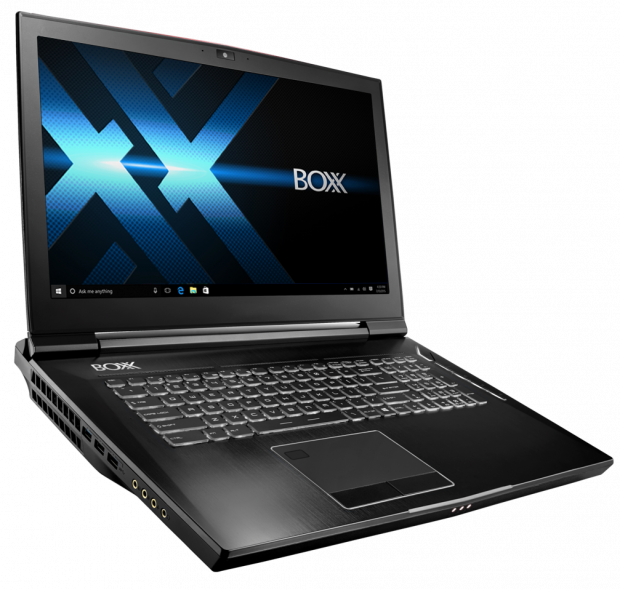 Image courtesy of BOXX. A high-performance mobile workstation featuring a new 8th-generation, six-core, desktop-class Intel Core i7 processor (3.7 GHz), NVIDIA Quadro P3200, P4200 or P5200 graphics and up to 64GB of ram, GoBOXX MXL enables engineers to create anywhere without foregoing desktop workstation-level performance. The mobile solution works for professional applications like SOLIDWORKS, Autodesk 3ds Max, Maya and Revit, while the VR edition is NVIDIA VR Ready and supports applications like Unity. Designed for engineers to incorporate mobile virtual reality into the workflow, GoBOXX MXL VR can handle complex 3D CAD assets for development, and includes the graphics performance to drive immersive experiences. Both GoBOXX MXL editions feature a 17-in. full-HD display.
The new BOXX mobile workstation line also includes GoBOXX SLM. Weighing 3.96 lbs. and just 0.69-in. thick, the ultra-thin laptop features a new six-core Intel Core i7-8550H processor, NVIDIA Quadro P2000 4GB graphics, 32 GB of memory and a 15-in. 1920x1080 full HD display. With Thunderbolt 3 and USB 3.1 ports, as well as two M.2 PCI-e SSD slots, GoBOXX SLM provides performance for Adobe CC, SOLIDWORKS, Autodesk 3ds Max, Maya, Revit and other professional applications.
Standard and VR models arrive in a new silver enclosure, and through BOXX Quick Ship, GoBOXX SLM purchasers can order the new laptop with same-day shipping.
“GoBOXX MXL provides a real desktop user experience, while GoBOXX SLM, in an easy-to-manage form factor, is the ideal run-and-gun solution,” says Mohammad.
For more info, visit BOXX.
Sources: Press materials received from the company.


DE's editors contribute news and new product announcements to Digital Engineering. Press releases may be sent to them via [email protected].
Follow DE
Join over 90,000 engineering professionals who get fresh engineering news as soon as it is published.






About Us · Contact Us · Editorial Team · Advertising · Privacy Policy · Subscriber Services · © 2026 Digital Engineering 24/7 · Peerless Media
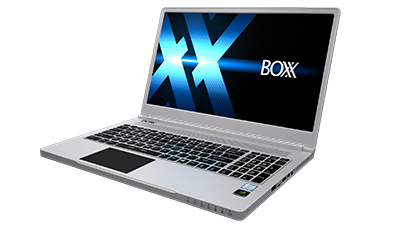 Image courtesy of BOXX.