Helping design and engineering professionals discover, evaluate and specify technologies and processes that shorten the design cycle and enable success.



May 2026 Special Focus: Artificial Intelligence in Design and Simulation
In this Special Focus Issue, learn about the latest developments in the integration of artificial intelligence into engineering workflows.

April 2026 Special Focus Issue: Generative Design
In this Special Focus Issue, Digital Engineering takes a look at how generative design solutions can be used across different types of design problems and with a variety of manufacturing approaches to accelerate design space exploration, and…
The old client-server computing model seems to be coming back, but with some new twists.
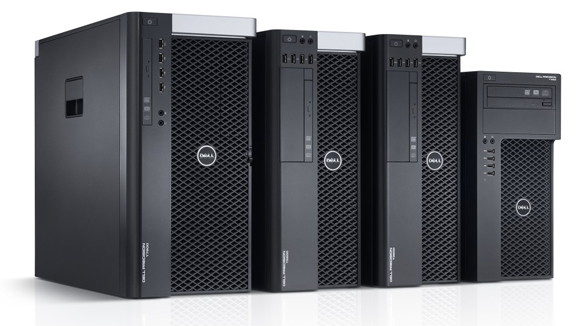
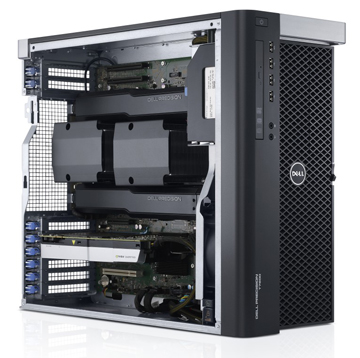
The new Dell Precision T7600 tower workstation, part of the company's workstation lineup released in mid-April, features a PC-over-IP option, delivered via what Dell calls "a true zero-client communication solution." The idea is to let you keep the workstation in a server room elsewhere while you work with just a keyboard, a mouse, and a display panel plugged into the client device, dubbed FX100.
The PC-over-IP device has no fan or driver, giving you a way to literally distance yourself from the heat and noise of a typical workstation. With audio/video input/out, FX100 gives you the option to connect to two displays. The client device communicates with the remote workstation through a PCIe remote access host card, housed in the host computer.
As for the workstation itself, T7600 is rack-mountable, designed for the Dell PowerEdge server rack. The new chassis design gives you access to the hard drive from the front, with quick-release design. "Designed for customers in data intensive fields like video editing who need to swap out hard drives easily and military and research organizations who need to store sensitive data in a secure location at the end of the day, it comes with up to four 3.5-inch hard drives or eight 2.5-inch hard drives," Dell wrote.
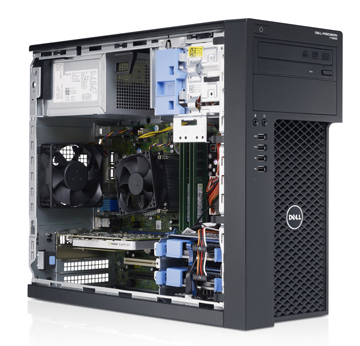
In the same week, Dell also rolled out T5600, T3600, and T1650 workstations.
T7600 is distinguished by its multi-GPU setup, comprising a NVIDIA Quadro 6000 and two NVIDIA Tesla C2075. Similarly, the T5600 and T3600 also feature both Quadro and Tesla GPUs, housed within the same unit.
The multiple GPU setup represents NVIDIA's Maximus technology, which proposes the use of Quadro GPU for graphics-heavy interactive applications (such as 3D CAD modeling and rendering programs) and Tesla GPUs for multi-threaded HPC jobs (such as simulation and analysis programs).
In a typical PC, running a computing intensive program such as rendering software or FEA software can consume all available processing power, effectively bringing interactive works to a crawl. NVIDIA's multiple GPU setup is expected to remedy the bottleneck by dividing the jobs among additional computing cores available on the GPUs. (For more, read "NVIDIA Maximus Unveiled," November 14, 2011.)
The last workstation, T1650, is Dell's new entry-level workstation, certified for 2D/3D CAD and photo-editing applications.


Kenneth Wong is Digital Engineering's resident blogger and senior editor. Email him at [email protected] or share your thoughts or suggestions at digitaleng.news/facebook.
Follow DE
Join over 90,000 engineering professionals who get fresh engineering news as soon as it is published.






About Us · Contact Us · Editorial Team · Advertising · Privacy Policy · Subscriber Services · © 2026 Digital Engineering 24/7 · Peerless Media