Helping design and engineering professionals discover, evaluate and specify technologies and processes that shorten the design cycle and enable success.



Cut Retrieval-Augmented Generation (RAG) Hallucinations by 50%
Most teams hit the same wall with enterprise AI: LLMs that hallucinate, pipelines that don’t scale, and infrastructure that’s harder to design than the models themselves.

What Is Intelligent BOM Management? A Guide to Smarter Product Development
Learn how intelligent Bill of Materials (BOM) management helps teams collaborate, reduce errors, and bring innovative products to market faster with cloud-based PLM tools.
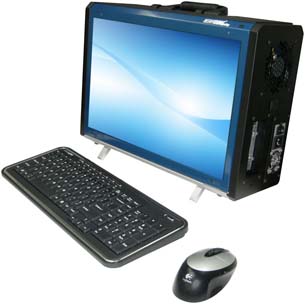 |
NextComputing has announced the addition of the 2nd Generation Intel Core processor family to its Radius all-in-one portable workstations. By adding these latest processors, based on Intel’s newly redesigned micro-architecture, code-named “Sandy Bridge,” NextComputing’s customers can expect improved performance for processing-intensive applications.
Based on Intel’s 32nm process, the new architecture enables better performance at higher clock speeds while consuming less power than the previous generation Intel Core processors. These 2nd Generation processors also include an on-die graphics processing unit (GPU), allowing the processor to adjust its performance and power consumption depending on an application’s needs for general purpose processing, graphics, or both. In addition, features such as optimized Intel Turbo Boost and Intel Hyper-Threading technology offer intelligent core clock-speed throttling and multi-threading capabilities respectively, giving power users a performance boost.
NextComputing’s Radius series portable workstations feature Intel Core i7 processing, multiple full-length/full-height PCI Express slots, and multiple terabytes of internal and removable storage in a briefcase-sized system with integrated display.
For more information, visit NextComputing.
Sources: Press materials received from the company and additional information gleaned from the company's website.


DE's editors contribute news and new product announcements to Digital Engineering. Press releases may be sent to them via [email protected].
Follow DE
Join over 90,000 engineering professionals who get fresh engineering news as soon as it is published.






About Us · Contact Us · Editorial Team · Advertising · Privacy Policy · Subscriber Services · © 2026 Digital Engineering 24/7 · Peerless Media