Helping design and engineering professionals discover, evaluate and specify technologies and processes that shorten the design cycle and enable success.



May 2026 Special Focus: Artificial Intelligence in Design and Simulation
In this Special Focus Issue, learn about the latest developments in the integration of artificial intelligence into engineering workflows.

Design & Simulation Software Guide 2025
In this Special Issue, Digital Engineering presents its second annual guide to design and simulation software vendors.
This week, Bob Pette, VP and GM of Enterprise Platforms, NVIDIA, kicked off the NVIDIA AI Summit in Washington D.C. with his keynote, titled "The Transformative Power of Accelerated Computing and AI." He called ChatGPT "the Big Bang of AI." If so, NVIDIA is behind the Big Bang.
"In 2017 [NVIDIA CEO] Jensen [Huang] held up the first RTX with Turing processor, the first GPU to have graphic shaders, computational units, and Tensor cores ... Those tensor cores are essential to accelerating AI," Pette said.
He also said, "We’re designing our systems with not just performance in mind, but with energy efficiency in mind.” The key, he pointed out, was in the CUDA programming language. “CUDA enables acceleration ... It also turns out to be one of the most impressive ways to reduce energy consumption,” he said.
Huang appeared in a video during the keynote. He said demand for AI increasing "as the world modernizes traditional data centers into generative AI factories. Foxconn, the world's largest electronics manufacturer, is gearing up to meet this demand by building robotic factories with Nvidia Omniverse and AI. Factory planners use Omniverse to integrate facility and equipment data from leading industry applications like Siemens Teamcenter X and Autodesk Revit."
NVIDIA continues to push its NIMs (NVIDIA Inferencing Microservices) as the foundation for AI-driven tasks, from natural-language processing to simulation. It recently expanded its partnership with Accenture to provide AI services to enterprises.
During the summit, Taiwan-based semiconductor maker TSCM announced, it is "moving to production with NVIDIA’s computational lithography platform, called cuLitho, to accelerate manufacturing and push the limits of physics for the next generation of advanced semiconductor chips."
Computational lithography--the transfer of circuitry onto silicon--is a critical step in semiconductor manufacturing. It's highly compute-intensive, electromagnetic physics, photochemistry, and computational geometry. "A typical mask set for a chip can take 30 million or more hours of CPU compute time," NVIDIA estimates. "With accelerated computing, 350 NVIDIA H100 Tensor Core GPU-based systems can now replace 40,000 CPU systems ..."
At the summit, NVIDIA announced a new NVIDIA AI Tech Community initiative in partnership with Carnegie Mellon University and the University of Pittsburgh. The company writes, "NVIDIA’s Joint Center with Carnegie Mellon University (CMU) for Robotics, Autonomy, and AI will equip higher-education faculty, students, and researchers with the latest technologies and boost innovation in the fields of AI and robotics. NVIDIA’s Joint Center with the University of Pittsburgh for AI and Intelligent Systems will focus on computational opportunities across the health sciences, including applications of AI in clinical medicine and biomanufacturing."
MITRE, a spinoff of the MIT Lincoln Laboratory, also announced a partnership with Mcity at the University of Michigan to develop a virtual and physical autonomous vehicle (AV) validation platform for industry deployment. Mcity Test Facility is a real-world AV test environment, but it also exists as a digital twin. The environment is built in NVIDIA Omniverse.
Henry Liu, University of Michigan’s professor of civil engineering and director of Mcity, said, "Safety critical situations, like accidents, are a low probability in real life, so if you test your autonomous vehicle in the real world, the car doesn’t have enough chances to experience these situations." For more on Mcity, read "Seeking Misbehaving Virtual Drivers," May 2023.
According to NVIDIA, "A core piece of this collaboration is sensor simulation, which models the physics and behavior of cameras, lidars, radars and ultrasonic sensors on a physical vehicle, as well as how these sensors interact with their surroundings."
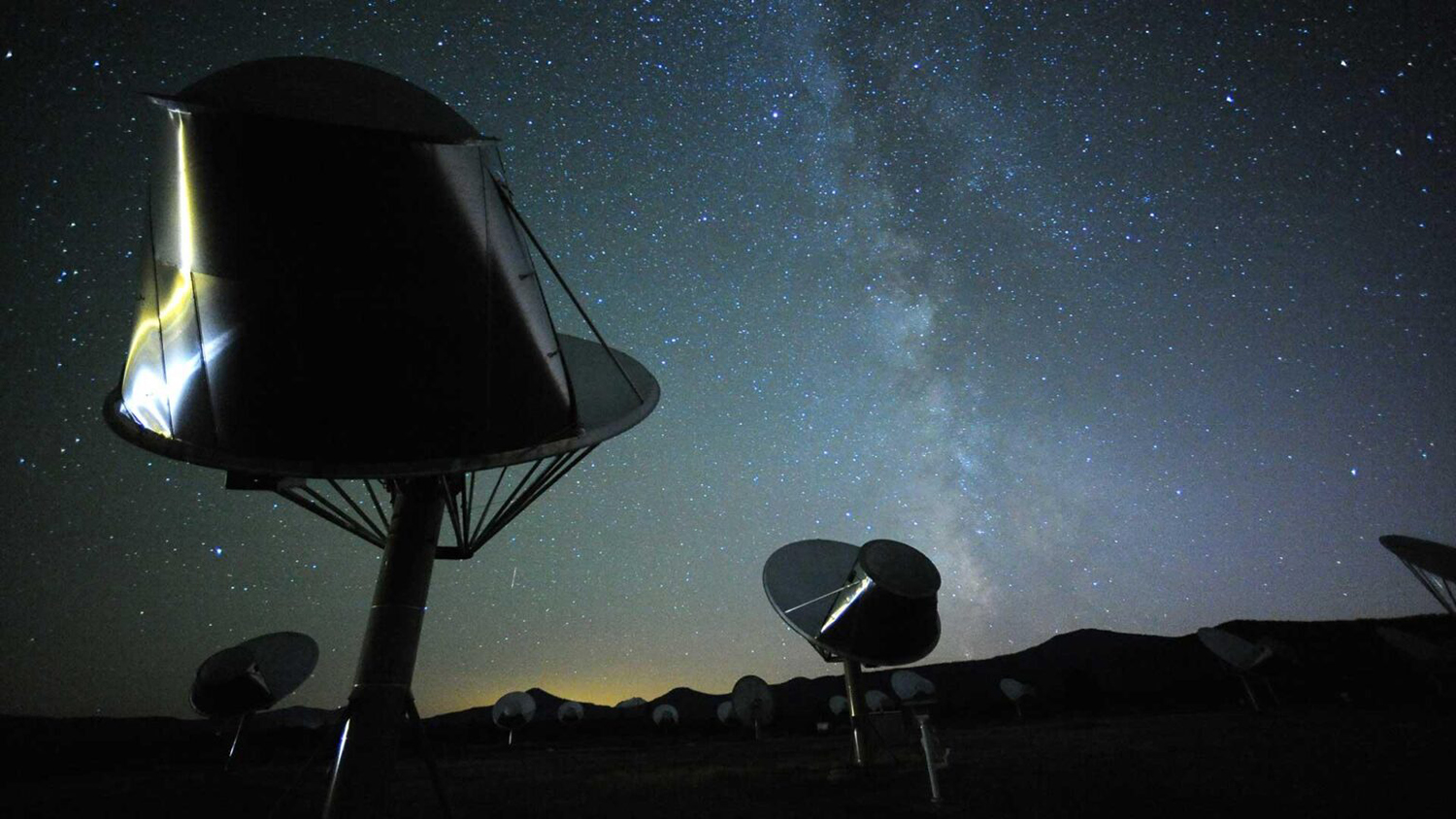
SETI Institute's goal is to answer the negging question: Do aliens exist? Much of its work revolves around detecting fast radio bursts from distant galaxies. Now, NVIDIA GPUs are added to SETI's detection toolset. "Researchers at the SETI Institute became the first to apply AI to the real-time direct detection of faint radio signals from space. Their advances in radio astronomy are available for any field that applies accelerated computing and AI," NVIDIA reveals. According to the company, "SETI Institute researchers had been using NVIDIA GPUs for years to accelerate the algorithms that separate signals from background noise. Now they thought there was potential to do more."


Since its founding in 1993, NVIDIA (NASDAQ: NVDA) has been a pioneer in accelerated computing. The company’s invention of the GPU in 1999 sparked the growth of the PC gaming market, redefined computer graphics, ignited the era of modern AI and…

Cut Retrieval-Augmented Generation (RAG) Hallucinations by 50%
Most teams hit the same wall with enterprise AI: LLMs that hallucinate, pipelines that don’t scale, and infrastructure that’s harder to design than the models themselves.

Kenneth Wong is Digital Engineering's resident blogger and senior editor. Email him at [email protected] or share your thoughts or suggestions at digitaleng.news/facebook.
Follow DE
Join over 90,000 engineering professionals who get fresh engineering news as soon as it is published.






About Us · Contact Us · Editorial Team · Advertising · Privacy Policy · Subscriber Services · © 2026 Digital Engineering 24/7 · Peerless Media