Helping design and engineering professionals discover, evaluate and specify technologies and processes that shorten the design cycle and enable success.



Digital Engineering April 2026
In the latest issue of Digital Engineering, we take a look at the latest innovations in design for additive manufacturing, including the use of natural language inputs, social media cosplayers, and AI integration. The issue also includes a feature…

January Special Focus Issue: Design for Additive
In this Special Focus Issue of Digital Engineering, learn about the latest advancements in design for additive manufacturing, including new software tools, additive in automotive, custom medical devices, and more.
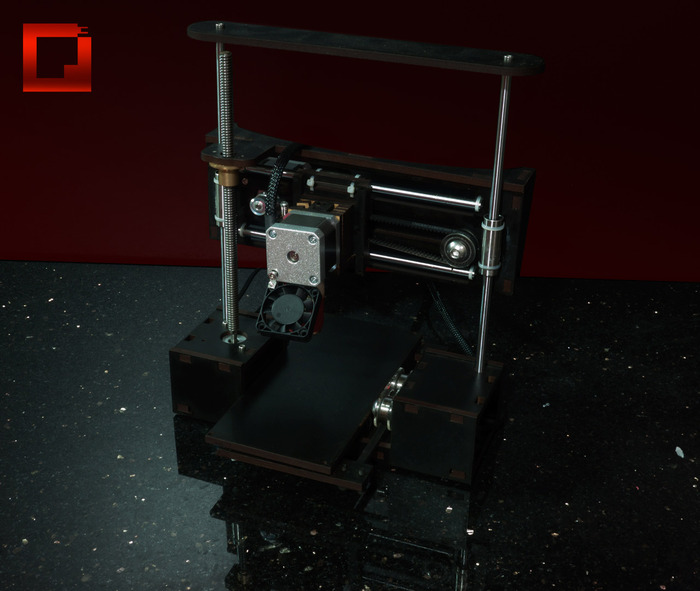
The QU-BD One Up 3D printer is a standard material extrusion printer, of the sort built by MakerBot, the kings of AM systems originally built on open source architecture. QU-BD, the Arkansas-based company behind the new system, does have a gimmick of sorts that should at least drive initial interest in its 3D printer. An entire QU-BD One Up kit can be had for $200.
I’m not generally a fan of AM systems built from kits. I don’t suppose most people have the ability or inclination to build a new electronic device from parts. Further, I guess most people with the ability or inclination are hobbyists for whom cobbling a device together based on open source design specs and with parts gathered from disparate sources is part of the fun.
That aside, $200 is a good deal for a 3D printer. I’m not sure you could buy the parts to assemble one on your own for that small of an investment. The company also claims it will be filming a video instructing users on how to assemble the QU-BD One Up, which is a smart move. In the end, though, neither price nor assembly assistance matter if the printer itself is subpar, so let’s have a look at specs.
The QU-BD One Up has a print speed of 100mm/s, and a build envelope of 100 x 100 x 125mm (4 x 4 x 5 in.). The build speed is reasonable, but the build envelope seems a bit on the small side for contemporary AM systems. Resolution tops out at 50µ, which is actually a bit better than MakerBot’s Replicator 2. The system is currently only capable of building objects from 1.75mm PLA. For an additional $79, you can upgrade to the QU-BD Two Up, which has the same general specs as the One Up, but with a build envelope of 175 x 175 x 125mm (6.8 x 6.8 x 5 in.).
My general conclusion is that if you or a friend wants a 3D printer to mess around with, and are confident in your ability to properly assemble a full AM system, QU-BD offers a good deal. I’m less certain about the company’s claims its systems are “production ready,” as the build envelope is just too small for many applications.
Below you’ll find the Kickstarter video from QU-BD.
Sources: QU-BD, Kickstarter


John Newman is a Digital Engineering contributor who focuses on 3D printing. Contact him via [email protected] and read his posts on Rapid Ready Technology.
Follow DE
Join over 90,000 engineering professionals who get fresh engineering news as soon as it is published.






About Us · Contact Us · Editorial Team · Advertising · Privacy Policy · Subscriber Services · © 2026 Digital Engineering 24/7 · Peerless Media