Helping design and engineering professionals discover, evaluate and specify technologies and processes that shorten the design cycle and enable success.



Digital Engineering April 2026
In the latest issue of Digital Engineering, we take a look at the latest innovations in design for additive manufacturing, including the use of natural language inputs, social media cosplayers, and AI integration. The issue also includes a feature…

January Special Focus Issue: Design for Additive
In this Special Focus Issue of Digital Engineering, learn about the latest advancements in design for additive manufacturing, including new software tools, additive in automotive, custom medical devices, and more.
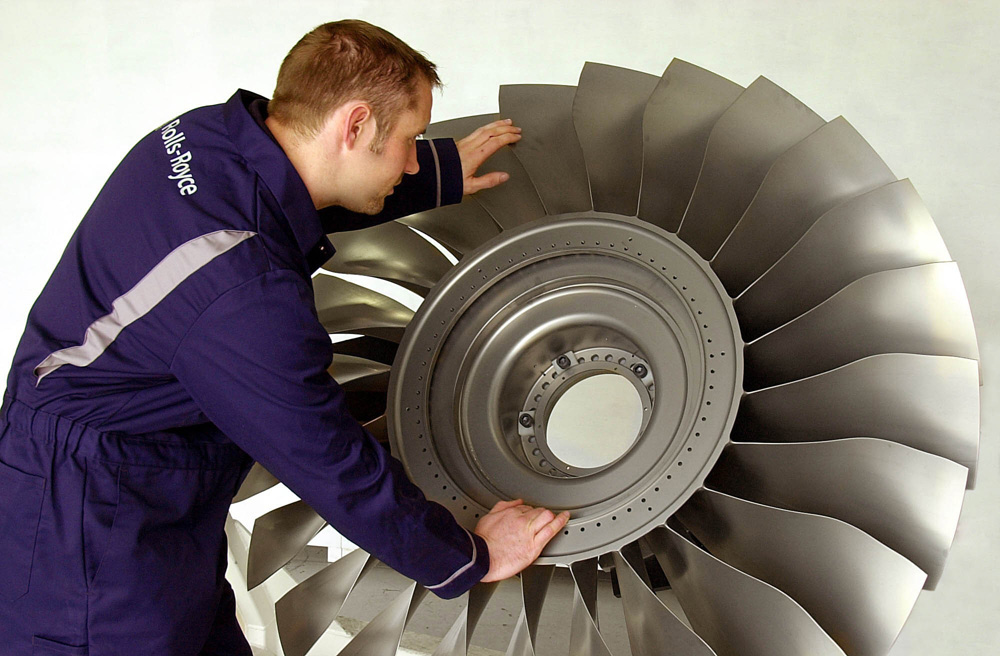
One of those companies is Rolls Royce. The company’s civil aerospace division is currently at work devising ways of using 3D printing to build various jet engine parts. Like other aerospace companies, Rolls Royce is interested in AM for its capability to build complex parts more quickly, with less material waste, and from lighter materials.

“3D printing opens up new possibilities, new design space,” said Henner Wapenhans, Rolls Royce head of technology strategy. “There are studies that show one can create better lightweight structures, because you just take the analogy of what nature does and how bones are built up – they’re not solid material. And so things that are simple things like brackets can be made a lot lighter.”
Along with providing lighter parts, Wapenhans said access to AM could save Rolls Royce money on storage. Instead of attempting to carry every conceivable part required to build or repair jet engines, some necessary components could be stored digitally and printed out upon demand.
3D printing offers time savings as well. Parts that might require weeks or months to produce through traditional manufacturing methods can be completed in hours or days.
“One of the great advantages in the aerospace world is that some of these parts that we make have very long lead times, because of the tooling process that’s got to [happen], and then it takes potentially 18 months to get the first part after placing an order – versus printing it, which could be done quite rapidly,” added Wapenhans. “Even if it takes, you know, a week to print, that’s still a lot faster.”
Rolls Royce’s interest in AM is likely the result, at least partially, of the Merlin Project, began in 2010, which studied parts built with laser sintering, and the potential for 3D printed aerospace parts. Rolls Royce was one of a number of partners in the study, alongside with Fraunhofer, a noted European AM research organization.
If you have some time, below you’ll find an interesting documentary about how Rolls Royce currently builds jet engines.
Sources: Merlin Project, Rolls Royce, Daily Mail


John Newman is a Digital Engineering contributor who focuses on 3D printing. Contact him via [email protected] and read his posts on Rapid Ready Technology.
Follow DE
Join over 90,000 engineering professionals who get fresh engineering news as soon as it is published.






About Us · Contact Us · Editorial Team · Advertising · Privacy Policy · Subscriber Services · © 2026 Digital Engineering 24/7 · Peerless Media