Helping design and engineering professionals discover, evaluate and specify technologies and processes that shorten the design cycle and enable success.



Digital Engineering April 2026
In the latest issue of Digital Engineering, we take a look at the latest innovations in design for additive manufacturing, including the use of natural language inputs, social media cosplayers, and AI integration. The issue also includes a feature…

January Special Focus Issue: Design for Additive
In this Special Focus Issue of Digital Engineering, learn about the latest advancements in design for additive manufacturing, including new software tools, additive in automotive, custom medical devices, and more.
A number of different airplane manufacturers have invested in AM, and now French helicopter manufacturer Safran Turbomeca will be joining their ranks. The company is in the process of setting up brand new 3D printing facilities at its manufacturing center in Bordes.
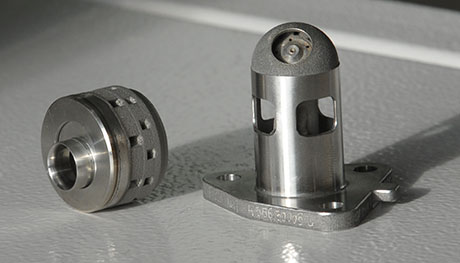
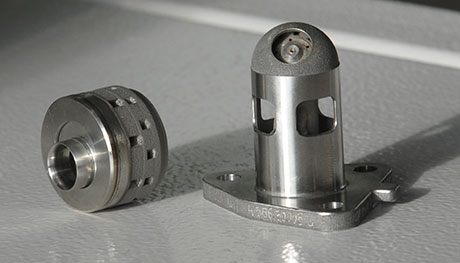 Turbomeca's new fuel-injector nozzles will be 3D printed, saving both time and costs. Courtesy of Safran.
From the press release:
Arrano test and production engines will feature fuel injector nozzles made using selective laser melting (SLM) techniques. This leading-edge manufacturing process will also be used to manufacture Ardiden 3 combustor swirlers. These engines are Turbomeca’s latest models and amongst the most advanced turboshafts ever designed.
Turbomeca chose AM to leverage its capacity for reducing overall part weight and complexity. Rather than producing a fuel-injector nozzle that is potentially comprised of dozens of parts, the company is capable of 3D printing the fuel-injector nozzle in one build. If that particular idea seems familiar, it may be because we reported on GE Aviation doing it last year.
Along with parts production, buying into new advanced manufacturing methods such as AM is part of Turbomeca’s “Future Line” program, which is intended to modernize its manufacturing capabilities. The company will also be introducing HVOF (High Velocity Oxy-Fuel) coatings, a process meant to improve its compressor and turbine blade manufacturing capabilities at Bordes.
Along with the aforementioned GE Aviation, Turbomeca will be joining companies the likes of Rolls Royce and Lockheed Martin that have already invested in AM. Nearly universally, these companies have reported on savings in both material costs and time to market, thanks to AM.
Below you’ll find a short video about one of Turbomeca’s newest helicopter engines, the Ardiden 3, in which you’ll shortly find 3D printed parts.
Source: Safran


John Newman is a Digital Engineering contributor who focuses on 3D printing. Contact him via [email protected] and read his posts on Rapid Ready Technology.
Follow DE
Join over 90,000 engineering professionals who get fresh engineering news as soon as it is published.






About Us · Contact Us · Editorial Team · Advertising · Privacy Policy · Subscriber Services · © 2026 Digital Engineering 24/7 · Peerless Media