Helping design and engineering professionals discover, evaluate and specify technologies and processes that shorten the design cycle and enable success.


Alert!
Digital Engineering ceased publication on July 1, 2026. This website remains available as an archive of engineering content.
For inquiries or information, please email [email protected].

Cut Retrieval-Augmented Generation (RAG) Hallucinations by 50%
Most teams hit the same wall with enterprise AI: LLMs that hallucinate, pipelines that don’t scale, and infrastructure that’s harder to design than the models themselves.

What Is Intelligent BOM Management? A Guide to Smarter Product Development
Learn how intelligent Bill of Materials (BOM) management helps teams collaborate, reduce errors, and bring innovative products to market faster with cloud-based PLM tools.
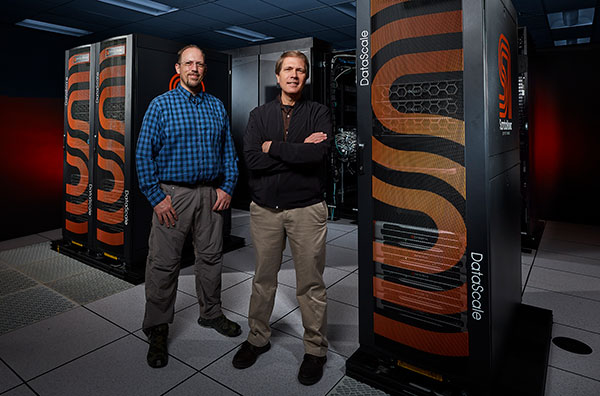
SambaNova Systems, provider of domain-specific, pre-trained foundation models to underpin generative artificial intelligence, and Lawrence Livermore National Laboratory (LLNL), report that they’re scaling up collaboration to bring SambaNova spatial data flow accelerator into LLNL’s Computing Center. This solution upgrades LLNL’s cognitive simulation program by improving the speed and accuracy of scientific research.
LLNL is a federal research institution that leverages high-performance computing (HPC) across its research. The institution has studied how deep neural network hardware architectures can accelerate traditional physics-based simulations as part of the National Nuclear Security Administration’s (NNSA’s) Advanced Simulation and Computing program.
Computer modeling and experimentation are said to be essential to scientific research. Models simulate natural phenomena and experiments. However, they face two fundamental challenges. First, even the most complex models do not achieve sufficient fidelity to simulate reality. Second, modern experiments regularly generate overwhelming amounts of data. To address these issues, LLNL researchers are working on cognitive simulation (CogSim), leveraging the SambaNova systems to improve the fidelity of models as well as to manage volumes of data.
"Multiphysics simulation is complex,” says Brian Van Essen, computer scientist at LLNL and Informatics Group Lead. “Our inertial confinement fusion (ICF) experiments generate huge volumes of data. Yet, connecting the underlying physics to the experimental data is an extremely difficult scientific challenge. AI techniques hold the key to teaching existing models to better mirror experimental models and to create an improved feedback loop between the experiments and models. The SambaNova system helps us create these cognitive simulations.”
LLNL has been working with SambaNova since 2020. The collaboration started as a proof-of-concept and evolved to creating prototypes of the final solution together. The first stage of the collaboration involved tight integration of SambaNova DataScale hardware input directly into the Corona supercomputing cluster.
This integration first enabled the use of AI calculations to improve overall speed, performance and productivity. It created a heterogeneous system architecture that integrates SambaNova’s system into the existing supercomputing cluster to support efficient CogSim. The next stage allows the heterogeneous system to be less tightly integrated with the supercomputing clusters. This design supports a wider selection of workloads, allowing LLNL to use a wider range of traditional resources, a more generalized solution that expands the possible use cases.
“We are looking to leverage AI to improve speed, energy use, and data motion,” says Bronis R. de Supinski, chief technical officer for Livermore Computing (LC), which operates LLNL’s Computing Center. “SambaNova has a different architecture than CPU or GPU-based systems, which we are leveraging to create an enhanced approach for CogSim that leverages a heterogeneous system combining the SambaNova DataScale with our supercomputing clusters.”
“Scientific discoveries rely on speed, accuracy and collaboration. We’ve built an incredible partnership to solve complex scientific issues—together,” says Rodrigo Liang, CEO of SambaNova Systems. “We’re excited to leverage SambaNova’s agility, power and flexibility to fulfill Lawrence Livermore National Laboratory’s mission of science in the national interest.”
By leveraging SambaNova’s architecture, LLNL’s need to address critical use cases in the scientific community demonstrates the opportunity and need to have a full stack AI solution.
Sources: Press materials received from the company and additional information gleaned from the company’s website.


DE's editors contribute news and new product announcements to Digital Engineering. Press releases may be sent to them via [email protected].
Follow DE






About Us · Contact Us · Editorial Team · Advertising · Privacy Policy · Subscriber Services · © 2026 Digital Engineering 24/7 · Peerless Media