Helping design and engineering professionals discover, evaluate and specify technologies and processes that shorten the design cycle and enable success.



Digital Engineering April 2026
In the latest issue of Digital Engineering, we take a look at the latest innovations in design for additive manufacturing, including the use of natural language inputs, social media cosplayers, and AI integration. The issue also includes a feature…

January Special Focus Issue: Design for Additive
In this Special Focus Issue of Digital Engineering, learn about the latest advancements in design for additive manufacturing, including new software tools, additive in automotive, custom medical devices, and more.
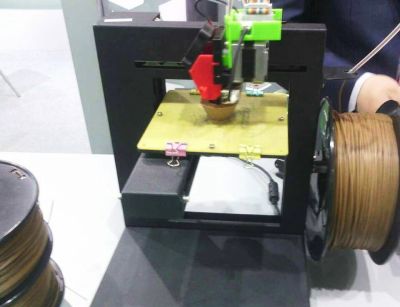
A Chinese manufacturer is staking claim to a development that could dramatically impact the cost of 3D printing materials. Jiangsu Jinghe Hi-Tech Co. has developed a patent-pending technology that essentially spins rice, wheat, or corn stalks into a straw-based plastic material it claims is suitable for 3D printing. The straw is shredded fine and then mixed with polypropylene and various other materials and then shaped into evenly-sized pellets. The pellets can then be loaded into a 3D printer, heated to 160 to 180 degrees Celsius, and extruded into a filament appropriate for printing.
The firm says it can make its straw plastic for close to half the cost of more traditional materials used in 3D printer filaments on a per-ton basis, like ABS plastic or PLA. The current cost of a spool of 3D printer filament ranges from $40 to $100 depending on the material, and Jiangsu Jinghe Hi-Tech says that this technology paves the way for a $10 spool of filament somewhere down the line.
Beyond the obvious cost advantages, the straw 3D printer filaments also have some significant environmental benefits. While the most commonly-used plastics in 3D printing such as PLA are biodegradable, the processes to create the plastics are not. The Chinese manufacturer claims that producing 14,000 tons of the straw-based filament can reduce carbon dioxide emissions by 22,400 tons every year simply by cutting back on synthetic plastics production.
The manufacturer also touts environmental benefits related to the harvest and production of the straw materials. Today, the straw generated from the production of crop plants is treated as biomass and burned, fueling air pollution and wasting a potential feedstock. In recognition of the problems, the Chinese government has issued a ban on straw burning. The 3D filament would provide an alternative use case for the straw and provide Chinese farmers with a potential revenue stream, according to the company.
From a cost perspective, there are huge advantages, a Jiangsu Jinghe Hi-Tech spokesman maintains. ABS raw materials cost around $2,400 per ton in the market, and PLA, which requires a more complex production process, is slightly more costly at $3,200 a ton. Comparatively, the straw-based material will cost around $1,600 per ton, the company says.
China has been fairly aggressive in the 3D printing market as of late. Recently, a Chinese construction firm, WinSun, used massive 3D printers to build 10 full-size homes in China in just 24 hours. WinSun's printer, measuring 490 feet long, 33 feet wide, and 20 feet deep, used recycled construction waste and industrial waste to build the units, which were located in Shanghai. [www.rapidreadytech.com/2014/04/3d-printed-pre-fab-housing-erected-in-shanghai/]
Beyond the Chinese market, there are a variety of advances underway in the area of 3D printing materials. In addition to all the widely heralded work being done in the health care sector with 3D bio-printing of human organs, there have been efforts to expand material variety, encompassing various metals, stone dust, wood, even sand.
For example, Markus Kayser's Solar Sinter Project uses sunlight and sand to produce glass objects. To see it in action, check out this video.
[www.markuskayser.com]


Beth Stackpole is a contributing editor to Digital Engineering. Send e-mail about this article to [email protected].
Follow DE
Join over 90,000 engineering professionals who get fresh engineering news as soon as it is published.






About Us · Contact Us · Editorial Team · Advertising · Privacy Policy · Subscriber Services · © 2026 Digital Engineering 24/7 · Peerless Media