Helping design and engineering professionals discover, evaluate and specify technologies and processes that shorten the design cycle and enable success.


Alert!
Digital Engineering ceased publication on July 1, 2026. This website remains available as an archive of engineering content.
For inquiries or information, please email [email protected].

May 2026 Special Focus: Artificial Intelligence in Design and Simulation
In this Special Focus Issue, learn about the latest developments in the integration of artificial intelligence into engineering workflows.

Design & Simulation Software Guide 2025
In this Special Issue, Digital Engineering presents its second annual guide to design and simulation software vendors.
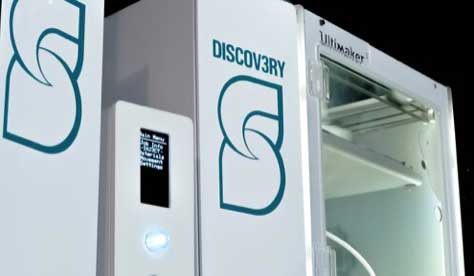
Structur3d —a company in the advanced additive manufacturing market space for soft materials—makes available the Inj3ctor Platform, a new desktop solution for injection molding rubber parts. The company is advancing and solidifying 3D printing’s role within industrial manufacturing by expanding its material capabilities to create new products with factory-grade rubber materials, like silicones and polyurethanes, the company reports.
The Inj3ctor is a solution to combine the principles of injection molding with 3D printing. Using 3D-printed molds, the Inj3ctor uses curated material cartridges to mix and inject 2-component (2K) flexible materials into any customizable shape, enabling turnkey, small-batch manufacturing of rubber materials.
Currently, 3D printed rubbers fail to meet necessary manufacturing standards. The Inj3ctor platform brings desktop injection and 3D printing together to deliver a feasible solution for manufacturing functional parts, the company says.
The solution is also involved in small-batch manufacturing as it reduces the cost and procurement risks for manufacturing rubber parts. Manufacturers have either hand-casted or invested in expensive mass production tools to do this if they didn’t choose to forgo the part altogether in design. This is important as larger manufacturers begin exploring the future of manufacturing custom and on-demand products for consumers. This stands to impact many industries, including automotive, industrial products, aerospace, academia, energy, medical and various consumer products where the buyer customizes some portion of the design, such as custom design in shoes.
“As a team of scientists and chemical engineers, we took a materials approach to 3D printing technology and expanded the printers' material capabilities beyond standard plastics,” says Charles Mire, CEO and co-founder of Structur3d. “Our Inj3ctor platform spotlights our shift to industrial manufacturing markets and demonstrates how additive manufacturing can lead the way toward the factory of the future. The technology opens the door for product developers and manufacturers to accelerate research and prototyping while reducing risk in supply chain procurement and manufacturing.”
Product developers can design a hyper-detailed mold using standard CAD software and 3D print the part with standard, durable or dissolvable plastic. Then users choose from tens of thousands of liquid rubber materials, customizing it based on desired durability, flexibility and cure time. After programming the mixing ratio and injection volume, the Inj3ctor fills in the mold, creating a fully-customized, flexible product.
The first batch of Structur3d’s new Inj3ctor platform for desktop injection molding is preparing for shipment in Q4 2020 to industry 4.0 manufacturers. The Inj3ctor Platform Bundle includes the Inj3ctor, an Ultimaker S5 3D printer, materials for both, and additional accessories and support.
Sources: Press materials received from the company and additional information gleaned from the company’s website.


DE's editors contribute news and new product announcements to Digital Engineering. Press releases may be sent to them via [email protected].
Follow DE
Join over 90,000 engineering professionals who get fresh engineering news as soon as it is published.






About Us · Contact Us · Editorial Team · Advertising · Privacy Policy · Subscriber Services · © 2026 Digital Engineering 24/7 · Peerless Media