Helping design and engineering professionals discover, evaluate and specify technologies and processes that shorten the design cycle and enable success.




May 2026 Special Focus: Artificial Intelligence in Design and Simulation
In this Special Focus Issue, learn about the latest developments in the integration of artificial intelligence into engineering workflows.

April 2026 Special Focus Issue: Generative Design
In this Special Focus Issue, Digital Engineering takes a look at how generative design solutions can be used across different types of design problems and with a variety of manufacturing approaches to accelerate design space exploration, and…
As we reach the end of 2024, Digital Engineering has asked its design and engineering readers once again to provide insight into their use of design and simulation technology.
The technology landscape for engineers has continued to evolve, with a number of mergers and acquisitions in the simulation and design software space as well as in the 3D printing industry; the emergence of artificial intelligence (AI)-based tools for simulation; increased adoption of graphics processing unit (GPU) acceleration across design, simulation and now computer-aided manufacturing (CAM) vendors; and further adoption of cloud and high-performance computing (HPC) solutions for increasingly complex modeling and simulation tasks.
Last year at this time, AI and machine learning (ML) had just emerged as a viable tool for simulation. Over the past 12 months, major vendors like Siemens, Altair, Autodesk, Ansys, Monolith and others have announced AI-based modeling and simulation tools, as well as AI assistants, and chip industry heavyweight NVIDIA unveiled more AI-based solutions that are relevant for designers.
For this year’s survey, we received responses from more than 200 readers. The largest group of respondents described their primary role as product or system design engineering (32%), followed by engineering management (13%), research & development (12%) and corporate management (9%). Respondents were spread among market sectors, with the majority working in aerospace/aviation/defense, industrial machinery and products, electronic products and equipment, and automotive.
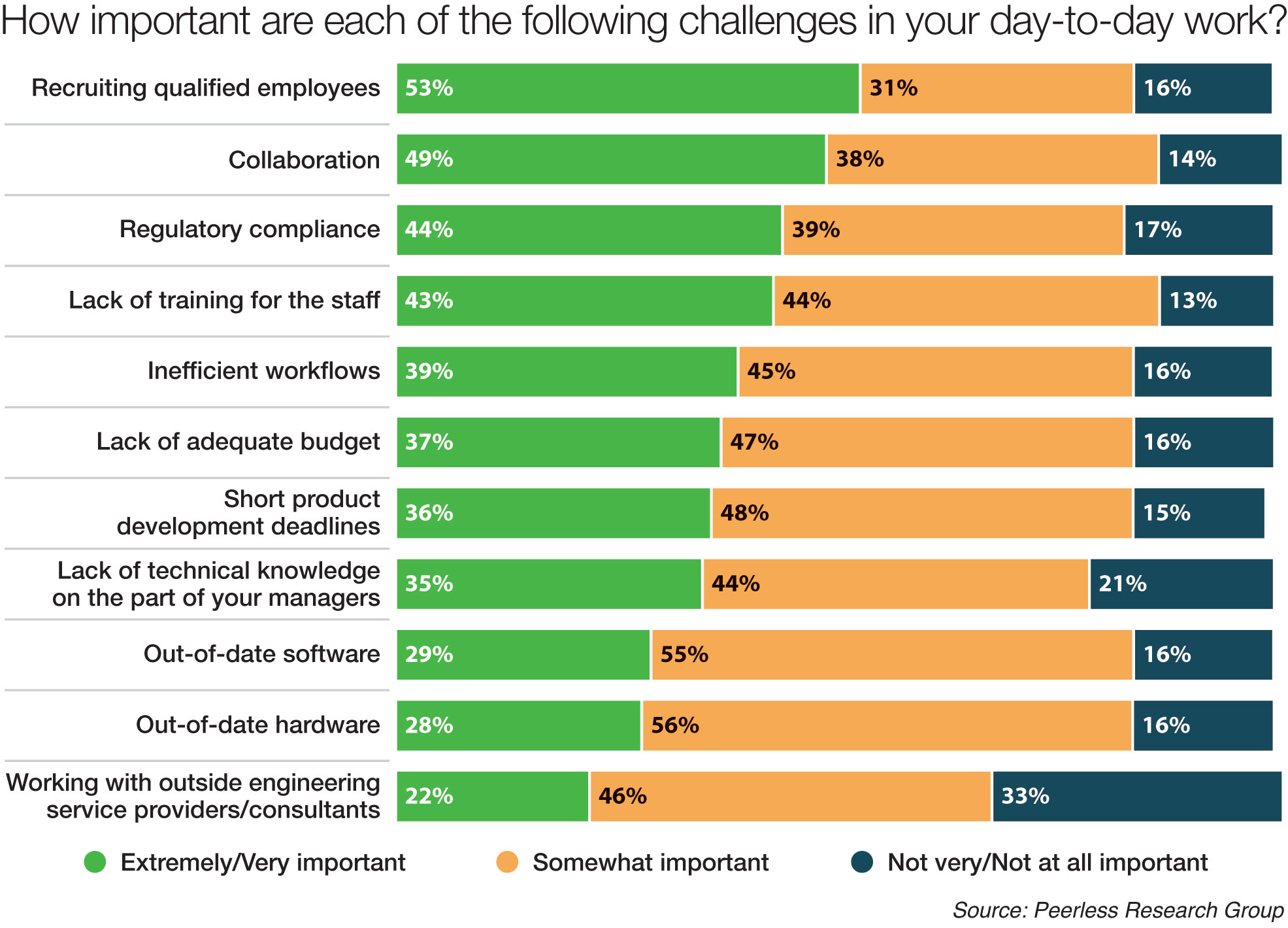
For the second year in a row, respondents listed recruitment and staffing as their biggest challenge, with 84% saying it was extremely or somewhat important (down from 89% last year). Lack of appropriate training for staff and collaboration tied for second at 87%, while short product development deadlines ranked third at 84%. In 2023, the third most common listed challenge was inefficient workflows.
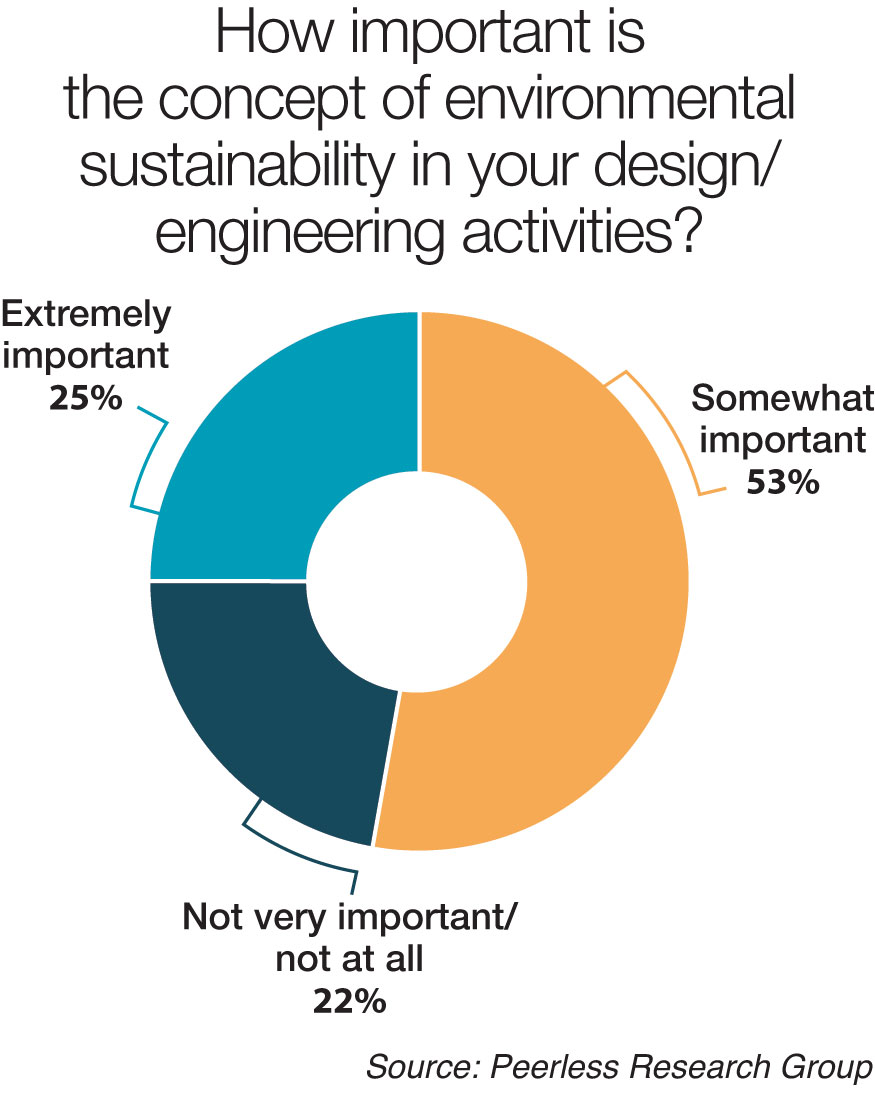
We also asked readers about the importance of sustainability in design. The number of respondents who said sustainability was extremely important dropped from 31% in 2023 to 25% in 2024, while those that thought it was somewhat important rose from 50% to 53%. Respondents who said it was not important at all rose from 19% last year to 22% in the current survey.
We have also seen less focus on sustainability issues among engineering technology vendors, but interestingly, when asked for elaboration from those who did and did not consider sustainability important, we had very few negative comments—in past years, respondents did not hold back when criticizing sustainability initiatives. This year, most of the comments were fairly positive. Here are a few examples:
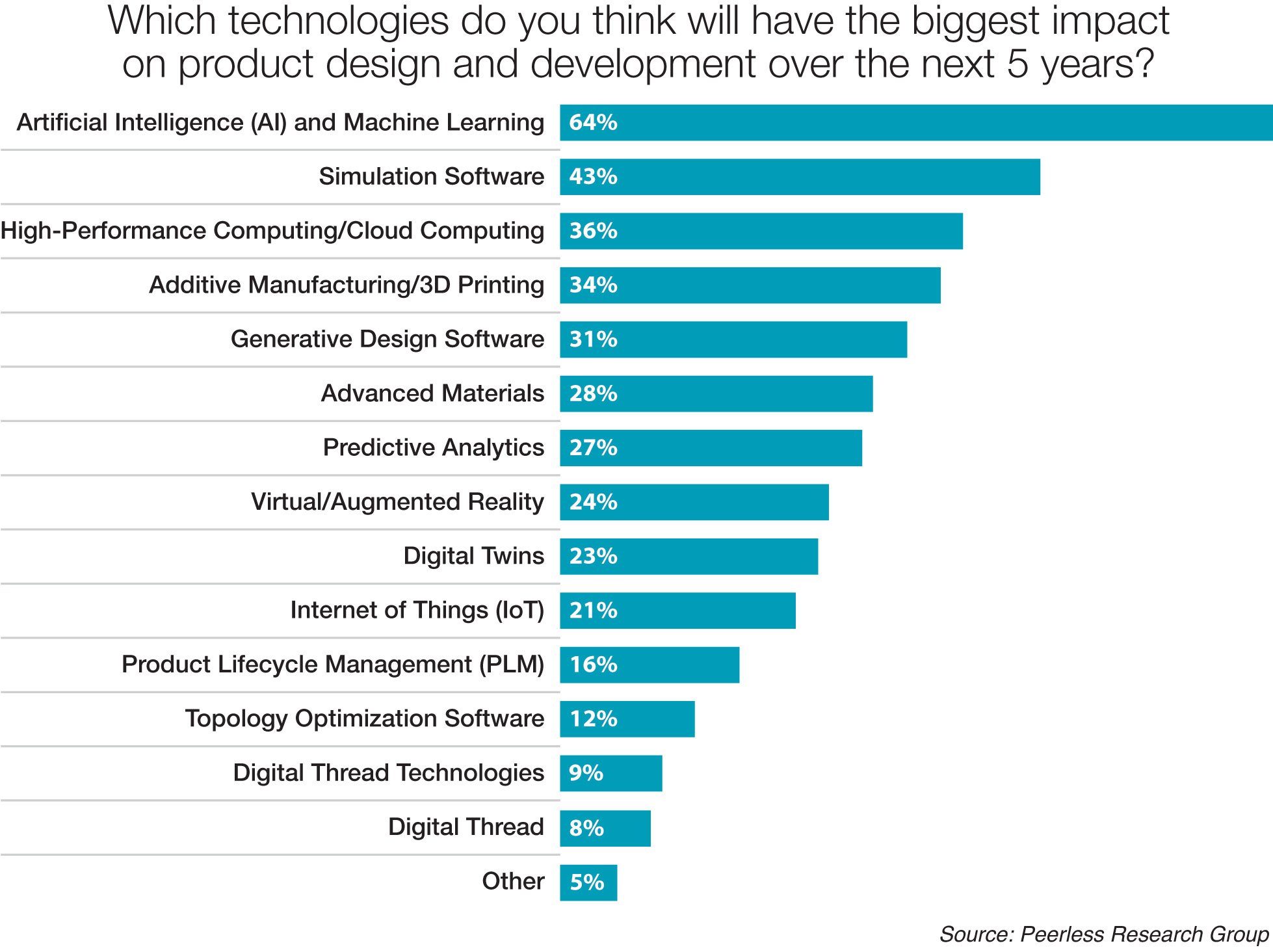
When we asked which technologies readers thought would have the biggest impact on product development in the next five years, AI once again took the top spot at 64% (down slightly from 65% last year). Simulation was second at 43% (up from 38%), followed by HPC/cloud computing (36%—up from 31% last year), additive manufacturing (34%), generative design (31%—up from 29% last year), and advanced materials (28%).
Reader comments on the value and utility of AI in engineering varied from bullish to skeptical:
We again asked readers what technologies they were currently using or developing products for, as well as which technologies they expected to adopt in the next two years. Simulation software once again ranked as the top technology that most readers were currently using, with 56% reporting that they were doing so (up from 50% last year). Additive manufacturing/3D printing was second again at 42%.
Those were followed by product lifecycle management (PLM; 41%), advanced materials and HPC/cloud (tied at 32%), and AI/machine learning (29%—up from 22% last year). HPC/cloud jumped from 22% currently using in 2023 to 32% this year.
In the next two years, 38% of respondents plan to incorporate AI/machine learning in their design/development processes (compared to 35% last year), with predictive analytics, digital twins and generative design tied at around 25% for future deployments. Although virtual/augmented reality current usage was at just 9%, 23% planned to deploy within two years.
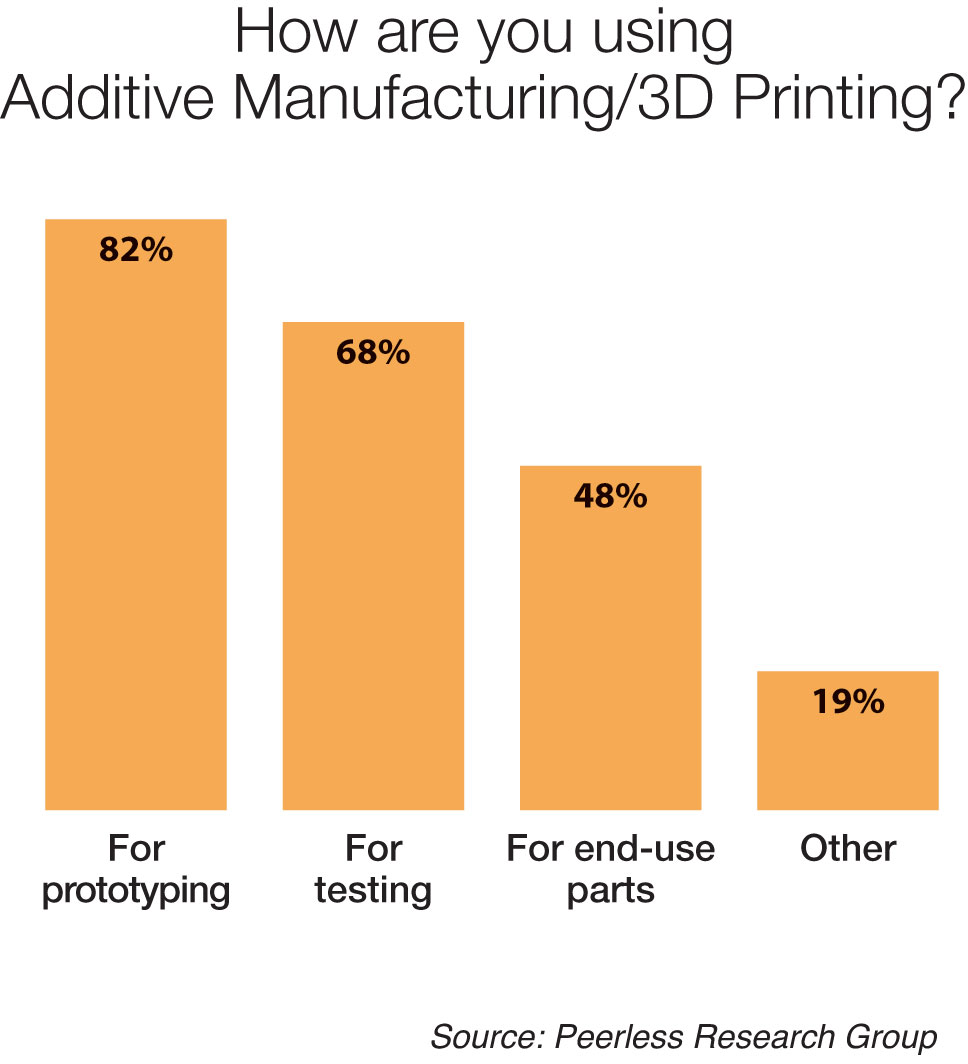
The number of additive manufacturing users that focus primarily on prototyping dropped again this year to 82% from 86% last year (and 89% in 2022). Testing applications were up a lot from 55% last year to 68% this year. End-use part printing rose from 44% of current users to 48%.
Improving product quality jumped to the top of the cost justification list, with 71% saying it was extremely important. Discovering new designs dropped from 72% last year to just 59% this year, tying for second place with shortening product development schedules and reducing product development costs. Other important objectives included fostering innovation, engineering productivity, and reducing manufacturing costs.
When it came to satisfaction with additive manufacturing solution benefits, 54% of users were very satisfied with the technology’s ability to shorten product development schedules, while 45% cited being able to create designs that were not feasible with other technologies. Reducing part complexity was cited by 39% of respondents, followed by reducing development costs (36%).
Respondents also shared their thoughts on the potential of additive manufacturing, along with some examples of how they are currently using the technology.
Generative design adoption is still slow, with just 16% of respondents reporting they are using the technology (up slightly from 14% last year). Moving forward, 26% plan to deploy it in the next two years, again up from 22% last year. When listing objectives for generative design deployments, respondents cited shortening development schedules (61%), manufacturing design that would otherwise not be feasible (43%), and reducing development costs (42%).
Current users said they were most satisfied with generative design’s ability to help them discover new designs (47% were extremely satisfied), followed by fostering innovation (50%) and reducing weight (41%).
Although generative design solutions are being somewhat overshadowed by AI systems, they are much more mature. Respondents had mixed thoughts about the technology:
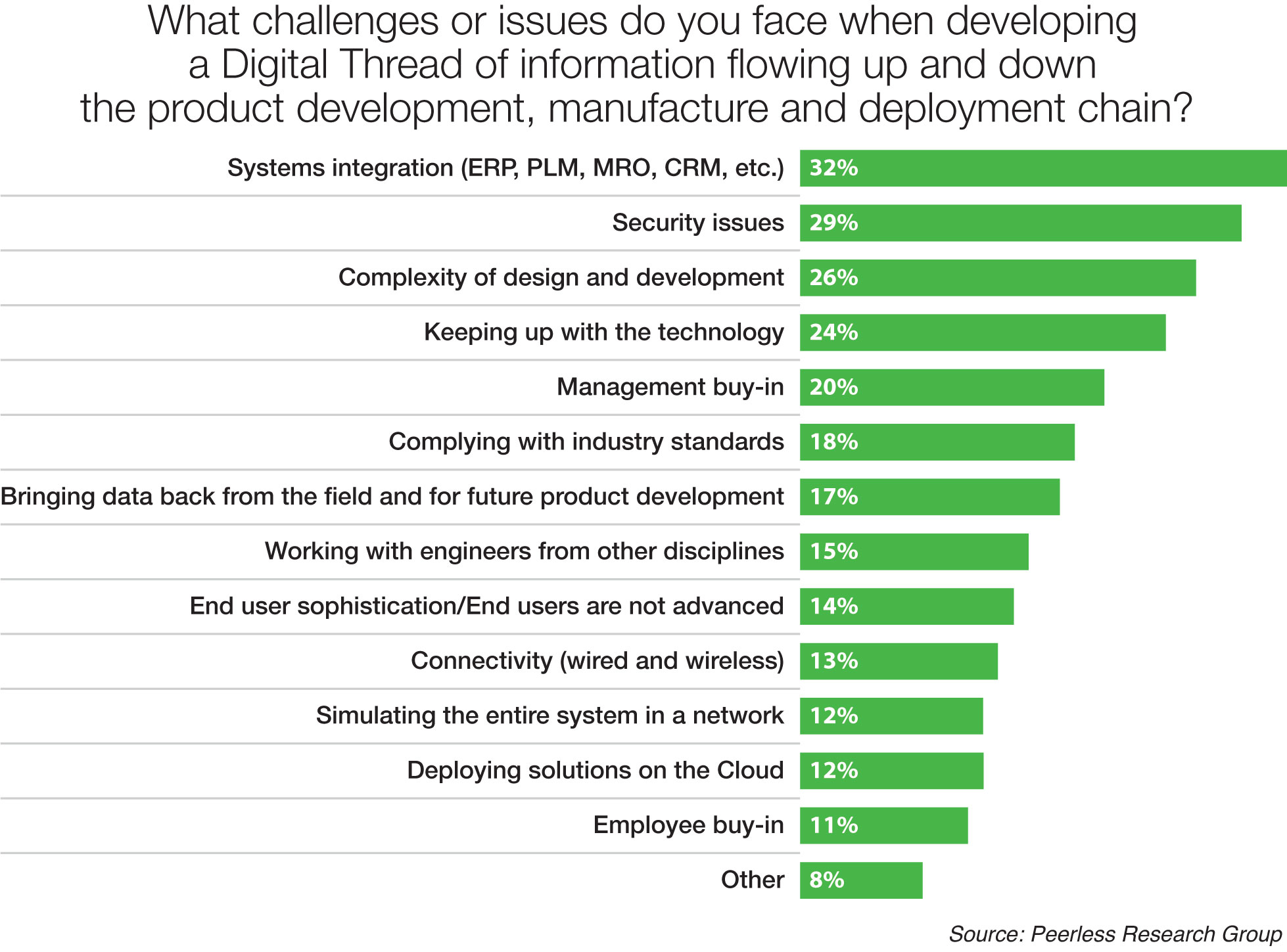
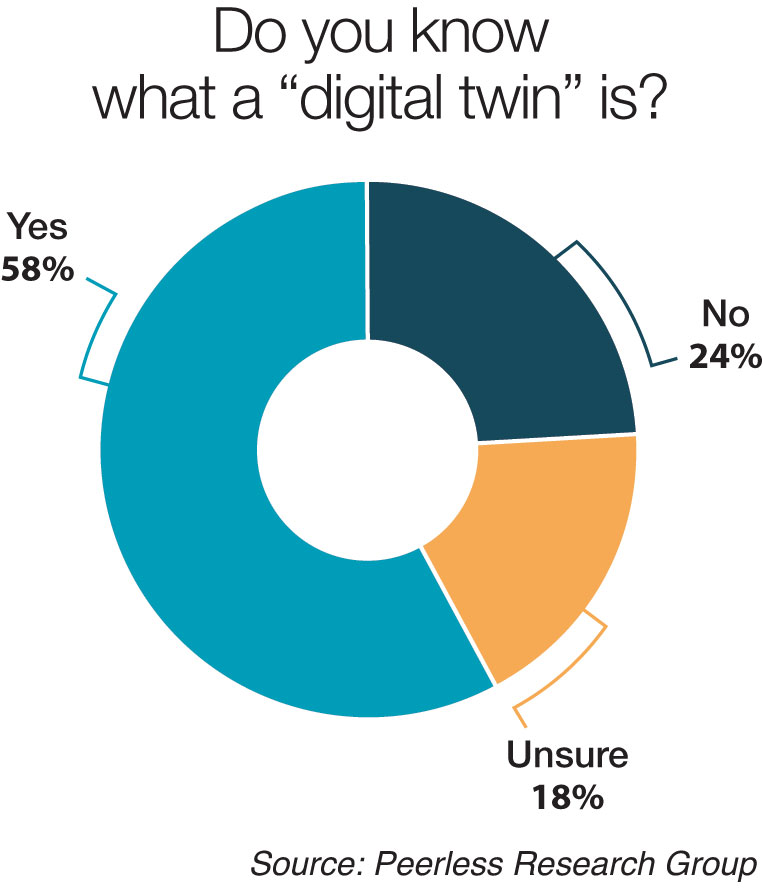
Digital twins are likewise being adopted very slowly, with 58% of respondents reporting that they do actually know what a digital twin is (up from 54% last year). Just 17% of respondents report they are currently using digital twins (up from 14%); 25% reported they plan to deploy digital twins within the next two years (up from 18%). Asked if they were currently using or planning to implement a PLM/product data management or digital thread solution, 40% said yes.
The majority of respondents agree that simulation-led design will be the most likely technology to revolutionize design engineering processes, with 58% answering in the affirmative (up from 54%). AI was second at 55%, followed by additive manufacturing (49%) and HPC/cloud and generative design, which roughly tied at 40% and 39%, respectively.
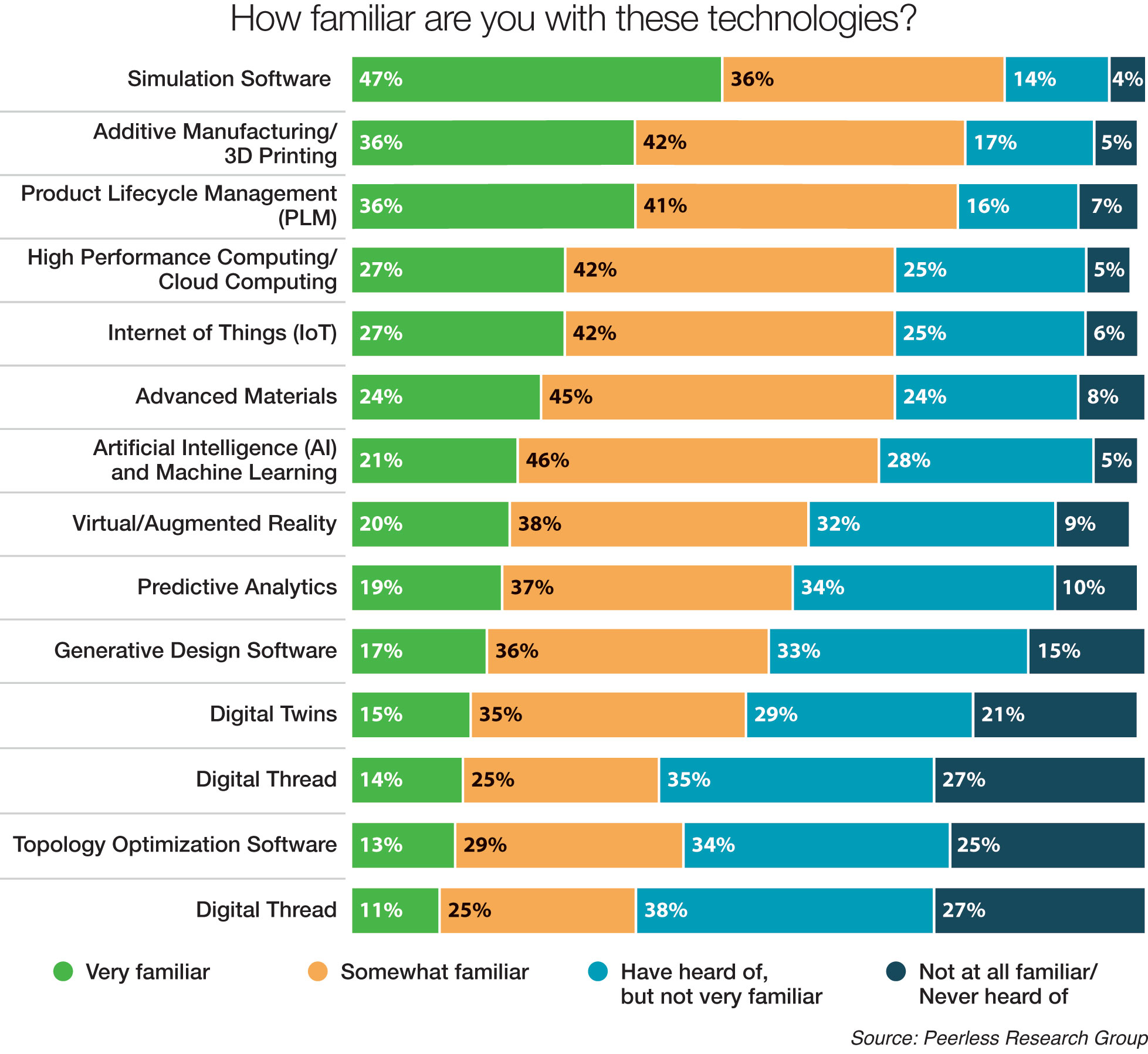
Asked about familiarity with various technologies, simulation again led with 83% of respondents being very or somewhat familiar, followed by additive manufacturing (78%), PLM (77%), and HPC/cloud computing (69%). DE


Brian Albright is the editorial director of Digital Engineering.
Contact him at [email protected].

Join over 90,000 engineering professionals who get fresh engineering news as soon as it is published.






About Us · Contact Us · Editorial Team · Advertising · Privacy Policy · Subscriber Services · © 2026 Digital Engineering 24/7 · Peerless Media