Helping design and engineering professionals discover, evaluate and specify technologies and processes that shorten the design cycle and enable success.



Digital Engineering September 2025
In the September issue of Digital Engineering, we look at trends in engineering education, how engineering schools are handling DfAM, the limitations of ROMs, VR engineering workflows, reports from the Paris Air Show and Hexagon LIVE, and more.
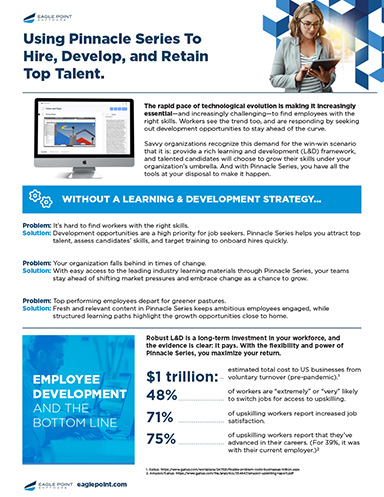
How Pinnacle Series Helps AEC Firms Attract, Train, and Retain Top Talent
Discover how AEC firms use Pinnacle Series to solve hiring challenges, upskill employees, and reduce turnover with personalized learning, skill assessments, and role-based training.
As economic fluctuations touch nearly every industry, market unpredictability can throw a wrench in even the best-laid plans. When variables are out of your control, the focus turns to controlling what you can, in order to preserve your existing assets and make the most of your current investments.
In this kind of environment, staying on time and on budget is even more critical than usual. Controlling cost and timeline are beneficial for your organization, but when disruption is widespread, showing up as expected and meeting your commitments will also set you apart in your clients’ perception. When you stand out as a reliable partner in uncertain times, your clients will be far more likely to stick with you in the future, no matter the circumstances.
We’ve highlighted before the explicit benefits of high-quality training—not just for your workforce’s performance and satisfaction, but for your organization’s bottom line as well. Beyond providing a material return on investment, however, training can also reduce the risk of a range of hidden costs. These financial setbacks can sneak up on a project, sinking your budget and timeline almost before you realize they’re happening.
But a strong learning and development (L&D) strategy can help you avoid these hidden costs and keep projects on track.
Software solutions can be game changers in terms of modernizing your organization’s capabilities, but they also represent a significant investment of capital and energy. You can only realize the return on that investment if your workforce embraces the new way of doing things. It’s much easier to build buy-in among employees through personalized, efficient learning resources that demonstrate the benefits of your new tools and highlight how to get the most out of them.
Without training, you could face:
Arguably, the most important competitive advantage in the economic marketplace at the moment, talent is both in high demand and hard to find right now. With skilled backfill options being scarce for departing workers, employee retention and development are increasingly critical to maintaining a high-performing workforce.
Every organization strives to build a knowledgeable employee base, and in that sense, the value of training is self-evident as a tool for attracting, onboarding, and upskilling top talent. It’s the employee satisfaction and engagement aspects of training, however, that can fly under the radar as a cost-reduction strategy.
A lack of training could cause:
Employee development boasts a wide and well-documented range of advantages. But on top of helping, you create a robust internal talent pipeline; an L&D strategy can work to plug financial leaks and minimize costly risks. Backed by the right technology, L&D can leave your organization more stable and better prepared for whatever comes your way.
Eagle Point Software’s flagship Pinnacle Series platform is the ideal foundation for your L&D strategy. Our Learning Management System (LMS) is a unified knowledge resource for your organization, incorporating a deep library of current resources on leading industry tools, and capturing the hard-earned expertise of your skilled workforce. Pinnacle Series delivers knowledge where it’s needed most, connecting employees to answers without disrupting the flow of work—helping your workforce stay engaged, productive, and confident.
Learn more about how Pinnacle Series can boost your efficiency while keeping projects on time and on budget. Request a demonstration today.


Eagle Point Software is a company that specializes in providing e-learning solutions for the architecture, engineering, construction, and manufacturing (AEC&M) industries. They offer unparalleled learning solutions designed specifically for…
How Pinnacle Series Helps AEC Firms Attract, Train, and Retain Top Talent
Discover how AEC firms use Pinnacle Series to solve hiring challenges, upskill employees, and reduce turnover with personalized learning, skill assessments, and role-based training.

Join over 90,000 engineering professionals who get fresh engineering news as soon as it is published.






About Us · Contact Us · Editorial Team · Advertising · Privacy Policy · Subscriber Services · © 2026 Digital Engineering 24/7 · Peerless Media