Helping design and engineering professionals discover, evaluate and specify technologies and processes that shorten the design cycle and enable success.



Digital Engineering April 2026
In the latest issue of Digital Engineering, we take a look at the latest innovations in design for additive manufacturing, including the use of natural language inputs, social media cosplayers, and AI integration. The issue also includes a feature…

January Special Focus Issue: Design for Additive
In this Special Focus Issue of Digital Engineering, learn about the latest advancements in design for additive manufacturing, including new software tools, additive in automotive, custom medical devices, and more.
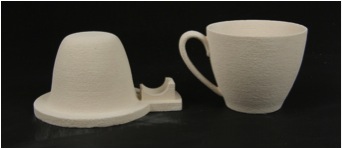
Researchers at the University of West England (UWE) Bristol have developed yet another use for AM, this time for creating ceramics. UWE’s ceramic 3D printing research first caught Rapid Ready’s attention in 2012 when the team discovered new uses for the ancient Egyptian ceramic called faience. Since that time, the team has perfected its ceramic printing process.
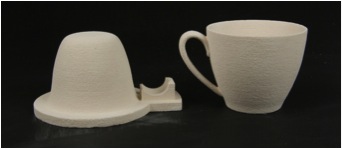
Printing in ceramics works in basically the same manner as other types of AM. A 3D design is created in CAD and is sliced up by the program before sending the information to a 3D printer. There, ceramic objects are built up in layers until you have a finished object. In the case of ceramic printing, the material used is called ViriClay.
ViriClay can be used to build cups, plates, saucers and so on for both the whiteware and tableware industry. While other ceramic AM systems do exist, researchers claim using their material will reduce energy consumption by 30% and produce objects of a high enough quality to be sold as end-use products. As is the case with most AM, the system requires days to produce a full set of anything, making it most useful for prototyping and specialty designs.
“The ceramic material developed at CFPR for use in 3D printing is both aesthetically pleasing and also a functional material, unlike the typical prototyping materials commonly used in 3D printers,” said Stephen Hoskins, research team lead. “The ceramic material can produce items of a high quality both in terms of design and also in terms of function -- it can create elegant tableware and ornamental ceramics. Because of its aesthetic qualities, it appeals to designers and artists who want to create lasting products that are also beautiful.”
Plans are in place to give artists a chance to work with the new material and printing process through interaction with a new company named Argillasys (from the Latin word for potters clay). The company will act as a service bureau for designers to manufacture 3D printed ceramics, including an online store where specialty items can be sold.
Below you’ll find a video about ceramic printing.


John Newman is a Digital Engineering contributor who focuses on 3D printing. Contact him via [email protected] and read his posts on Rapid Ready Technology.
Follow DE
Join over 90,000 engineering professionals who get fresh engineering news as soon as it is published.






About Us · Contact Us · Editorial Team · Advertising · Privacy Policy · Subscriber Services · © 2026 Digital Engineering 24/7 · Peerless Media