Helping design and engineering professionals discover, evaluate and specify technologies and processes that shorten the design cycle and enable success.



Digital Engineering April 2026
In the latest issue of Digital Engineering, we take a look at the latest innovations in design for additive manufacturing, including the use of natural language inputs, social media cosplayers, and AI integration. The issue also includes a feature…

January Special Focus Issue: Design for Additive
In this Special Focus Issue of Digital Engineering, learn about the latest advancements in design for additive manufacturing, including new software tools, additive in automotive, custom medical devices, and more.
The US Army has already found novel methods of deploying AM assets, and now it appears the Navy is setting course to join its brother service. As you might expect, the Navy will put 3D printers to work on prototyping as its opening move, but it has other, bigger plans in store for the technology.
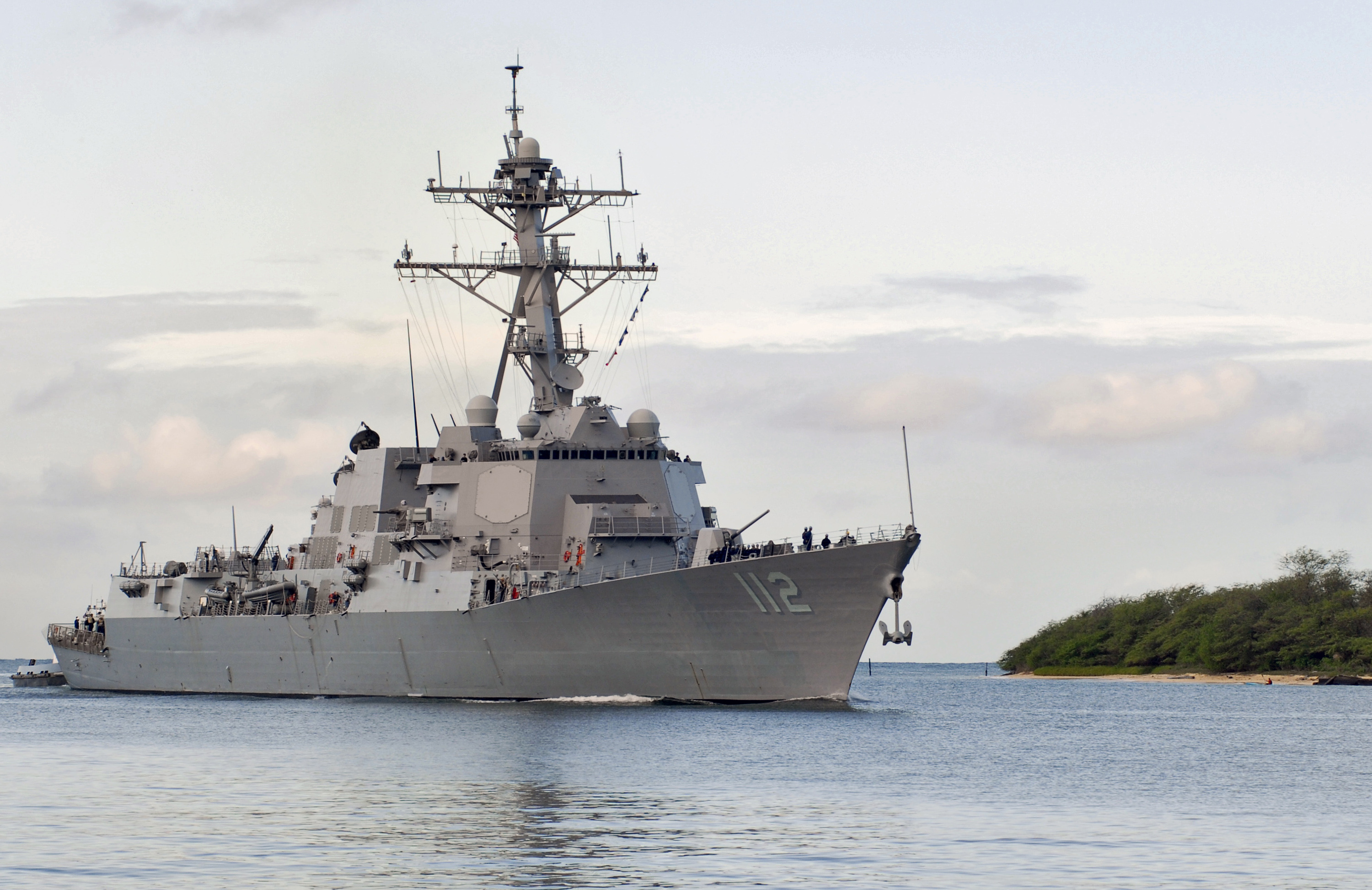
The Navy is interested in AM for many of the same reasons that aerospace companies have embraced 3D printing. AM can build parts that are much lighter than those produced by traditional manufacturing methods, and a lighter ship uses less fuel. The fact that AM processes result in less waste could provide another area of savings.
Large-scale manufacturing is also appealing. In place of building several parts that then have to be assembled using yet other parts, a large enough AM system could print out whole sections of a ship. Constructing ships using AM would also allow designers more flexibility in the internal mechanical flow of a ship, further increasing efficiency.
Much like NASA, the Navy is also investigating the potential of AM to make ships more self-sustaining by allowing a ship to print replacement parts it needs while deployed. If a 3D printer could reduce the amount of spare parts and tools required to work those parts by a significant degree, the Navy could save both space and money. This aspect of AM could be particularly useful for parts with a low failure rate that are rarely kept onboard.
While it might seem somewhat frivolous, one last area the Navy is looking at AM for is in the galley. In the case a ship needs to host an official event of some sort, a 3D printer can make all kinds of unique foodstuffs. For more frequent use, an AM system in the kitchen could produce specialty items for birthdays, to fill special requests and so forth.
With all of the potential gains to be found by investing in AM, it seems fairly likely that the Navy will soon become yet another driving force behind the expansion of 3D printing. As AM systems continue to develop to offer different materials, or better yet, mixed materials, sightings of a 3D printer onboard or at the shipyards should become commonplace.
Below you'll find a video of the classic ship in a bottle being built using a 3D printer.
Source: US Naval Institute


John Newman is a Digital Engineering contributor who focuses on 3D printing. Contact him via [email protected] and read his posts on Rapid Ready Technology.
Follow DE
Join over 90,000 engineering professionals who get fresh engineering news as soon as it is published.






About Us · Contact Us · Editorial Team · Advertising · Privacy Policy · Subscriber Services · © 2026 Digital Engineering 24/7 · Peerless Media