Helping design and engineering professionals discover, evaluate and specify technologies and processes that shorten the design cycle and enable success.



Digital Engineering April 2026
In the latest issue of Digital Engineering, we take a look at the latest innovations in design for additive manufacturing, including the use of natural language inputs, social media cosplayers, and AI integration. The issue also includes a feature…

January Special Focus Issue: Design for Additive
In this Special Focus Issue of Digital Engineering, learn about the latest advancements in design for additive manufacturing, including new software tools, additive in automotive, custom medical devices, and more.
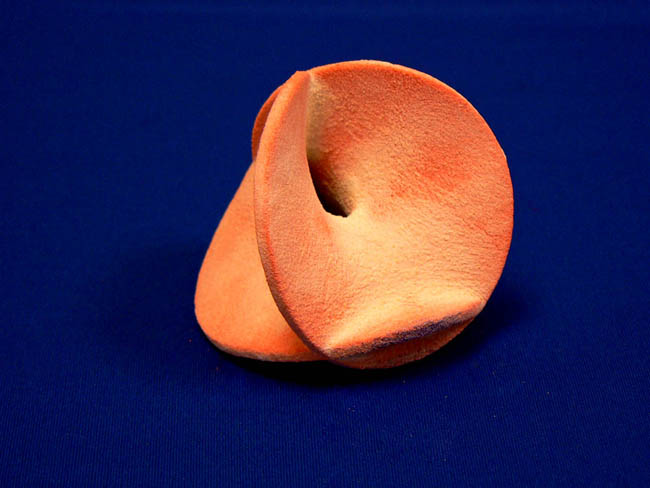
A team of engineers and artists working at the University of Washington’s Solheim Rapid Manufacturing Laboratory has developed a way to create glass objects using a conventional 3D printer. The technique allows a new type of material to be used in 3D printers.
The team's method, which it named the Vitraglyphic process, is a follow-up to the Solheim Lab's success last winter printing with ceramics.
 |
“It became clear that if we could get a material into powder form at about 20 microns we could print just about anything,” said Mark Ganter, a UW professor of mechanical engineering and co-director of the Solheim Lab.
In a typical powder-based 3D printing system, a thin layer of powder is spread over a platform and software directs an inkjet printer to deposit droplets of binder solution only where needed. The binder reacts with the powder to bind the particles together and create a 3-D object. Glass powder doesn’t readily absorb liquid, however, so the approach used with ceramic printing had to be radically altered.
“Using our normal process to print objects produced gelatin-like parts when we used glass powders," said mechanical engineering graduate student Grant Marchelli, who led the experimentation. "We had to reformulate our approach for both powder and binder.”
By adjusting the ratio of powder to liquid the team found a way to build solid parts out of powdered glass purchased from Spectrum Glass in Woodinville, WA. Their successful formulation held together and fused when heated to the required temperature.
In an instance of new technology rediscovering and building on the past, Ganter points out that 3D printed glass bears remarkable similarities to pate de verre, a technique for creating glassware. In pate de verre, glass powder is mixed with a binding material such as egg white or enamel, placed in a mold and fired. The technique dates from early Egyptian times. With -D printing the technique takes on a modern twist.
As with its ceramics 3D printing recipe, the Solheim lab is releasing their method of printing glass for general use.
“By publishing these recipes without proprietary claims, we hope to encourage further experimentation and innovation within artistic and design communities,” said Duane Storti, a UW associate professor of mechanical engineering and co-director of the Solheim Lab.
The new method would also create a way to repurpose used glass for new functions, Ganter said. He sees recycled glass as a low-cost material that can help bring 3D printing within the budget of a broader community of artists and designers.
For more information, contact Professor Mark Ganter.
Sources: Press materials received from the company and additional information gleaned from the company's website.


DE's editors contribute news and new product announcements to Digital Engineering. Press releases may be sent to them via [email protected].
Follow DE
Join over 90,000 engineering professionals who get fresh engineering news as soon as it is published.






About Us · Contact Us · Editorial Team · Advertising · Privacy Policy · Subscriber Services · © 2026 Digital Engineering 24/7 · Peerless Media