Helping design and engineering professionals discover, evaluate and specify technologies and processes that shorten the design cycle and enable success.


Alert!
Digital Engineering ceased publication on July 1, 2026. This website remains available as an archive of engineering content.
For inquiries or information, please email [email protected].
Sponsored
Dear DE Reader:
 The last Broadway revival of the musical “Stop the World—I Want to Get Off” was in the late ’70s. But the show's title serves as an apt metaphor for the befuddlement many experience trying to keep up with the dizzying pace of change in product development technologies. Today's Check it Out paper offers you the chance to stop for a spell and, most importantly, get a better understanding of what this change is all about, where it's going and what it means for you.
“Advanced Product Design for Industry 4.0, Part 1: Product Design” is the inaugural paper in a four-part series from NVIDIA exploring the changing product development technology landscape. If the next three papers are as intriguing as this, somebody deserves a gold star because this is a well-thought-out, well-wrought presentation.
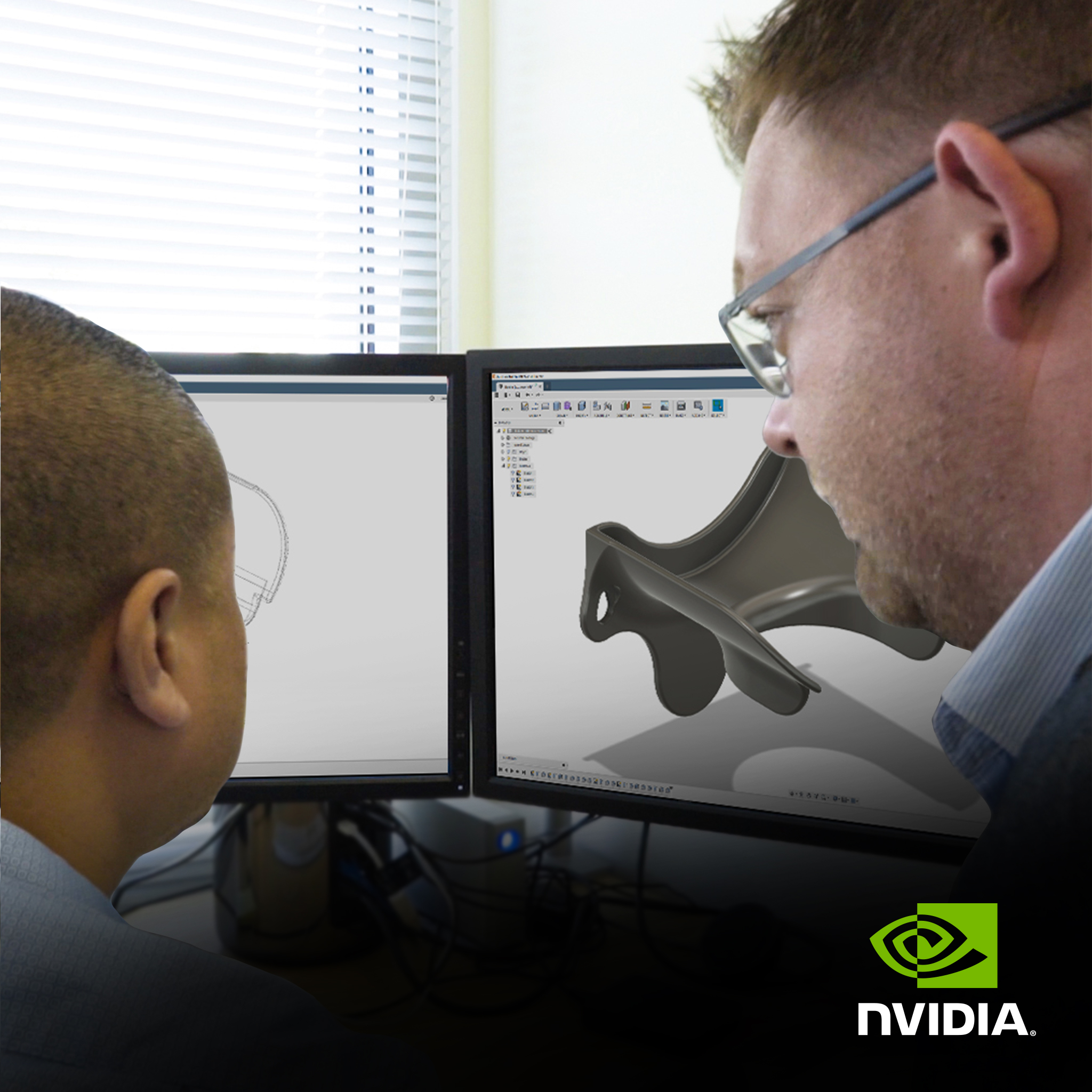 Industry 4.0 applications like smart, connected products require new design strategies and lots of oomph. This new paper explores how visual computing technologies drive the changing product development process. Image courtesy of NVIDIA Corp.
The paper's subtitle, “Mobility, Creativity, Collaboration, Innovation, and Security,” sums up its major topics. But it's more than that. And while the  paper highlights the role NVIDIA's visual computing technologies serve as manufacturers design, develop and implement Industry 4.0's connected products, it's more than a recitation of the NVIDIA catalog. It's the breadth and depth of the visual computing technologies enabling the transformation of design processes that give it particular note.
This paper brings into its purview all those Industry 4.0 disruptive technologies that have and are accelerating and liberating design engineering. That means you'll see it touch a range of hardware and software technologies such as pen-based tablets, artificial intelligence, digital twins, virtual reality, 3D graphics virtualization, physically-based rendering, centralized and secure data management as well as collaborative multidisciplinary and/or multilocation teams.
And it makes sense out of it all. It ties technological diversity together into a smart, connected and logical whole. It begins where all product development starts: an idea and a sketch. From there, it methodically steps through the complexities of the design development process while mapping new technologies that visual computing enables with a given workflow. Its formula is to introduce a technology, say, virtual machines, and explain the real benefits for the product development process.
“Advanced Product Design for Industry 4.0, Part 1: Product Design” demystifies complex product development technologies in a way that makes it an easy read for anyone regardless of their familiarity with the meaning of visual computing technology. Consider it a must-read if your outfit wants to step into the future of advanced product design.
Thanks, Pal. – Lockwood
Anthony J. Lockwood
Editor at Large, DE


Anthony J. Lockwood is Digital Engineering's founding editor. He is now retired. Contact him via [email protected].
Follow DE
Join over 90,000 engineering professionals who get fresh engineering news as soon as it is published.






About Us · Contact Us · Editorial Team · Advertising · Privacy Policy · Subscriber Services · © 2026 Digital Engineering 24/7 · Peerless Media