Helping design and engineering professionals discover, evaluate and specify technologies and processes that shorten the design cycle and enable success.


Alert!
Digital Engineering ceased publication on July 1, 2026. This website remains available as an archive of engineering content.
For inquiries or information, please email [email protected].

Digital Engineering April 2026
In the latest issue of Digital Engineering, we take a look at the latest innovations in design for additive manufacturing, including the use of natural language inputs, social media cosplayers, and AI integration. The issue also includes a feature…

January Special Focus Issue: Design for Additive
In this Special Focus Issue of Digital Engineering, learn about the latest advancements in design for additive manufacturing, including new software tools, additive in automotive, custom medical devices, and more.
Dear Desktop Engineering Reader:
 |
It's been a couple of years since I last spoke with John Kawola the CEO at Z Corporation. I recall that at the time he was talking about the need to not just drive down the of additive prototyping and modeling technologies but to drive down the costs while simultaneously delivering high-quality machinery. After all, anybody can cheap down something. Lowering the price and delivering high quality is a tricker engineering accomplishment. Seems that Z Corporation is mastering the art.
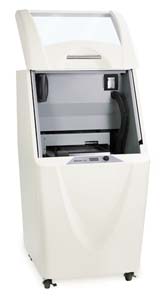
Just today, Z Corporation has unveiled two new 3D printers that continue the trend toward more affordable 3D printing for commercial and academic use. Neither the new ZPrinter 150 or the new ZPrinter 250 trade price – base prices of $14,900 and $24,900, respectively – for performance. And both are eco-friendly and compact enough to fit into most any office or classroom environment.
The primary difference between the two units is one of color: The ZPrinter 150 is a monochrome device while the ZPrinter 250 prints its models and prototypes in multiple colors (and, yes, colors are printed simultaneously). Both provide a 9.3- x 7.3- x 5-inch build size, 300 x 450 dpi resolution, feature sizes as small as 0.016 inches, and a vertical build speed of 0.8 inch/hour. Both also can print multiple stacked models simultaneously, and offer convenience features like automatic powder loading and self-monitoring of materials. They are designed to be used out-of-the-box and with as little fuss as much as such a system can be.
Z Corporation has created a short 3:30-minute video on its new monochrome ZPrinter 150 and multicolor ZPrinter 250. While the video offers hip elevator-class music without a deep-throat narrative, I found it short and sweet, getting its message across perfectly. So, I recommend that you go check it out. With prices like these coupled with those performance specs, it's getting difficult to find a reason not to have a 3D printer in every office and classroom. The video will show you what I mean by that.
Thanks, Pal. -- Lockwood
Anthony J. Lockwood
Editor at Large, Desktop Engineering


Anthony J. Lockwood is Digital Engineering's founding editor. He is now retired. Contact him via [email protected].
Follow DE






About Us · Contact Us · Editorial Team · Advertising · Privacy Policy · Subscriber Services · © 2026 Digital Engineering 24/7 · Peerless Media