Helping design and engineering professionals discover, evaluate and specify technologies and processes that shorten the design cycle and enable success.


Sponsored
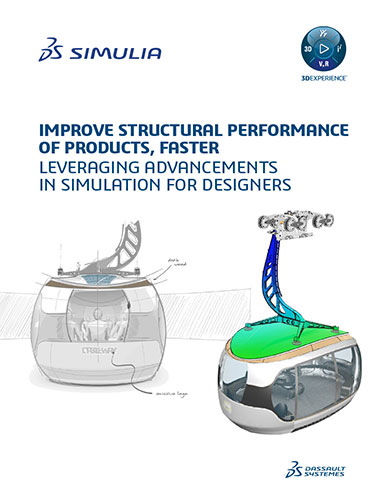
An increasing number of companies are cutting design time and costs while accelerating innovation by making physics-based simulation an integral part of their design process. Accurate simulation results are able to guide early design decisions, reduce the reliance on expensive physical prototypes, minimize the risk failures during physical testing and drive optimization to improve factors such as weight and strength.
Despite these benefits, some companies still implement simulation only at the end of the design process, or only as a diagnostic tool after things go wrong. This can be because of concerns about the compatibility of CAD and simulation tools, or due to reluctance of designers and engineers who are not trained to use simulation.
This whitepaper details the Dassault Systèmes SIMULIA structural simulation offering, based on proven Abaqus technology, and integrated with CATIA for 3D modelling and design. Because both SIMULIA and CATIA operate on the 3DEXPERIENCE® platform, they can be used interchangeably.
They are also connected to other Dassault Systèmes applications for data management and collaboration. The integration between CATIA and SIMULIA tools and the guided, easy-to-use, common user interface means that even non-experts can quickly set up and run simulations to gain insight into their design’s performance at every stage of the process.

Dassault Systèmes, the 3DEXPERIENCE Company, is a catalyst for human progress. We provide business and people with collaborative virtual environments to imagine sustainable innovations. The 3DEXPERIENCE platform enables companies to create and…

Electrum utilizes the 3DEXPERIENCE platform on the cloud to develop their new electric motorcycle
Electrum, a new brand of electric motorcycles, utilizes the 3DEXPERIENCE platform. Their mission is to support Indonesia’s shift to low-carbon, sustainable transport and to ultimately help the country’s government achieve its vision of net zero carbon emissions by 2060.




About Us · Contact Us · Editorial Team · Advertising · Privacy Policy · Subscriber Services · © 2026 Digital Engineering 24/7 · Peerless Media