Helping design and engineering professionals discover, evaluate and specify technologies and processes that shorten the design cycle and enable success.



Digital Engineering April 2026
In the latest issue of Digital Engineering, we take a look at the latest innovations in design for additive manufacturing, including the use of natural language inputs, social media cosplayers, and AI integration. The issue also includes a feature…

January Special Focus Issue: Design for Additive
In this Special Focus Issue of Digital Engineering, learn about the latest advancements in design for additive manufacturing, including new software tools, additive in automotive, custom medical devices, and more.
Now, researchers at the University of Oxford have used 3D printing to create synthetic human tissue. The new tissue material is formed from thousands of tiny water droplets encapsulated in lipid films. This medical milestone could lead to advances in drug delivery methods, using the network to target specific areas, and, with further development, could one day replace, or at least interact with, damaged human tissue.
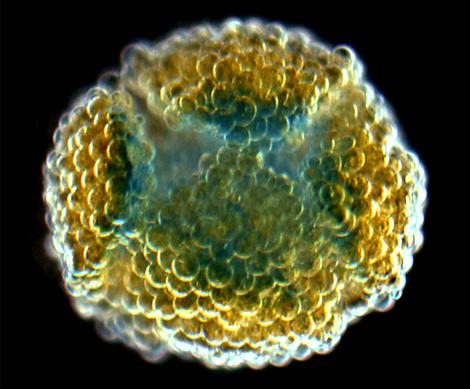
“We aren't trying to make materials that faithfully resemble tissues but rather structures that can carry out the functions of tissues,” said Professor Hagan Bayley of Oxford University's Department of Chemistry, who led the research. “We’ve shown that it is possible to create networks of tens of thousands connected droplets. The droplets can be printed with protein pores to form pathways through the network that mimic nerves and are able to transmit electrical signals from one side of a network to the other.”
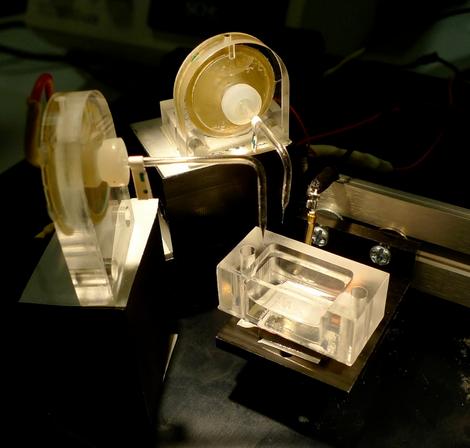
Each droplet in a network measures around 50 microns in diameter, with the largest network formed thus far containing 35,000 droplets. Of course, the researchers couldn’t very well just buy a commercial system to produce the material, so they developed their own. The synthetic tissue can also be programmed 4D style to fold itself into different shapes after printing is completed, simulating muscle movement.
Oxford researchers also said that since the new material is synthetic in nature, it contains no genome and will not replicate, unlike other cell research, such as stem cells, which should lead to fewer problems in application. The team reported their findings in a paper titled “A Tissue-Like Printed Material” in Science.
Below you’ll find a clip of the manufactured tissue folding itself.

John Newman is a Digital Engineering contributor who focuses on 3D printing. Contact him via [email protected] and read his posts on Rapid Ready Technology.
Follow DE
Join over 90,000 engineering professionals who get fresh engineering news as soon as it is published.






About Us · Contact Us · Editorial Team · Advertising · Privacy Policy · Subscriber Services · © 2026 Digital Engineering 24/7 · Peerless Media