Helping design and engineering professionals discover, evaluate and specify technologies and processes that shorten the design cycle and enable success.




Digital Engineering April 2026
In the latest issue of Digital Engineering, we take a look at the latest innovations in design for additive manufacturing, including the use of natural language inputs, social media cosplayers, and AI integration. The issue also includes a feature…

January Special Focus Issue: Design for Additive
In this Special Focus Issue of Digital Engineering, learn about the latest advancements in design for additive manufacturing, including new software tools, additive in automotive, custom medical devices, and more.
One of the companies working in this space is Tissue Regeneration Systems (TRS), and DePuy Synthes Products (a Johnson & Johnson company) has acquired 3D printing technology from TRS. The 3D printing methods will help DePuy Synthes create patient-specific, bioresorbable implants with a “unique mineral coating intended to support bone healing in patients with orthopaedic and craniomaxillofacial deformities and injuries,” according to a release announcing the acquisition. Financial terms of the transaction have not been disclosed.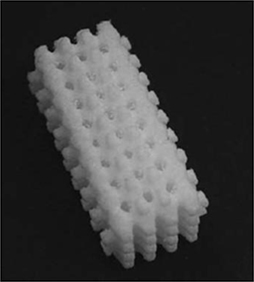
"We are systematically investing in building a pipeline of 3D printed products," said Ciro Römer, Company Group Chairman, DePuy Synthes. "The TRS technology, which will be added to the DePuy Synthes Trauma Platform, is the latest example of how we are working toward developing next-generation technologies that transform healthcare delivery with individualized solutions for patients."
DePuy Synthes began collaborating with TRS in 2014 through Johnson & Johnson Innovation, which invests in new technologies in the medical device, consumer healthcare and pharmaceutical sectors. According to DePuy, Johnson & Johnson Innovation facilitated the collaboration between the two companies.
"The acquisition of the TRS technology by DePuy Synthes is testament to our ability to identify and work collaboratively with promising early-stage companies and entrepreneurs to accelerate bringing innovative new products to market," said Robert G. Urban, Ph.D., Global Head, Johnson & Johnson Innovation. "We are excited at the potential this technology holds to help improve patient outcomes."
Founded in 2008, TRS sells skeletal reconstruction and bone regeneration technology based on research from the University of Michigan and the University of Wisconsin.
In addition to being bioresorbable, the implants created using the TRS method have an engineered porosity that can help bear large load and support functions. The geometry can be custom constructed based on CT scans and adapted during surgery to exactly replicate the missing bone.
The technology gives doctors an alternative to harvested bone for these surgeries.
For more in 3D printing and bone implants, see our previous coverage here.
Source: DePuy Synthes


Brian Albright is the editorial director of Digital Engineering.
Contact him at [email protected].

Join over 90,000 engineering professionals who get fresh engineering news as soon as it is published.






About Us · Contact Us · Editorial Team · Advertising · Privacy Policy · Subscriber Services · © 2026 Digital Engineering 24/7 · Peerless Media