Helping design and engineering professionals discover, evaluate and specify technologies and processes that shorten the design cycle and enable success.



Digital Engineering April 2026
In the latest issue of Digital Engineering, we take a look at the latest innovations in design for additive manufacturing, including the use of natural language inputs, social media cosplayers, and AI integration. The issue also includes a feature…

January Special Focus Issue: Design for Additive
In this Special Focus Issue of Digital Engineering, learn about the latest advancements in design for additive manufacturing, including new software tools, additive in automotive, custom medical devices, and more.
The most recent award was the second of a three-part challenge.
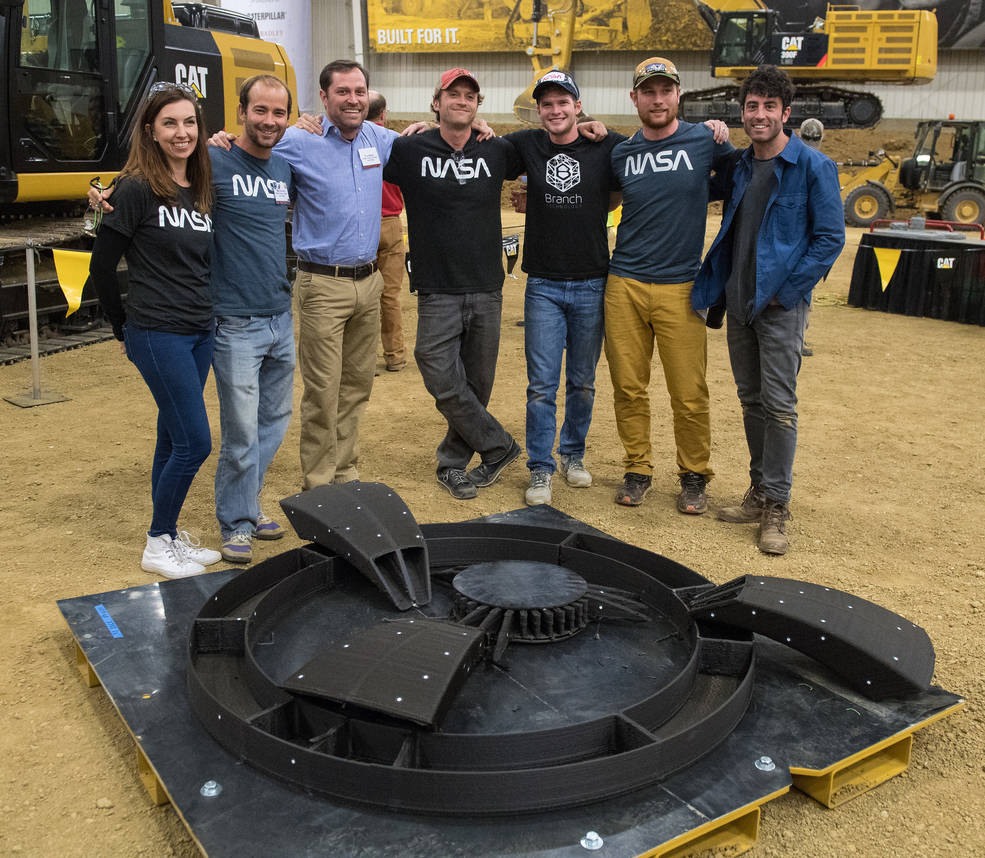
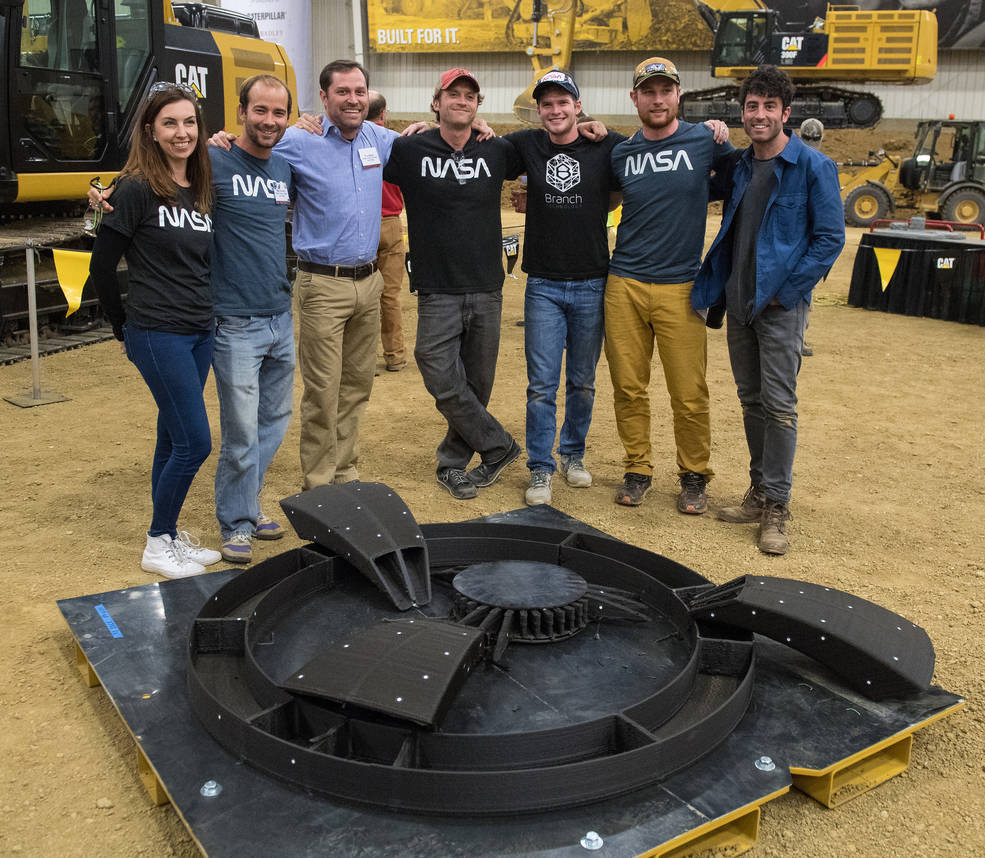 The first-place printed dome created by Team Foster + Partners | Branch Technology of Chattanooga, TN. Image: NASA
First prize ($250,000) went to Team Foster + Partners | Branch Technology of Chattanooga, TN. Second place ($150,000) went to Pennsylvania State University of University Park.
“The advancement and innovation in additive construction that we’ve seen from these teams is inspiring,” said Jim Reuter, NASA’s deputy associate administrator for the Space Technology Mission Directorate (STMD). “Meeting the technology goals of this challenge proves that competition can push boundaries, and their work puts us that much closer to preparing the way for deep space exploration.”
 Pennsylvania State University snagged the second-place slot in the 3D-Printed Habitat Challenge. Image: NASA
In Phase 2 of the competition, participants created recycling systems that could build structural components using terrestrial and space-based materials. They then developed 3D printing technologies that could produce a structurally sound habitat, including the printer and construction materials. They printed beams, cylinders, and domes that were analyzed and failure tested at the Caterpillar, Inc., Edwards Demonstration and Learning Center in Peoria, IL.
The teams printed the habitat pieces from Aug. 24 to 26 in front of the judging panel.
The 3D-Printed Habitat Challenge is aimed at developing technologies that could be used to create habitats out of local materials and recyclable materials both on other planets and in places here on Earth where the need for affordable housing is high, but building materials are scarce.
NASA’s Centennial Challenges Program and Bradley University in Peoria, partnered on the project.
You can read more about the early phases of the challenge here.
Source: NASA


Brian Albright is the editorial director of Digital Engineering.
Contact him at [email protected].

Join over 90,000 engineering professionals who get fresh engineering news as soon as it is published.






About Us · Contact Us · Editorial Team · Advertising · Privacy Policy · Subscriber Services · © 2026 Digital Engineering 24/7 · Peerless Media