Helping design and engineering professionals discover, evaluate and specify technologies and processes that shorten the design cycle and enable success.



Digital Engineering April 2026
In the latest issue of Digital Engineering, we take a look at the latest innovations in design for additive manufacturing, including the use of natural language inputs, social media cosplayers, and AI integration. The issue also includes a feature…

January Special Focus Issue: Design for Additive
In this Special Focus Issue of Digital Engineering, learn about the latest advancements in design for additive manufacturing, including new software tools, additive in automotive, custom medical devices, and more.
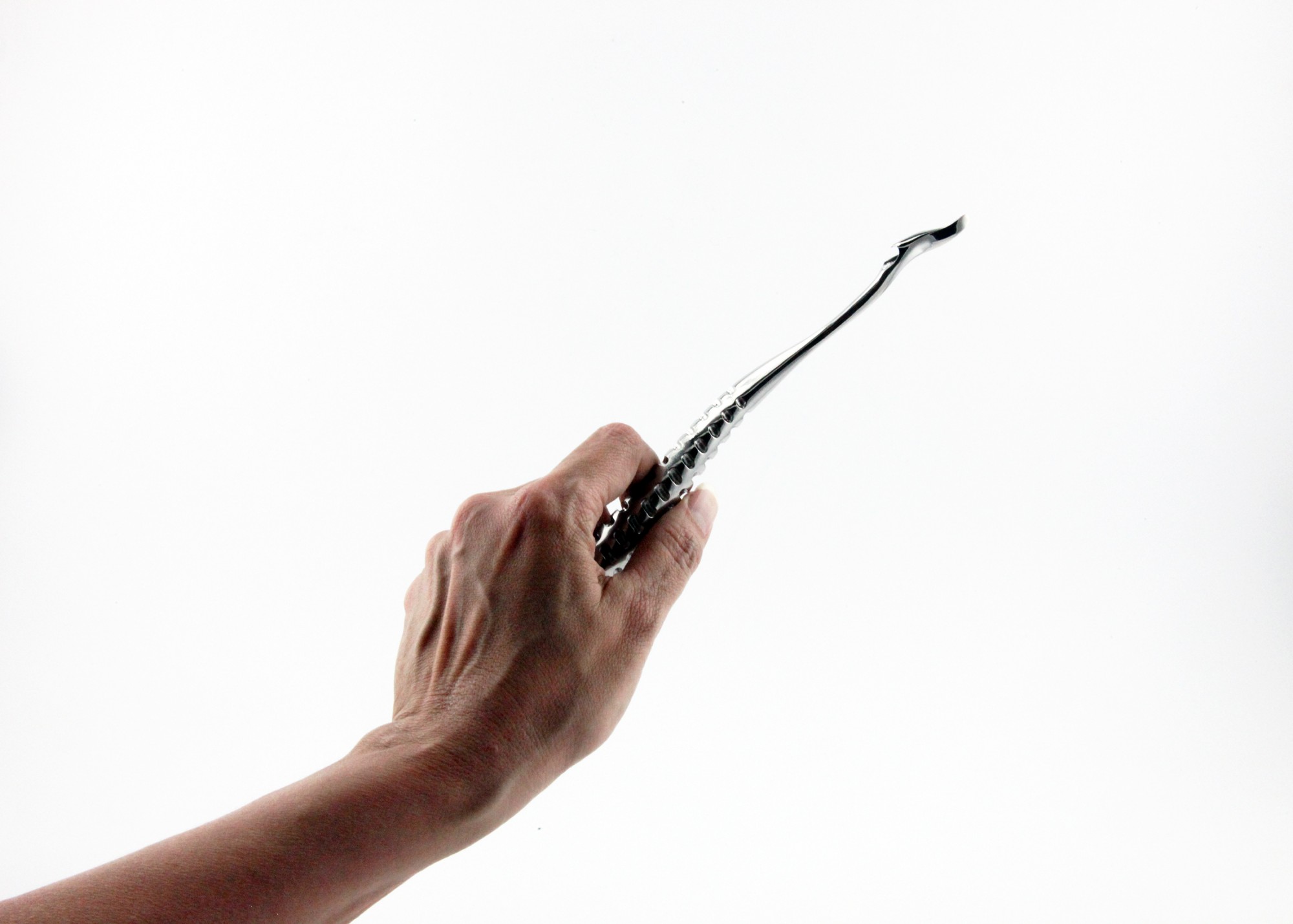
Dr. Dana Piasecki, an orthopedic surgeon at OrthoCarolina Sports Medicine, in Charlotte, NC, has developed a new tool that might help to ensure higher success rates in ACL surgeries. The new tool, called the Pathfinder, was designed, prototyped and manufactured, using additive manufacturing (AM).
 The Pathfinder was built and developed using 3D printing. Courtesy of Stratasys.
The standard method of repairing an ACL tear is to transplant a ligament graft through a hole drilled in the tibia head. The graft is then run through the newly created tibial tunnel and up the back of the femur before being attached in place. Unfortunately, this new alignment is sometimes as much as 10mm away from natural ligament placement, meaning it suffers additional stress which could lead to reinjury.
The Pathfinder allows for a variant of the tibial method, using a drill that is flexible to help fit the new graft in the proper position. Not only does this procedure reduce the chances of reinjuring the ACL, it also eases recovery.
“The main problem is doctors are using a straight drill to create the tibia and femur attachment points for the graft, but instrumenting through the rigid tibial tunnel limits where you can get on the femur. I realized I needed a procedure in which the drill is flexible and could be bent to follow the ligament’s normal path to impact the femur at the location and angle that anatomically mimics native ACL positioning,” said Dr. Piasecki. “I then needed a tool that could be inserted into the inner knee space to grasp the flexible drill, steer it to the proper spot on the femur and hold it during the drilling process.
Piasecki began by carving the general shape of his new tool from plastic, before contacting Stratasys to provide rapid prototyping assistance. Once the design seemed to fit Piasecki’s intent, the doctor moved on to ordering a working model built using direct metal laser sintering with Inconel 718 material, which offered the necessary biocompatibility, surface finish, oil resistance and mechanical requirements.
Following testing, the Pathfinder was granted Class 1 Medical Device status by the FDA and is now available for use by surgeons. Below you’ll find a video about ACL tears.
Source: Stratasys


John Newman is a Digital Engineering contributor who focuses on 3D printing. Contact him via [email protected] and read his posts on Rapid Ready Technology.
Follow DE
Join over 90,000 engineering professionals who get fresh engineering news as soon as it is published.






About Us · Contact Us · Editorial Team · Advertising · Privacy Policy · Subscriber Services · © 2026 Digital Engineering 24/7 · Peerless Media