Helping design and engineering professionals discover, evaluate and specify technologies and processes that shorten the design cycle and enable success.



Digital Engineering April 2026
In the latest issue of Digital Engineering, we take a look at the latest innovations in design for additive manufacturing, including the use of natural language inputs, social media cosplayers, and AI integration. The issue also includes a feature…

January Special Focus Issue: Design for Additive
In this Special Focus Issue of Digital Engineering, learn about the latest advancements in design for additive manufacturing, including new software tools, additive in automotive, custom medical devices, and more.
Europol, in joint operations with Bulgarian and Spanish law enforcement officials, arrested 31 members of a Bulgarian organized crime network. When you hear the words, “organized crime” it’s tempting to think of hopped up street thugs, but the Bulgarian network was high-tech operation. Europol suspects the network of being involved in a number of crimes, including large-scale ATM skimming, electronic payment fraud, and forgery of documents.
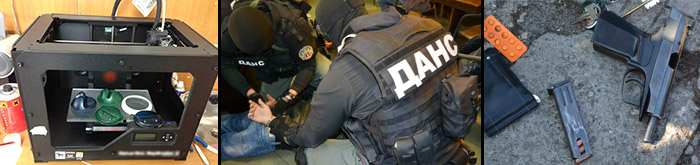 Europol's Operation Imperium resulted in 31 arrests for high tech crimes. Courtesy of Europol.
Police raided eight different criminal labs in Spain and Bulgaria, finding advanced equipment, including 3D printers, for skimming and counterfeiting. ATM skimming requires thieves to alter actual ATMs to steal the account numbers of users that insert their cards.
The organized crime network used 3D printers to build bezels that overlapped actual ATM card slots to steal information. Along with the fake bezels, Europol officials found dozens of forged credit cards, accompanied by PIN numbers, ready to be used at other ATMs.
"We've hit another international organised payment crime network, which sends a strong signal to cybercriminal groups active in this field,” said Troels Oerting, head of Europol's European Cybercrime Centre. “This is a great example of effective joint efforts between EU Member States and EC3 to protect customers and their electronic transactions across the European Union."
It might be interesting to hear the methods used by the criminals to produce CAD designs that fit into ATM bezels well enough that most people wouldn’t notice. The next time Europol busts a ring like this one, it wouldn’t be surprising if they found 3D scanners along with AM systems. Below you’ll find a video about a similar case in Australia.
Source: Europol


John Newman is a Digital Engineering contributor who focuses on 3D printing. Contact him via [email protected] and read his posts on Rapid Ready Technology.
Follow DE
Join over 90,000 engineering professionals who get fresh engineering news as soon as it is published.






About Us · Contact Us · Editorial Team · Advertising · Privacy Policy · Subscriber Services · © 2026 Digital Engineering 24/7 · Peerless Media