Helping design and engineering professionals discover, evaluate and specify technologies and processes that shorten the design cycle and enable success.


Alert!
Digital Engineering ceased publication on July 1, 2026. This website remains available as an archive of engineering content.
For inquiries or information, please email [email protected].

Digital Engineering April 2026
In the latest issue of Digital Engineering, we take a look at the latest innovations in design for additive manufacturing, including the use of natural language inputs, social media cosplayers, and AI integration. The issue also includes a feature…

January Special Focus Issue: Design for Additive
In this Special Focus Issue of Digital Engineering, learn about the latest advancements in design for additive manufacturing, including new software tools, additive in automotive, custom medical devices, and more.
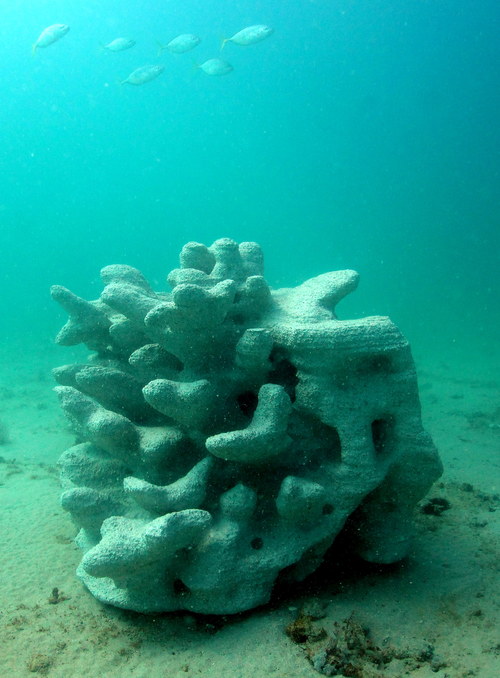
 An example of 3D-printed coral. Image: Reef Design Lab
Coral reefs around the globe have been in decline due to the effects of pollution, development, rising temperatures, fishing operations and other threats. 3D printing could help protect these valuable natural resources that support roughly a quarter of all ocean life. The Caribbean island of Bonaire has partnered with Fabien Cousteau (grandson of celebrity explorer Jacques Cousteau) and a local resort to use 3D printers to expand and restore reefs by printing artificial coral using the same shapes and colors that attract marine life.
The same technology has been used in Monaco and in the Persian Gulf.
“Opportunities have never been better to marry environmental responsibility with economic health for a mutually beneficial outcome,” Cousteau said. “Bonaire is in a prime position to enhance reef growth because it has so many natural, healthy reefs already. Our initiative with 3D printing will rapidly assist us in revitalizing more stressed or damaged areas.”
3D printing can create artificial coral in the preferred shapes, colors and textures that attract baby coral polyps looking for an anchor. This can potentially be much more successful than the use of construction debris or sunken ships, materials that are frequently used to create artificial reefs.
Cousteau’s Ocean Learning Center has opened up shop in Harbour Village Beach Club in Bonaire to create reefs of sandstone and limestone.
Reef Design Lab, a Melbourne-based non-profit, is also deploying printed coral reef structures. The company says it installed the first such printed reef in Bahrain.
In Bonaire, researchers will test different materials to help create best practices for this type of reef restoration.
“Our hope, with our experimentation, is that we’ll be able to augment or enhance the natural recruitment of coral,” Cousteau told Smithsonian.com. “We’re using natural aggregates and binding materials to look at what’s the best combination that allows for the settlement of new colonies.”
Source: SAT


Brian Albright is the editorial director of Digital Engineering.
Contact him at [email protected].

Join over 90,000 engineering professionals who get fresh engineering news as soon as it is published.






About Us · Contact Us · Editorial Team · Advertising · Privacy Policy · Subscriber Services · © 2026 Digital Engineering 24/7 · Peerless Media