Helping design and engineering professionals discover, evaluate and specify technologies and processes that shorten the design cycle and enable success.




Artificial Intelligence for Design and Engineering Workflows
In this white paper, learn how artificial intelligence and machine learning can improve design and simulation.

Technology Focus: Designing for Optimization & Simulation
Simulation is pervasive, with people from different departments and backgrounds discovering new ways to put it to use, in all of its varied forms.
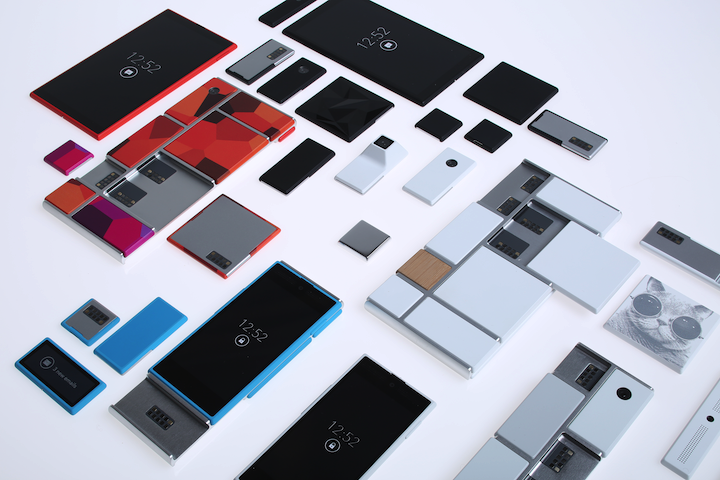
We last wrote about Project Ara in April, when Google announced its developer's kit at the Project Ara Developers Conference. Now 3DS has unveiled more details about the additive manufacturing system in a recent blog post.
According to the company, the production platform ditches the "reciprocating" model of the print platform and print head moving in coordinated fashion for a continuous motion system and racetrack architecture that will enable print rates in the millions. The company is developing conductive inks (along with Carnegie Mellon University and X5 Systems) for parts lik the antennas. Modules will be printable in a full spectrum of colors, as well as in hard and soft composite materials.
“The combination of exponential creation technology with exponential information technology translates to unprecedented capability and adaptability for the consumer,” said Chuck Hull, founder and CTO of 3DS in the blog post. “The scale of this project and its practical functionality are an exciting step into the future.”
When the phones launch in 2015, there will be three sizes available, including a "mini" that could measure just 2-x-5 in.
According to this article over on Pocket-lint, a recently announced partnership between Sennheiser and Phonebloks (the development group that helped create the project) means that Sennheiser audio "bloks" may be available for the phones.
Source: 3D Systems


Brian Albright is the editorial director of Digital Engineering.
Contact him at [email protected].

Join over 90,000 engineering professionals who get fresh engineering news as soon as it is published.






About Us · Contact Us · Editorial Team · Advertising · Privacy Policy · Subscriber Services · © 2026 Digital Engineering 24/7 · Peerless Media