Helping design and engineering professionals discover, evaluate and specify technologies and processes that shorten the design cycle and enable success.


Alert!
Digital Engineering ceased publication on July 1, 2026. This website remains available as an archive of engineering content.
For inquiries or information, please email [email protected].
Sponsored

Digital Engineering April 2026
In the latest issue of Digital Engineering, we take a look at the latest innovations in design for additive manufacturing, including the use of natural language inputs, social media cosplayers, and AI integration. The issue also includes a feature…

January Special Focus Issue: Design for Additive
In this Special Focus Issue of Digital Engineering, learn about the latest advancements in design for additive manufacturing, including new software tools, additive in automotive, custom medical devices, and more.
Dear DE Reader,
3D printing has come a long way in the 30 years since its invention. Creating jigs and fixtures, rapid printing of durable prototypes and on-demand short runs of final parts are not uncommon uses of 3D printing these days. But until recently one capability remained elusive, the ability to do full production runs with factory quality repeatability for thousands of parts.
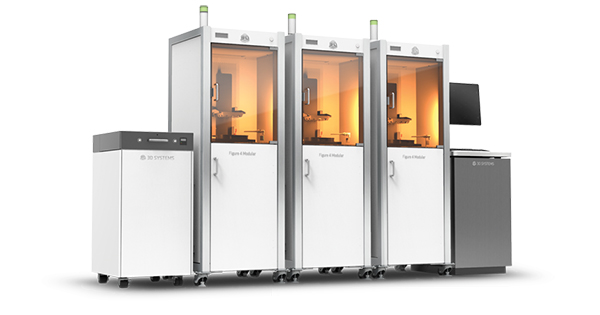
A few months ago 3D Systems—the company that invented 3D printing—independently confirmed six-sigma quality for long print runs on its new additive manufacturing platform, the Figure 4. With five new materials ready for distribution, this new platform is a game changer and our Editor’s Pick of the Week.
The Figure 4 is a non-contact membrane system, a print method known for producing thermoplastic parts with high fidelity and surface quality. It is fast (100 mm/hr) and offers part consistency for high-volume runs.
Figure 4 Modular can be scaled for increased production, up to 24 print engines. When using 3D Systems’ 3D Sprint software to control the print jobs, each engine can run different materials and job simultaneously as part of a single, high-throughput line. But even the best 3D printer is useless without materials. 3D Systems is announcing four new materials to complement the four materials already available. The new materials are:
Figure 4 FLEX-BLK 10—a flexible material for durable propylene-like black parts. This material is great for functional assemblies and prototypes, master patterns for RTV/silicone molding, short-run production, and concept and marketing models.
Figure 4 TOUGH-BLK 20—an ABS-like black material with industry-leading UV stability and high accuracy for production applications.
Figure 4 MED-AMB 10 and Figure 4 MED-WHT 10—a biocompatible material available in transparent amber or white. Both colors are suitable for use in general medical applications requiring translucency, sterilization, and/or thermal resistance.
Figure 4 HI-TEMP-AMB 250—a very high thermal-resistant material (HDT > 250C) for design verification testing, motor enclosures, and low pressure molding/tooling with transparency for flow visualization.
Check out the Product Brief for more information on Figure 4 Modular specifications, Digital Molding, and information on the rigorous testing for process repeatability. Thanks for reading, we’ll be back next week with another Editor’s Pick of the Week.
—The DE Editors

From digitization, design and simulation through manufacturing, inspection and management, our comprehensive portfolio of technologies provides a seamless, customizable workflow designed to optimize products and processes while accelerating…
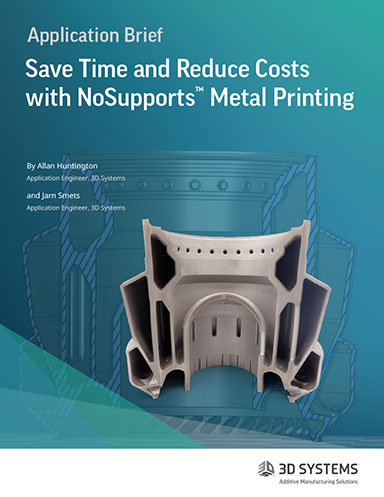
Save Time and Reduce Costs with NoSupports™ Metal Printing
Metal 3D printing is a high energy process in which it is possible for unmanaged heat and stress to build up and impact part quality, this guide presents a step-by-step methodology for how to apply NoSupports to a hot end section of a larger turbomachinery part.

DE's editors contribute news and new product announcements to Digital Engineering. Press releases may be sent to them via [email protected].
Follow DE






About Us · Contact Us · Editorial Team · Advertising · Privacy Policy · Subscriber Services · © 2026 Digital Engineering 24/7 · Peerless Media