Helping design and engineering professionals discover, evaluate and specify technologies and processes that shorten the design cycle and enable success.



Digital Engineering April 2026
In the latest issue of Digital Engineering, we take a look at the latest innovations in design for additive manufacturing, including the use of natural language inputs, social media cosplayers, and AI integration. The issue also includes a feature…

January Special Focus Issue: Design for Additive
In this Special Focus Issue of Digital Engineering, learn about the latest advancements in design for additive manufacturing, including new software tools, additive in automotive, custom medical devices, and more.
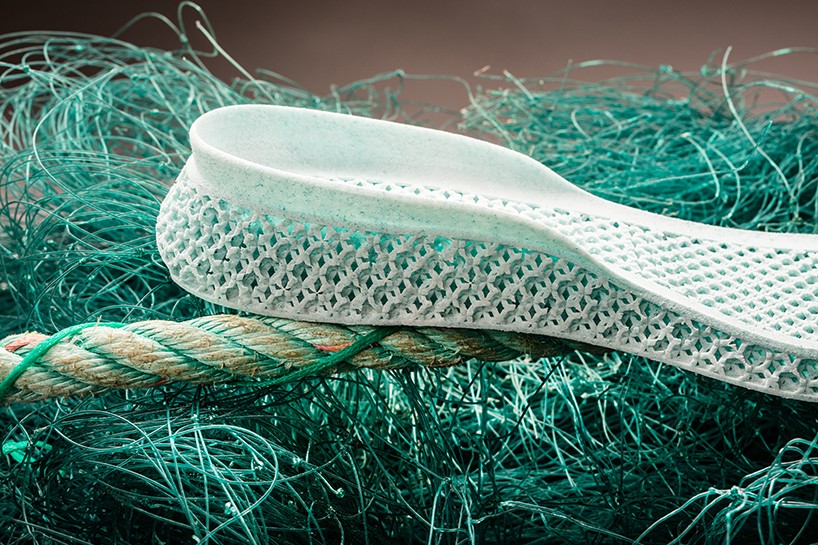
While we still struggle to keep plastic from getting into the ocean in the first place, Adidas has come up with a way to make use of some of that junk once it's fished out. The company has announced 3D printed shoes made from reclaimed ocean plastic.
In June 2015, Adidas partnered with Parley for the Oceans, which works on addressing threats to the oceans, and created a concept shoe made out of reclaimed ocean waste. They have since combined that concept with a 3D-printed midsole made of recycle polyester and gillnets.
The shoe made its first appearance at the Paris Climate Conference in December.
“The industry can’t afford to wait for directions any longer. Together with the network of Parley for the Oceans, we have started taking action and creating new sustainable materials and innovations for athletes," said Adidas board member Eric Liedtke.
In addition to incorporating recycled materials into its production processes, Adidas is phasing out the use of plastic bags in its stores, as well as eliminating plastic microbeads from its body care products.
Adidas also announced a partnership with Materialise on its Futurecraft 3D project to create custom midsoles for its running shoes. Customers will have their feet scanned at Adidas stores, and the model will be used to create a custom midsole that can be included in any Adidas shoe.
Before Adidas got out of the gate, however, New Balance announced the industry's first 3D-printed customized midsole for running shoes. The company has partnered with 3D Systems to create the midsole using DuraForm Flex TPU elastomeric powder and selective laser sintering. The shoe will launch in Boston in April 2016 and in New Balance retail stores later in the year.
Source: Motley Fool and designboom


Brian Albright is the editorial director of Digital Engineering.
Contact him at [email protected].

Join over 90,000 engineering professionals who get fresh engineering news as soon as it is published.






About Us · Contact Us · Editorial Team · Advertising · Privacy Policy · Subscriber Services · © 2026 Digital Engineering 24/7 · Peerless Media