Helping design and engineering professionals discover, evaluate and specify technologies and processes that shorten the design cycle and enable success.


Alert!
Digital Engineering ceased publication on July 1, 2026. This website remains available as an archive of engineering content.
For inquiries or information, please email [email protected].

Digital Engineering April 2026
In the latest issue of Digital Engineering, we take a look at the latest innovations in design for additive manufacturing, including the use of natural language inputs, social media cosplayers, and AI integration. The issue also includes a feature…

January Special Focus Issue: Design for Additive
In this Special Focus Issue of Digital Engineering, learn about the latest advancements in design for additive manufacturing, including new software tools, additive in automotive, custom medical devices, and more.
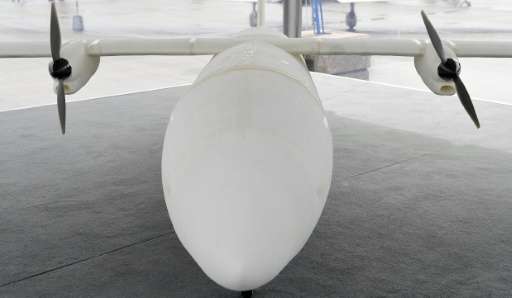
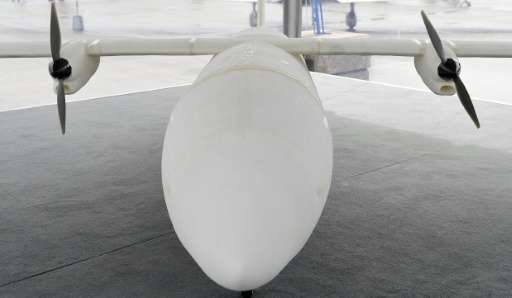
You can’t ride in it, but the 46-pound pilotless airplane presents a major step forward in the aerospace industry.
While neither the two electric motors nor the control were printed, the remainder of the 50 parts of the craft was created using polyamide. Thor (Test of High-tech Objectives in Reality) is just 4 meters (13 ft.) long and is really more of a drone than an airplane. It took roughly a month to print.
"This is a test of what's possible with 3D printing technology," Thor project head Detlev Konigorski told the AFP. "We want to see if we can speed up the development process by using 3D printing not just for individual parts but for an entire system."
Thor had its first successful flight in November, flying 25 miles. Airbus plans 18 more test missions this year. Thor cost roughly 20,000 euros to produce.
The company’s A350 airliner also includes more than 1,000 3D printed parts. Airbus and Autodesk have also worked on a “bionic” printed partition for its airplanes that will save weight and fuel. The design mimics the structure of cells and bone.
"By 2025 we will be able to use printers to product bionic aircraft structures," said Peter Sander, who oversees Airbus Germany's new technology efforts.
Source: Phys.Org


Brian Albright is the editorial director of Digital Engineering.
Contact him at [email protected].






About Us · Contact Us · Editorial Team · Advertising · Privacy Policy · Subscriber Services · © 2026 Digital Engineering 24/7 · Peerless Media