Helping design and engineering professionals discover, evaluate and specify technologies and processes that shorten the design cycle and enable success.



May 2026 Special Focus: Artificial Intelligence in Design and Simulation
In this Special Focus Issue, learn about the latest developments in the integration of artificial intelligence into engineering workflows.

April 2026 Special Focus Issue: Generative Design
In this Special Focus Issue, Digital Engineering takes a look at how generative design solutions can be used across different types of design problems and with a variety of manufacturing approaches to accelerate design space exploration, and…
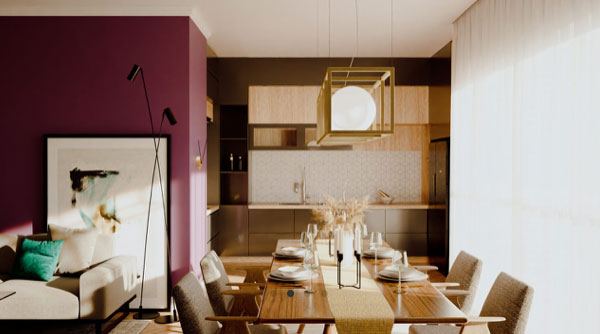
Altair debuts Thea Render version 3, which brings new features, workflow enhancements and speed improvements in several areas.
Adaptive Tracing is a technique that solves complicated lighting scenarios, such as caustics from point lights, sun pool caustics and diffuse interreflections. This results in images with a higher dynamic range and lighting effects that were previously impossible.
Relight allows users to create infinite images from a single render. When Relight is enabled, every light in the scene can then be modified (intensity, color and status) and create different lighting setups in post production. Every Relight setup can be saved in the Relight Editor panel as a Snap and then loaded back to the Darkroom for further editing or exported to an image file.
Random color is a procedural texture that can be used to add variation to your instanced models and create rich looking images for grass, bushes, trees, wooden floor and more.
The Intel Open Image Denoiser is now integrated inside Thea Render. The AI-accelerated denoiser provides noise-free images and runs on the CPU.
Denoising with both Intel’s and NVIDIA’s AI denoisers is also supported during an interactive rendering session. Watch video here.
Thea Render makes use of the latest NVIDIA CUDA Toolkit, which introduces support for the NVIDIA Ampere architecture.
Thea for SketchUp has been updated with new features and workflow enhancements too. Some are:
Additional updates include support for Lindalë Skatter v2, out-of-core rendering; multithreaded export; HDR region render; enhanced channels; improved interactiveness; and user interface improvement.
Sources: Press materials received from the company and additional information gleaned from the company’s website.


Altair transforms design and decision making by applying simulation, machine learning, and optimization throughout product lifecycles. Altair offers software in five categories related to Computer Aided Engineering (CAE) and High Performance…
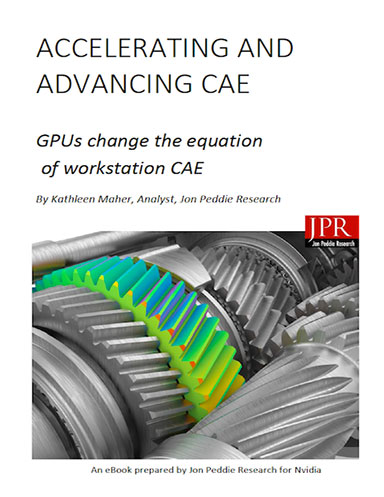
Accelerating and Advancing CAE
GPUs are changing the nature of engineering simulation, according to a new ebook from Jon Peddie Research (JPR). It explains how GPU acceleration is improving CAE workflows.

DE's editors contribute news and new product announcements to Digital Engineering. Press releases may be sent to them via [email protected].
Follow DE
Join over 90,000 engineering professionals who get fresh engineering news as soon as it is published.






About Us · Contact Us · Editorial Team · Advertising · Privacy Policy · Subscriber Services · © 2026 Digital Engineering 24/7 · Peerless Media