Helping design and engineering professionals discover, evaluate and specify technologies and processes that shorten the design cycle and enable success.



May 2026 Special Focus: Artificial Intelligence in Design and Simulation
In this Special Focus Issue, learn about the latest developments in the integration of artificial intelligence into engineering workflows.

April 2026 Special Focus Issue: Generative Design
In this Special Focus Issue, Digital Engineering takes a look at how generative design solutions can be used across different types of design problems and with a variety of manufacturing approaches to accelerate design space exploration, and…
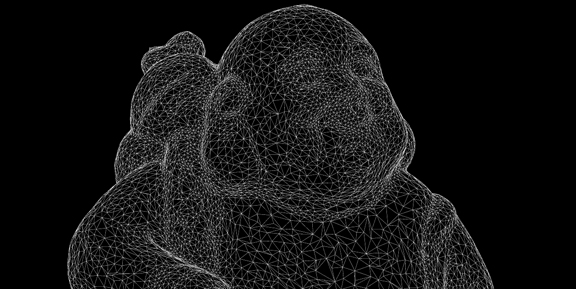
Autodesk's consumer-friendly product line, 123D, is getting two new additions: 123D Catch and 123D Make. Like other 123D titles, the latest pair takes aim squarely at the emerging maker market, spawned by the do-it-yourself crowd that frequents Maker Faire, Renegade Craft Fair, and similar events.
The latest additions are:
The ability to automatically extract a 3D model out of 2D photos will give hobbyists, enthusiasts, students, and tinkerers an easier way to create 3D digital models of existing products (for example, a piece of furniture or a sculpture). They'll be able to bypass the daunting task of learning and mastering a 3D modeling program.
Though 123D Catch is targeted at the maker market, the method exemplified by 123D Catch will also be appealing to professional designers and commercial manufacturers, as it allows them to digitally capture the approximate shape of an existing product in order to explore possible improvement to its aesthetics, function, and durability in CAD and analysis software.
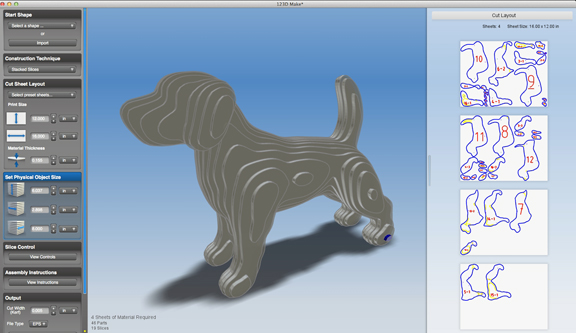
123D Make mimics the 3D printing and laser-cutting process, whereby users can turn a 3D model into a series of 2D cutouts that represent the desired volume and mass. When assembled, the resulting flat patterns (perhaps created from cardboard) will give users a 3D physical object corresponding to his or her idea. The cut pieces are numbered to make assembly sequencing easy.
123D Make is currently only available for Mac OS X, a surprise for the company that relies primarily on PC users for its professional software sales. (PC-based 123D users looking to create 3D prototypes may choose to work with Autodesk partners who provide laser-cutting and 3D printing services.)
123D Catch and Make are preceded by the launches of 123D, a general-purpose 3D modeling software (currently in Beta, available as a free download); 123D Sculpt, an iPad app for touch-based model creation and deformation; and the 123D content portal, for sharing your digital creations with other 123D fans.
123D Sculpt, now available at Apple app store, is based on Autodesk Mudbox, a digital 3D painting and sculpting software selling for $745. 123D Sculpt provides users with a way to create organic shapes, typically not easy to create in parametric CAD modeling programs. (Imagine building the head of a horned monster from a 2D profile, a series of extrusions, and rounded edges.) The iPad's multi-touch capability makes digital sculpting much more intuitive; bypassing the mouse and keyboard, it allows users to employ pinching, poking, and stretching to reshape a digital model to his or her satisfaction.
Though Autodesk caters primarily to professional engineers, designers, and digital content creators, the latest push for 123D products, along with its investment in a fledgling Consumer Division (responsible for such products as Autodesk Sketchbook Mobile), suggests the company is looking at new opportunities beyond the professional customer pool.


Kenneth Wong is Digital Engineering's resident blogger and senior editor. Email him at [email protected] or share your thoughts or suggestions at digitaleng.news/facebook.
Follow DE
Join over 90,000 engineering professionals who get fresh engineering news as soon as it is published.






About Us · Contact Us · Editorial Team · Advertising · Privacy Policy · Subscriber Services · © 2026 Digital Engineering 24/7 · Peerless Media