Helping design and engineering professionals discover, evaluate and specify technologies and processes that shorten the design cycle and enable success.


Alert!
Digital Engineering ceased publication on July 1, 2026. This website remains available as an archive of engineering content.
For inquiries or information, please email [email protected].

Digital Engineering April 2026
In the latest issue of Digital Engineering, we take a look at the latest innovations in design for additive manufacturing, including the use of natural language inputs, social media cosplayers, and AI integration. The issue also includes a feature…

January Special Focus Issue: Design for Additive
In this Special Focus Issue of Digital Engineering, learn about the latest advancements in design for additive manufacturing, including new software tools, additive in automotive, custom medical devices, and more.
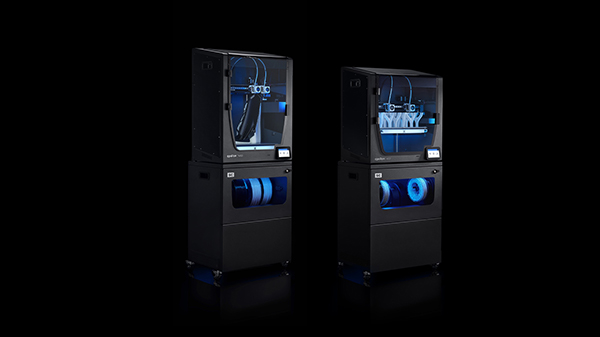
BCN3D, a Spanish 3D printing solutions manufacturer, has launched the new Smart Cabinet to complete the Epsilon ecosystem, which boosts the entire printing process with BCN3D workbench 3D printers Epsilon W27 and Epsilon W50.
The BCN3D Smart Cabinet relies on smart drying technology to ensure that filaments are consistently kept at optimal humidity levels, protecting against print failure and nozzle clogging.
The filament humidity control keeps materials in optimal condition, and an Uninterruptible Power Supply (UPS) protects the print job at all times, eliminating the risk of losing a print job due to power outages.
The BCN3D Smart Cabinet works on the absorption dryer method, alternating between drying cycles and regeneration cycles to maintain a constant dry environment around the stored spools and protect them from sudden external changes.
The Smart Cabinet controls relative humidity inside the air-tight container through a desiccant that absorbs moisture, in this case, alumina-based pellets, which are open to the dehumidifying environment.
By isolating the absorption material from the heating chamber and increasing its temperature, the absorbed humidity is released outside of the chamber and the material is regenerated. After the purge, the desiccant has been refreshed and is ready to collect more moisture. The air-tight container and cyclical internal ventilation through the fan, heat and valves, means there is no user interaction required.
This process effectively keeps the filament dry and in optimal condition for its use, and means that there is never a need to change the desiccant.
Sources: Press materials received from the company and additional information gleaned from the company’s website.


DE's editors contribute news and new product announcements to Digital Engineering. Press releases may be sent to them via [email protected].
Follow DE






About Us · Contact Us · Editorial Team · Advertising · Privacy Policy · Subscriber Services · © 2026 Digital Engineering 24/7 · Peerless Media