Helping design and engineering professionals discover, evaluate and specify technologies and processes that shorten the design cycle and enable success.


Alert!
Digital Engineering ceased publication on July 1, 2026. This website remains available as an archive of engineering content.
For inquiries or information, please email [email protected].
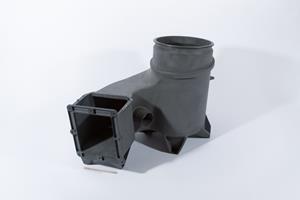

Digital Engineering April 2026
In the latest issue of Digital Engineering, we take a look at the latest innovations in design for additive manufacturing, including the use of natural language inputs, social media cosplayers, and AI integration. The issue also includes a feature…

January Special Focus Issue: Design for Additive
In this Special Focus Issue of Digital Engineering, learn about the latest advancements in design for additive manufacturing, including new software tools, additive in automotive, custom medical devices, and more.
Boeing has contracted for the parts with Oxford Performance Materials, which received a $10 million investment from advanced materials provider Hexcel this month. The company is delivering its OXFAB production parts for installation on the vehicles.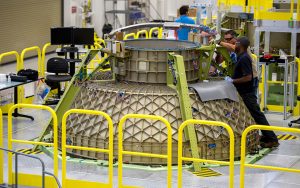
NASA awarded a $4.2 billion contract to Boeing to build three of the Starliner capsules, and Oxford has already shipped the parts, which are made of PEKK (polyetherketoneketone) material. In 2012, the company demonstrated that the material could withstand the temperature extremes necessary to be used in aerospace and defense applications.
“From our earliest discussions with Boeing, they stressed the need to see significant reductions in weight, cost and lead times in order to consider replacing traditional metallic and composite parts with a new technology for their space program,” said Lawrence Varholak, president of OPM Aerospace & Industrial. “We are proud to be developing and delivering OXFAB technology to the highest standards.”
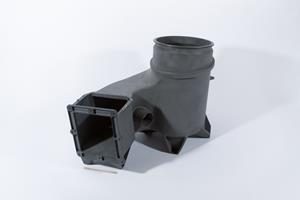 An OXFAB structural component that was additively manufactured for the Starliner. Image: Oxford Performance Materials
The Starliner will be able to deliver a mix of crew and cargo to low-Earth orbit destinations such as the International Space Station.
PEKK parts in the Starliner include brackets for the propulsion system and internal structures for the air revitalization system.
According to the company, the printed parts will reduce both weight and costs for the seven-seat capsules.
"What really makes it valuable to NASA and Boeing is this material is as strong as aluminum at significantly less weight," Varholak said in an interview with Reuters.
Connecticut-based Oxford also makes aircraft parts, as well as cranial/facial implants and replacement vertebrae for medical applications.
The Starliner is set to begin test flights in 2018.
Source: Reuters


Brian Albright is the editorial director of Digital Engineering.
Contact him at [email protected].






About Us · Contact Us · Editorial Team · Advertising · Privacy Policy · Subscriber Services · © 2026 Digital Engineering 24/7 · Peerless Media