Helping design and engineering professionals discover, evaluate and specify technologies and processes that shorten the design cycle and enable success.



Digital Engineering April 2026
In the latest issue of Digital Engineering, we take a look at the latest innovations in design for additive manufacturing, including the use of natural language inputs, social media cosplayers, and AI integration. The issue also includes a feature…

January Special Focus Issue: Design for Additive
In this Special Focus Issue of Digital Engineering, learn about the latest advancements in design for additive manufacturing, including new software tools, additive in automotive, custom medical devices, and more.
British newspaper The Register has a new advertising scheme meant to appeal to its science-minded demographic. The paper plans to construct and launch a low orbit flyer, using its readers as a sort of crowd source for development, and additive manufacturing (AM) to build the flyer.
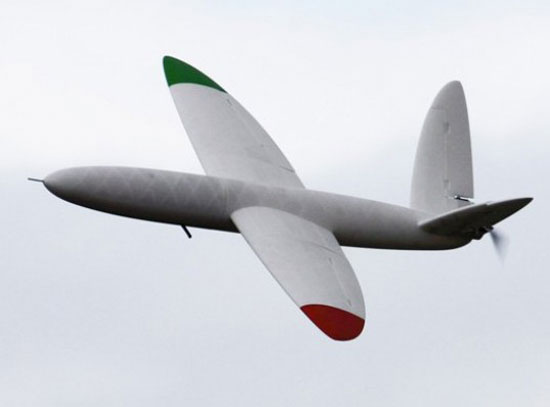
The project is called Low Orbit Helium Assisted Navigator, or LOHAN, and is the second time The Register has constructed a low orbit flyer simply for the amusement of its readers (the first project was dubbed SPEARS). The paper was apparently inspired by the successful flight of the University of Southampton’s SULSA 3D printed drone, and turned to AM for its second project.
The plan is to launch LOHAN via helium balloon into near Earth orbit. The flyer’s rocket will kick in when it disconnects from the balloon, and it will direct itself back home using GPS location and an autopilot program. The Register also plans to include a few cameras in the design, giving its readers a chance to follow the flight through the medium of video.
LOHAN is currently undergoing rapid prototyping on an EOS P730 to determine if the wings are shaped properly. From there the paper should go on to prototype the complete design of the flyer, before the entire thing is printed out and sent into the skies.
You can follow the project here. Below you’ll find a video about selective laser sintering and LOHAN.
Source: The Register


John Newman is a Digital Engineering contributor who focuses on 3D printing. Contact him via [email protected] and read his posts on Rapid Ready Technology.
Follow DE
Join over 90,000 engineering professionals who get fresh engineering news as soon as it is published.






About Us · Contact Us · Editorial Team · Advertising · Privacy Policy · Subscriber Services · © 2026 Digital Engineering 24/7 · Peerless Media