Helping design and engineering professionals discover, evaluate and specify technologies and processes that shorten the design cycle and enable success.


Alert!
Digital Engineering ceased publication on July 1, 2026. This website remains available as an archive of engineering content.
For inquiries or information, please email [email protected].
Sponsored

Cut Retrieval-Augmented Generation (RAG) Hallucinations by 50%
Most teams hit the same wall with enterprise AI: LLMs that hallucinate, pipelines that don’t scale, and infrastructure that’s harder to design than the models themselves.

What Is Intelligent BOM Management? A Guide to Smarter Product Development
Learn how intelligent Bill of Materials (BOM) management helps teams collaborate, reduce errors, and bring innovative products to market faster with cloud-based PLM tools.
Dear Desktop Engineering Reader:
 |
It's cliché to say something along the lines of “high-performance computing can accelerate your productivity and the pace of innovation,” and it's rather novel to offer something concrete to buttress such assertions. But something concrete is exactly what Christopher Penney and Yong Wang of Remcom Inc. give you in an extremely well-done white paper titled “Optimized Device Design: A Demonstration of Parameterization, Optimization, and High-Performance Computing with Hardware Accelerated FDTD.”
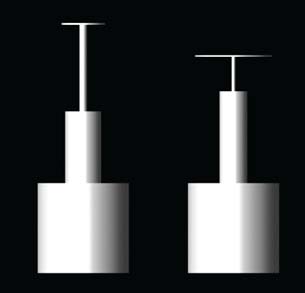
This 18-page technical paper offers straightforward engineering talk. It's about a complex electromagnetic (EM) analysis project to design and optimize a small, wideband, vertically polarized antenna. “Design” in our context here implies the software's ability to automatically adjust the subject unit's variables – parameters – using the engineer-specified constraints and the iterative results of many simulations. "Optimize" is building on iterative insights to make a better design.
A key to the project is Remcom's XFdtd 7 EM design and simulation software. (Do NOT moan. This is the antithesis of a perky PR paper; XFdtd 7 is barely mentioned.) XFdtd 7 uses FDTD (finite difference time domain) methodology to converge on a result. FDTD solves Maxwell’s equations in the time domain, in contrast to electromagnetic simulation techniques operating in the frequency-domain. The implication of FDTD to be aware of here is that your calculations of EM field values progress at discrete time steps.
Such time-stepping and multiple variables are, of course, compute-intensive. So, too, is running iteration after iteration of a simulation, analyzing data, then building off of each iteration's insight to converge on a result. And this is where HPC comes in. HPC is the straw that stirs the drink. The results offered by the authors indicate that FDTD is well-suited for the parallel processing capabilities inherent in the GPUs (graphical processing units) found in HPC systems. This, in turn, enabled rapid design modification and optimization not possible with earlier generation EM software and workstation technologies.
“This means that a simulation that might previously have taken eight hours can now be done in as little as five minutes,” write the authors. “Or conversely, in that same eight-hour period perhaps 100 iterations of a design can be simulated rather than one.”
To me, that quote is the definition of increased productivity and greater opportunity for innovation. Hit the link over there and download (registration-free) today's Check It Out paper from Remcom's Penney and Yong Wang to see if you agree.
Thanks, pal. -- Lockwood
Anthony J. Lockwood
Editor at Large, Desktop Engineering
Check out the white paper titled “Optimized Device Design: A Demonstration of Parameterization, Optimization, and High-Performance Computing with Hardware Accelerated FDTD.”


Anthony J. Lockwood is Digital Engineering's founding editor. He is now retired. Contact him via [email protected].
Follow DE






About Us · Contact Us · Editorial Team · Advertising · Privacy Policy · Subscriber Services · © 2026 Digital Engineering 24/7 · Peerless Media