Helping design and engineering professionals discover, evaluate and specify technologies and processes that shorten the design cycle and enable success.



May 2026 Special Focus: Artificial Intelligence in Design and Simulation
In this Special Focus Issue, learn about the latest developments in the integration of artificial intelligence into engineering workflows.

Design & Simulation Software Guide 2025
In this Special Issue, Digital Engineering presents its second annual guide to design and simulation software vendors.
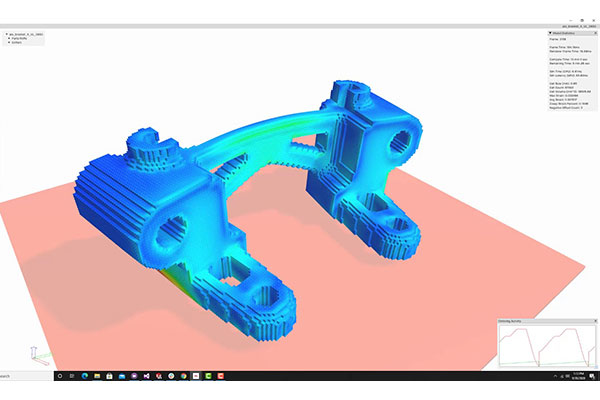
Desktop Metal has released an upgrade to its multiphysics simulation software that automates the generation of sinter-ready, printable parts and other required geometry such as supports, setters and inserts. The goal is to create 3D printed metal parts for high-volume production at high precision.
This upgrade improved upon the original version that shipped in 2020. The company considers Live Sinter to be a key enabler of its binder jet platform that is designed to accelerate the move to volume production using metal additive manufacturing.
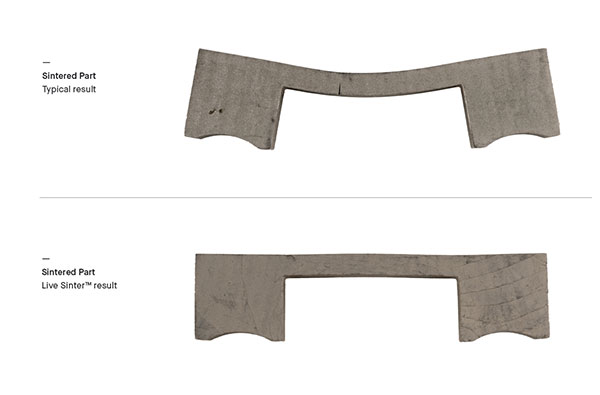
Live Sinter predicts and corrects for shrinkage and distortion in part designs in as little as 20 minutes, according to Desktop Metal. The result is sinter-ready, printable geometries.
New in this upgrade is the ability to make scan-based adjustments. In essence users can fine-tune their simulation results based on one or more scans to “further dial in part accuracies,” according to the company.
The company says this combination of simulation and scan-based adjustments makes it a “unique tool for optimizing metal binder jetting parts production.”
“One of my biggest worries investing in this technology was the furnace and the frustration of failing that far into the process during sintering,” says Neil Glazebrook, vice president of 3D Solutions at ABCorp in Boston. “Using Live Sinter, I’m blown away at our success with the sintering furnace. I don’t have to use sintering supports anymore, so I don’t have to charge for supports. I use Live Sinter for everything, and it makes it more competitive.”
More information on Live Sinter is available here.
Sources: Press materials received from the company and additional information gleaned from the company’s website.


Desktop Metal was started to address a problem—how to make metal 3D printing accessible for engineering teams. In 2013, CEO Ric Fulop began collaborating with world-leading experts in materials science, engineering, and 3D printing. Their work…

DE's editors contribute news and new product announcements to Digital Engineering. Press releases may be sent to them via [email protected].
Follow DE
Join over 90,000 engineering professionals who get fresh engineering news as soon as it is published.






About Us · Contact Us · Editorial Team · Advertising · Privacy Policy · Subscriber Services · © 2026 Digital Engineering 24/7 · Peerless Media