Helping design and engineering professionals discover, evaluate and specify technologies and processes that shorten the design cycle and enable success.


Alert!
Digital Engineering ceased publication on July 1, 2026. This website remains available as an archive of engineering content.
For inquiries or information, please email [email protected].

May 2026 Special Focus: Artificial Intelligence in Design and Simulation
In this Special Focus Issue, learn about the latest developments in the integration of artificial intelligence into engineering workflows.

April 2026 Special Focus Issue: Generative Design
In this Special Focus Issue, Digital Engineering takes a look at how generative design solutions can be used across different types of design problems and with a variety of manufacturing approaches to accelerate design space exploration, and…
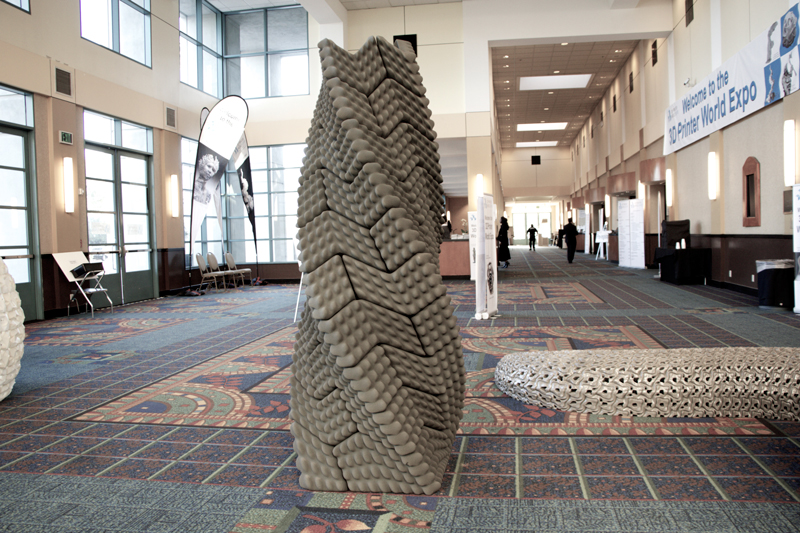
Emerging Objects is adding even more strength to the case for construction-level AM with its Quake Column. Inspired by Incan architecture, the Quake Column is 3D printed and, as you might guess from the name, is meant to be resistant to earthquakes. Unlike current construction methods, Emerging Object’s column uses gravity and an interlocking design rather than mortar to keep the column in one piece.
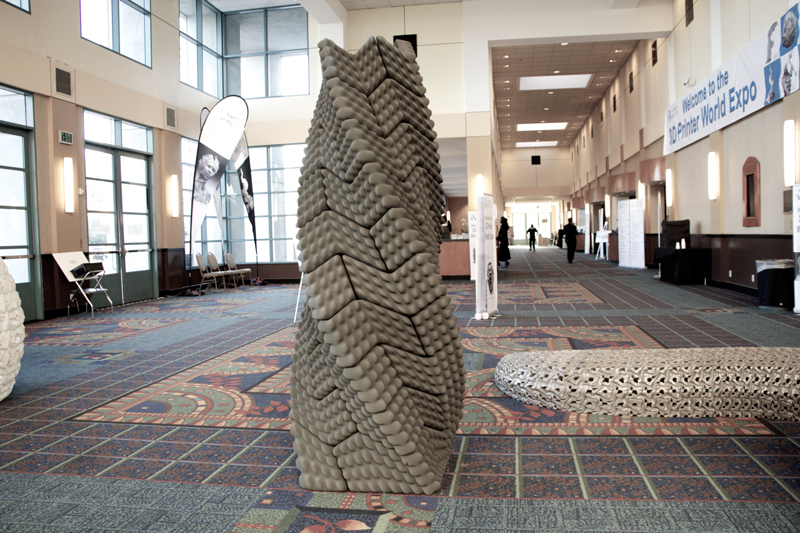 Emerging Objects' Quake Column mixes high tech fabrication with ancient construction practices. Courtesy of Emerging Objects.
From the Emerging Objects website:
The interlocking stone of Incan structures creates an absence of resonant frequencies and stress concentration points. The dry-stone walls built by the Incas could move slightly during an earthquake and resettle without the walls collapsing, a passive structural control technique employing both the principle of energy dissipation and that of suppressing resonant amplifications. Inca walls also tend to incline inwards by 3° to 5° and the corners were rounded, which contributes to their stability.
Where the stones used by the Incans for construction were solid and extremely heavy, Emerging Objects worked with ExOne to manufacture blocks that are partially hollow, making them easier to transport and erect. Each block has been designed to lock with the blocks around it, making for a structure capable of shifting during an earthquake, but still retains load-bearing integrity.
It seems like some practical testing might be in order before anyone attempted to use the Quake Columns, which are currently as much art project as architectural development. Regardless, the column is an early example of how opening up construction to the freedom of design offered by AM has the potential to change the industry.
Below you’ll find a video about a Chinese company using AM for construction.
Source: Emerging Objects


John Newman is a Digital Engineering contributor who focuses on 3D printing. Contact him via [email protected] and read his posts on Rapid Ready Technology.
Follow DE
Join over 90,000 engineering professionals who get fresh engineering news as soon as it is published.






About Us · Contact Us · Editorial Team · Advertising · Privacy Policy · Subscriber Services · © 2026 Digital Engineering 24/7 · Peerless Media