Helping design and engineering professionals discover, evaluate and specify technologies and processes that shorten the design cycle and enable success.




Digital Engineering September 2025
In the September issue of Digital Engineering, we look at trends in engineering education, how engineering schools are handling DfAM, the limitations of ROMs, VR engineering workflows, reports from the Paris Air Show and Hexagon LIVE, and more.
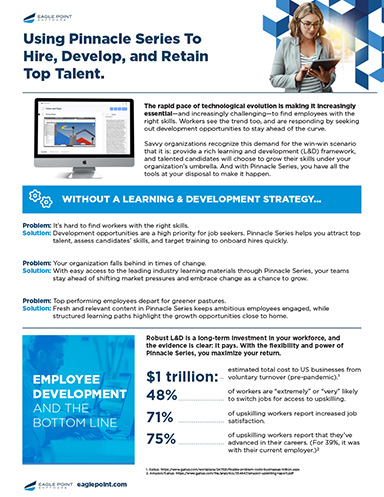
How Pinnacle Series Helps AEC Firms Attract, Train, and Retain Top Talent
Discover how AEC firms use Pinnacle Series to solve hiring challenges, upskill employees, and reduce turnover with personalized learning, skill assessments, and role-based training.
The Innovate for Impact: Siemens Design Challenge is an initiative created by Siemens, in collaboration with The American Society of Mechanical Engineers (ASME) and Engineering for Change (E4C). Announced in February, the challenge was a call to action for socially minded engineers and hardware innovators to address two of the United Nations' sustainable development goals—zero hunger and clean water.
Participants made up of engineering students, practicing engineers, faculty, entrepreneurs and global development practitioners from 34 countries, representing 43 universities, took part in the challenge and proposed more than 220 solutions addressing the quality of life in underserved communities. Last week, E4C and Siemens announced four finalists in each track.
The Zero Hunger Track finalists are:
The Clean Water Track finalists are:
“When we launched this initiative, none of us had any idea that a global pandemic would soon bring society to a standstill. I’ve been encouraged not only by the strong response we’ve received from innovators worldwide, but by witnessing people leverage this opportunity during such challenging times to collaborate virtually, united under a common mission to serve society,” says Barbara Humpton, CEO, Siemens USA. “We received brilliant submissions from more than 30 countries, and our eight finalists exemplify Siemens’ core belief: that a combination of ingenuity nurtured with the right digital tools enables us to expand what’s humanly possible.”
E4C, a platform and community from the American Society of Mechanical Engineers (ASME), architected the application and evaluation process, educated participants on human-centered design principles and provided a variety of other tools and resources. Siemens provided free access and training on technology tools for digital design and engineering from its Xcelerator portfolio, including Solid Edge software and a new co-creation platform developed with Siemens’ Mendix software for low-code application development.
The co-creation platform for the challenge opened on March 4. During the “plan and learn” pre-application phase of the challenge, prospective applicants were invited to review and consider participation in one of two tracks: zero hunger and clean water. Participants could learn more about the issues, access online training, review best practices and case studies in human centered design, and submission criteria for the Challenge. They chose to either design a postharvest off-grid preservation technology to reduce farm-to-table food loss in lower resource settings that lack electricity, or to design a very low-cost, energy-efficient, scalable technology for desalinating brackish water.
Over the course of the challenge, participants have been asked to: submit a 60-second video introducing their team and product concept; research and explore the needs of their end user; design their concept in 3D CAD software; iterate their design based on their research and provide justification for decisions; simulate how their product works; and submit a video pitching their product concept.
“The diverse teams and unique solutions assembled through the Innovate for Impact: Siemens Design Challenge demonstrate the capacity of the global technical community as a tremendous force for good,” says Iana Aranda, director of engineering global development programs for ASME. “While the COVID-19 pandemic has imposed limits around the globe, this digital challenge shows us that there are no limits to the social innovation drive of our community.”
Winners will be announced on September 15, 2020. Each winning solution will be awarded $10,000.
For more information about Innovate for Impact: Siemens Design Challenge, click here.
Sources: Press materials received from the company and additional information gleaned from the company’s website.

ASME is a not-for-profit membership organization that enables collaboration, knowledge sharing, career enrichment, and skills development across all engineering disciplines, toward a goal of helping the global engineering community develop…

DE's editors contribute news and new product announcements to Digital Engineering. Press releases may be sent to them via [email protected].
Follow DE
Join over 90,000 engineering professionals who get fresh engineering news as soon as it is published.






About Us · Contact Us · Editorial Team · Advertising · Privacy Policy · Subscriber Services · © 2026 Digital Engineering 24/7 · Peerless Media