Helping design and engineering professionals discover, evaluate and specify technologies and processes that shorten the design cycle and enable success.



Design & Simulation Software Guide 2025
In this Special Issue, Digital Engineering presents its second annual guide to design and simulation software vendors.

Design & Simulation Software Guide
In this Special Issue, Digital Engineering presents its inaugural guide to design and simulation software vendors, including listings for CAD, CAM, simulation, generative design, PLM, rendering and visualization, design for additive manufacturing,…
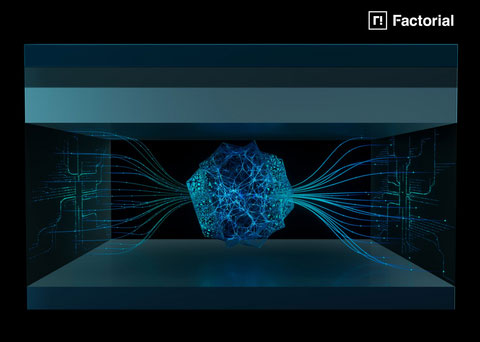
Factorial Inc. (Factorial), a company focused on solid-state battery technology, has launched Gammatron, an AI-powered simulation platform designed to boost development of next-generation batteries. Specifically, Factorial aims to improve how battery performance is predicted, validated and optimized.
Gammatron was created as a tool to respond to battery development delays. Gammatron fuses electrochemistry, thermodynamics, and high-fidelity lab data in an effort to simulate and optimize battery behavior at the material and cell-system level.
“Validating a new cell design can take years, but with Gammatron, we’ve demonstrated that we can dramatically shorten that timeline—forecasting long-term performance from just two weeks of early testing, instead of the typical three to six months,” says Siyu Huang, CEO of Factorial.
Key capabilities of Gammatron include:
Used in Factorial’s joint development with Stellantis, Gammatron helped forecast battery performance before full test completion.
“Batteries are complex dynamic chemical systems. Gammatron combines machine learning with scientific feature engineering. Where most platforms hit a wall with shallow machine learning, Gammatron goes deeper and shows engineers which material and design changes will unlock longer life and higher performance,” says Raimund Koerver, vice president of Business Development at Factorial.
This technology plays a supporting role in streamlining customer qualification, enhancing overall cell performance, and accelerating internal development. By integrating advanced capabilities such as material screening, battery cell digital twins, and cell manufacturing traceability, it enables data-driven innovation across the battery lifecycle, the company notes.
Initially launching as a tech-enabled service, Gammatron will be operated in-house for co-development with select partners. The platform is available for solid-state battery development and legacy lithium-ion programs.
About Factorial Inc.
Founded and headquartered in the United States, Factorial offers high-performance alternatives to traditional lithium-ion technologies. Its FEST (Factorial Electrolyte System Technology) and Solstice platforms deliver greater energy density, enhanced safety, and compatibility with existing manufacturing systems, according to the company.
Sources: Press materials received from the company and additional information gleaned from the company’s website.


DE's editors contribute news and new product announcements to Digital Engineering. Press releases may be sent to them via [email protected].
Follow DE
Join over 90,000 engineering professionals who get fresh engineering news as soon as it is published.






About Us · Contact Us · Editorial Team · Advertising · Privacy Policy · Subscriber Services · © 2026 Digital Engineering 24/7 · Peerless Media